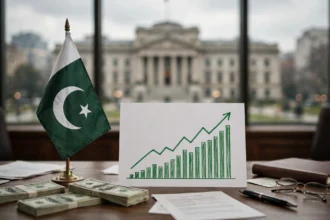
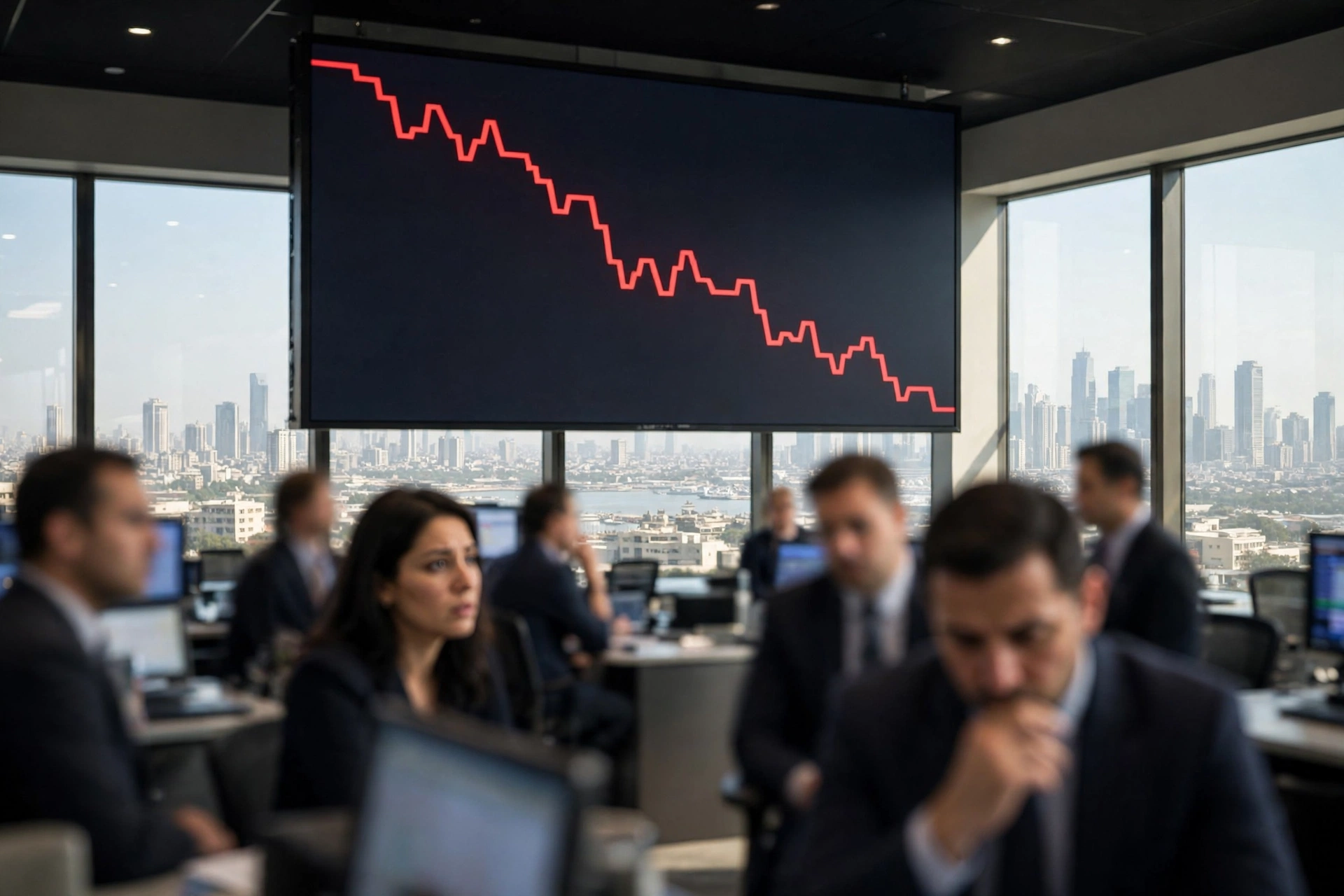

The Pakistan Stock Exchange closed lower on Thursday as an early rally linked to the new International Monetary Fund agreement faded and investors booked profits when global oil prices moved sharply higher. The benchmark KSE-100 index lost 1,138.50 points, or 0.68 percent, to settle at 167,441.91, reversing a strong start in which the market had climbed close to the 169,500 level during the session.
The fall came only a day after Pakistan and the IMF reached a staff level agreement on the latest programme reviews. That news first lifted sentiment in Karachi, but the mood changed as crude prices rose and traders worried about higher import costs, inflation pressure and regional uncertainty linked to shipping and energy supply routes.
Early IMF rally gives way to selling
Market reports said the index opened on a positive note and gained around 906 points in early trade after the IMF review outcome became clear. The agreement covers the fourth review under the Extended Fund Facility and the third review under the Resilience and Sustainability Facility. Subject to approval by the IMF Executive Board, it is expected to unlock about 1.2 billion dollars and take total disbursements under the two programmes to around 5.7 billion dollars.
Those details are explained in our report on the Pakistan IMF staff-level agreement for $1.21 billion, which sets out what the deal means for reserves and the external account. For traders, however, the immediate focus quickly shifted from the IMF headline to the price of oil and the risk that costlier energy imports would again strain the balance of payments. Investors tracking the currency impact can also check the USD to PKR exchange rate today for the latest rupee position.
Oil prices and regional risk hit sentiment
Brokerage summaries linked the reversal to a rise of nearly 4 percent in international oil prices, driven by concerns about Middle East supply, attacks linked to shipping in and around the Gulf and the Strait of Hormuz, and disruption worries in the United States. For Pakistan, higher crude prices matter quickly because fuel imports feed directly into transport costs, electricity generation charges and general inflation.
That link was visible again this week in domestic fuel pricing. The latest notification covered in our update on the petrol price in Pakistan today for October 9 shows how changes in global energy markets pass through to local pump rates. When oil climbs at the same time as geopolitical risk rises, equity investors often reduce exposure to banks, fertiliser, cement and other rate sensitive sectors until the direction becomes clearer.
Volumes fall and most shares close lower
Trading activity weakened sharply compared with the previous session. Ready market volume fell to about 365.9 million shares from 586.9 million shares a day earlier, a drop of more than 37 percent. The traded value also declined to about 17.7 billion rupees. Market breadth was negative, with 130 shares advancing, 324 declining and 42 remaining unchanged out of 496 companies traded.
Heavyweight shares were among the main drags on the index. United Bank, Fauji Fertiliser, Systems Limited, Engro Fertiliser and Pakistan Oilfields were repeatedly cited in market summaries as leading contributors to the decline. K-Electric was the volume leader with about 29.6 million shares changing hands, followed by other actively traded small and mid cap names. Analysts said the index had met resistance near its recent highs and that profit taking was expected after the previous sessions of volatile trading.
What investors will watch next
Analysts expect the market to stay volatile in the near term, with the 167,000 to 170,000 range watched closely as a short term band. The IMF agreement provides support for Pakistan’s external financing picture, but traders say that support can be offset if oil prices stay elevated or if regional tensions disrupt energy supplies further. Foreign flows, crude prices and any progress toward IMF board approval will be the main factors in the next sessions.
For continued coverage of markets, inflation and government economic decisions, follow our Pakistan business and economy news. The next trading session will show whether buyers return at lower levels or whether the profit taking seen on Thursday extends into the close of the week.