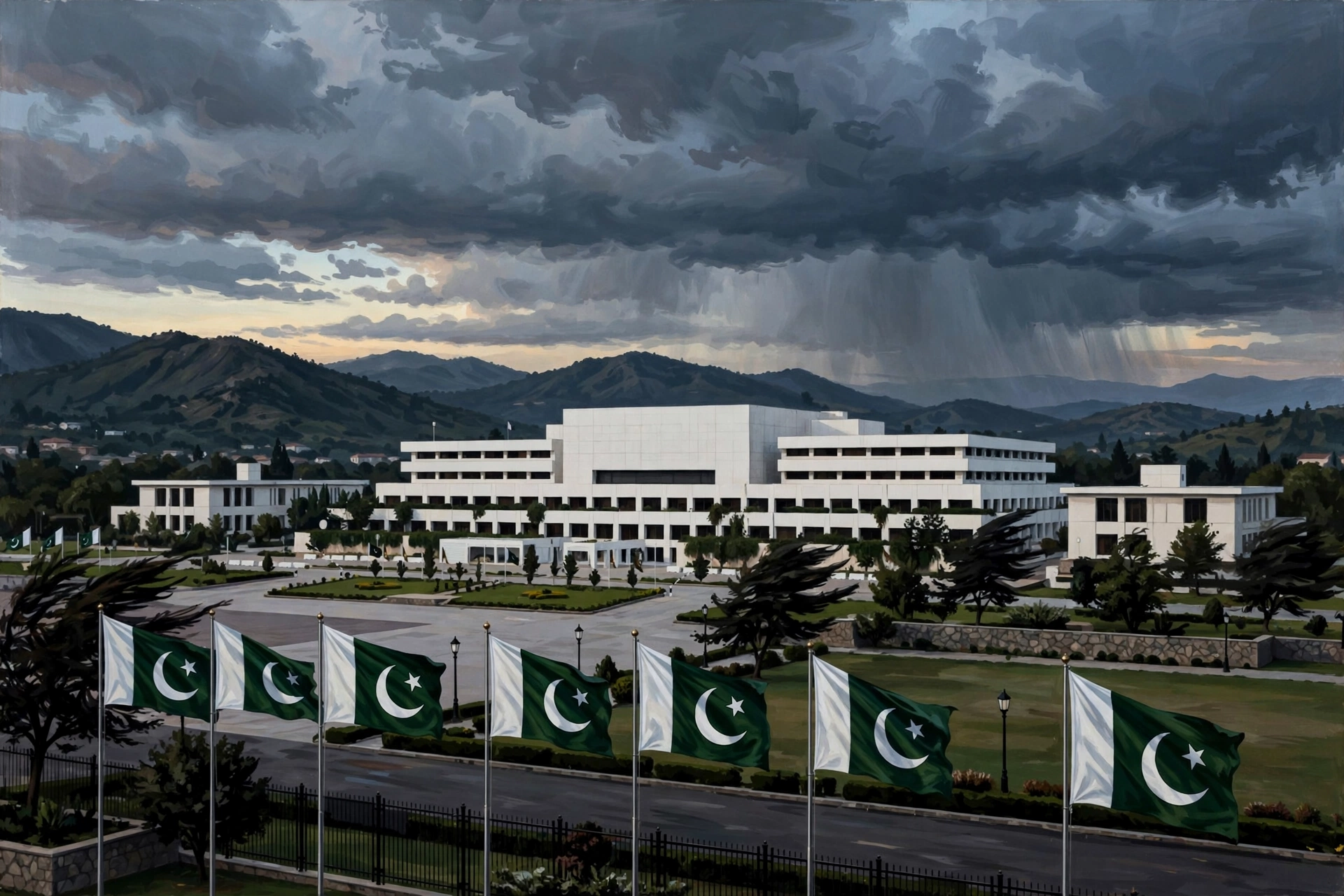

The federal cabinet meets in Islamabad on Sunday to decide whether to impose an emergency and governor’s rule in Khyber Pakhtunkhwa, placing the PTI-led province under direct federal control. The meeting, called by Prime Minister Shehbaz Sharif, follows Saturday’s talks between the ruling coalition’s two main partners, the PML-N and the PPP, on a plan to take the constitutional route against the provincial government. Separate sessions of the National Assembly and the Senate have been called for Tuesday, October 13.
Saturday’s meetings at the top
President Asif Ali Zardari and Prime Minister Shehbaz Sharif reviewed the political and security situation at Aiwan-e-Sadr on Saturday, with KP’s deteriorating law and order coming under discussion. The prime minister was accompanied by Ishaq Dar, Mohsin Naqvi, Rana Sanaullah, Azam Nazeer Tarar and Attorney General Mansoor Usman Awan, while Senator Sherry Rehman, Naveed Qamar, Saleem Mandviwalla and Dr Asim Hussain attended on the president’s side. The official Presidency statement confirmed no decision on governor’s rule or an emergency.
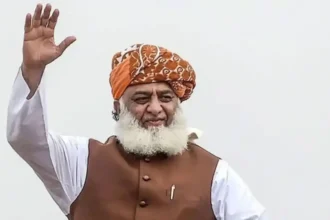
The prime minister also met JUI-F chief Maulana Fazlur Rehman, who has been playing a mediating role. Fazl then met PTI Chairman Barrister Gohar Ali Khan and Asad Qaiser and apprised them of the government’s possible move if the PTI insisted on continuing its march, while urging talks over coercion. The federal government has meanwhile deepened regional security partnerships, signing Pakistan’s anti terror cooperation pact with Turkiye this week.
Government says no option left
Interior Minister Mohsin Naqvi came out most directly, telling reporters there was no room left to avoid the imposition of an emergency in KP, and that the government had made every possible effort but had nothing more to offer the PTI. Information Minister Attaullah Tarar confirmed that the prime minister had convened the federal cabinet on Sunday to discuss emergency and governor’s rule options, adding that the meaning of a Sunday cabinet meeting, on a weekly holiday, could be understood by all.
Minister of State for Interior Tallal Chaudhry said multiple options were being examined, questioning what avenues remained when the PTI was failing to cooperate in the fight against terrorism and speaking against national policy during its march. Sources said the cabinet is expected to consider both options and approve advice to be sent to President Zardari.
PTI calls it an attack on the mandate
Late on Saturday night, the PTI held a joint meeting of its core committee and political committee. A handout issued early on Sunday said the party strongly opposed any such measure, terming it a direct attack on the mandate of the people of the province, the elected assembly and constitutional and democratic rights. It announced full support for the ongoing peaceful long march led by KP Chief Minister Sohail Afridi, while refuting reports of differences between Afridi and the party committees. The PTI launched its long march towards Islamabad on October 4 amid heavy law enforcement deployment.
Security tightened across KP
KP police chief Zulfiqar Hameed issued guidelines to all district police officers on Saturday in view of possible violent protests and sabotage if an emergency were announced. Station house officers were told to identify vulnerable places on protest routes and deploy sufficient strength. A senior provincial official said all deputy commissioners and district police officers had been directed to remain in their districts until further orders. In Rawalpindi, Section 144 was imposed across the district for one month. The province has faced repeated militant attacks this month, including the north waziristan counter terror operation in which nine terrorists were killed.
The constitutional route
The government plans to invoke Articles 232, 233 and 234 of the Constitution, sources told Dawn. Article 232 covers the proclamation of an emergency when the president is satisfied a grave emergency exists beyond the provincial government’s power to control; it requires a resolution from the provincial assembly, and if the president acts on his own, approval of both houses of parliament within ten days. Article 233 covers suspension of certain fundamental rights during an emergency. Article 234 covers governor’s rule on failure of constitutional machinery, for which the president only requires a report from the provincial governor.
What happens next
If the cabinet advises the president to act, President Zardari could issue a proclamation suspending the provincial government of Sohail Afridi and placing KP under the federal government or the governor. With Fazl urging talks over coercion and the PTI insisting its march will stay peaceful, the next 48 hours will decide whether KP enters an unprecedented constitutional confrontation or a last minute settlement emerges.
Markets are watching closely, as prolonged confrontation has historically pressured the currency and equities. Readers tracking the economic side can follow the USD to PKR exchange rate today page. More developing stories like this are collected in our Pakistan politics coverage section.