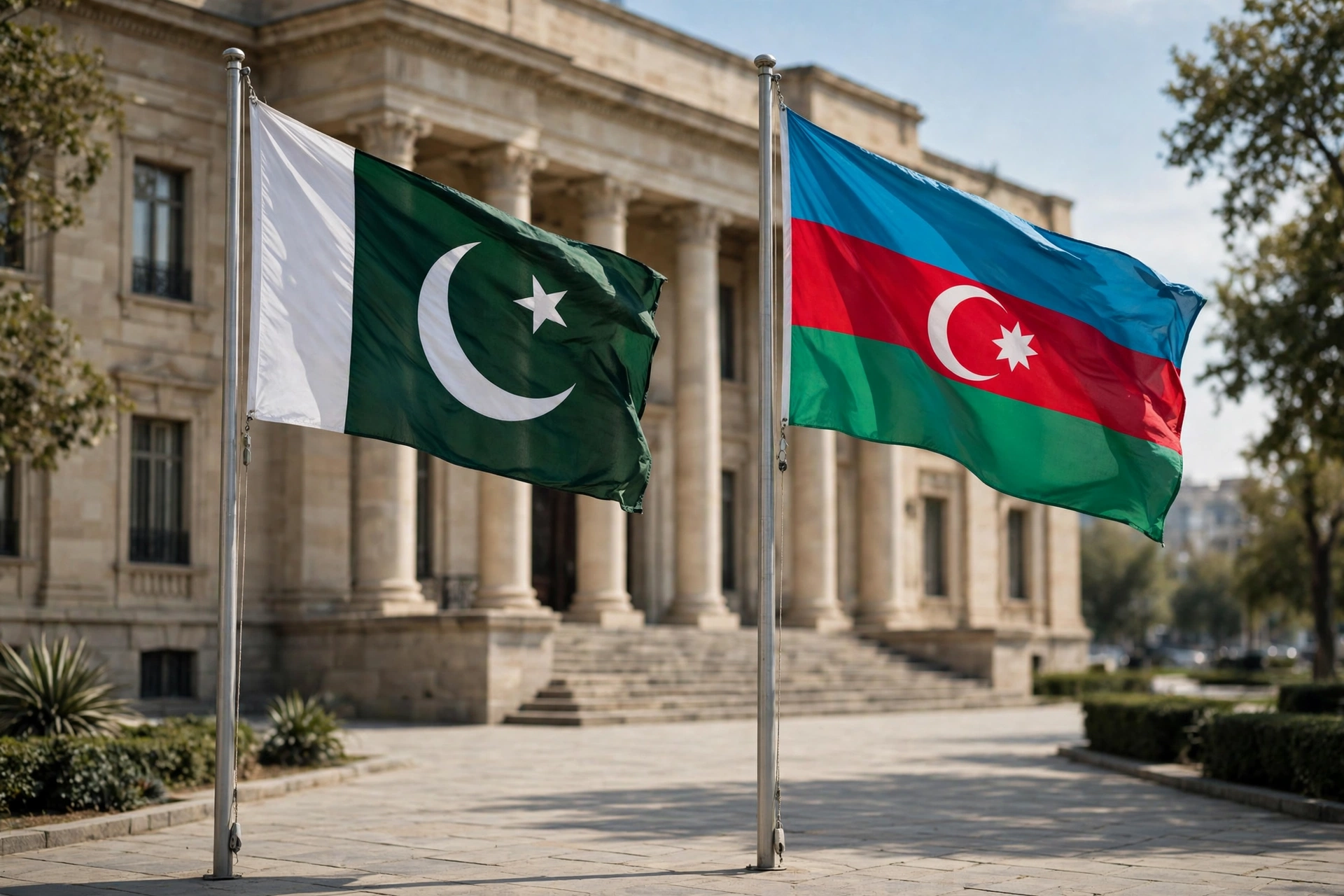

Prime Minister Shehbaz Sharif held a telephone conversation with Azerbaijan’s President Ilham Aliyev on Saturday, October 10, in which both leaders agreed to take their strategic partnership to a new level by turning their strong political understanding into closer economic, investment and commercial cooperation. The call was held against the backdrop of Pakistan’s stepped-up diplomatic outreach aimed at promoting regional peace and de-escalation, a role the Azerbaijani president openly praised.
According to a statement issued by the Prime Minister’s Office, Shehbaz reaffirmed Pakistan’s “deep-rooted, fraternal and strategic partnership” with Azerbaijan, describing it as a relationship characterised by mutual trust and steadfast support on all issues of core national interest. President Aliyev appreciated Pakistan’s constructive diplomatic efforts to facilitate dialogue, mediation and de-escalation, acknowledging their importance for regional peace and stability.
Economic cooperation takes centre stage
The two leaders reviewed the state of bilateral ties and expressed satisfaction at the growing momentum in their multifaceted cooperation. Their shared conclusion was that the exceptional political goodwill between Islamabad and Baku must now be translated into a mutually beneficial economic, investment and commercial partnership, a commitment they reaffirmed twice in the conversation.
They also discussed progress on ongoing bilateral initiatives, with particular attention to the Asaan Khidmat Centre in Islamabad. The centre is modelled on Azerbaijan’s ASAN Khidmet service delivery system and has now become operational in the federal capital. At the prime minister’s request, President Aliyev agreed to extend Azerbaijan’s full support and expertise toward expanding the Asaan Khidmat network across Pakistan. Shehbaz thanked him for the gesture, describing it as another manifestation of enduring friendship and solidarity between the two countries.
Stronger trade and investment ties between Pakistan and its partners also matter for households and businesses watching currency movements, since deeper commercial cooperation can influence capital flows and import costs over time.
Regional situation and peace diplomacy
The two leaders exchanged views on the evolving regional and international situation and stressed the need for continued consultations and close coordination on issues of mutual interest. Prime Minister Shehbaz briefed President Aliyev on Pakistan’s sustained diplomatic outreach to promote peace, dialogue and de-escalation in the region, efforts that the Azerbaijani president acknowledged as important for stability.
The call fits a wider pattern of Pakistan’s active diplomacy in recent weeks, which included Pakistan’s condemnation of the Houthi attack on Riyadh airport and its reaffirmation of commitments under the Makkah Joint Defence Agreement with Saudi Arabia. Islamabad has been positioning itself as a mediator and stabilising voice as tensions rise across the Middle East.
Shehbaz also shared details of the conversation on X, saying the two sides had reaffirmed the enduring friendship and strategic partnership between Pakistan and Azerbaijan and their resolve to convert strong bilateral ties into greater economic, investment and trade cooperation.
Why the Asaan Khidmat expansion matters
The Asaan Khidmat initiative carries practical weight for citizens. Modelled on Azerbaijan’s widely studied ASAN Khidmet one-window public service model, the Islamabad centre aims to bring government services under one roof, cutting red tape and waiting times. Azerbaijan’s agreement to support the network’s nationwide expansion could speed up replication in other provinces, giving the reform a ready-made blueprint and technical backing rather than forcing Pakistan to build from scratch.
The conversation concluded with both leaders reiterating their commitment to work closely together to transform their strategic partnership into an enduring relationship of shared progress, prosperity and mutual benefit for the peoples of the two countries. For Islamabad, the call adds another strand to a foreign policy calendar crowded with crisis diplomacy at home and abroad, even as the federal cabinet deliberates emergency options for Khyber Pakhtunkhwa. Readers can follow further developments in Pakistan’s national news coverage.