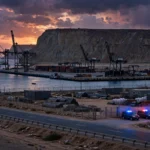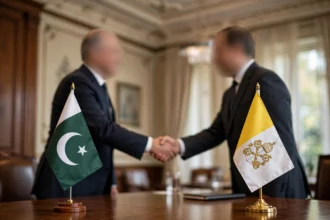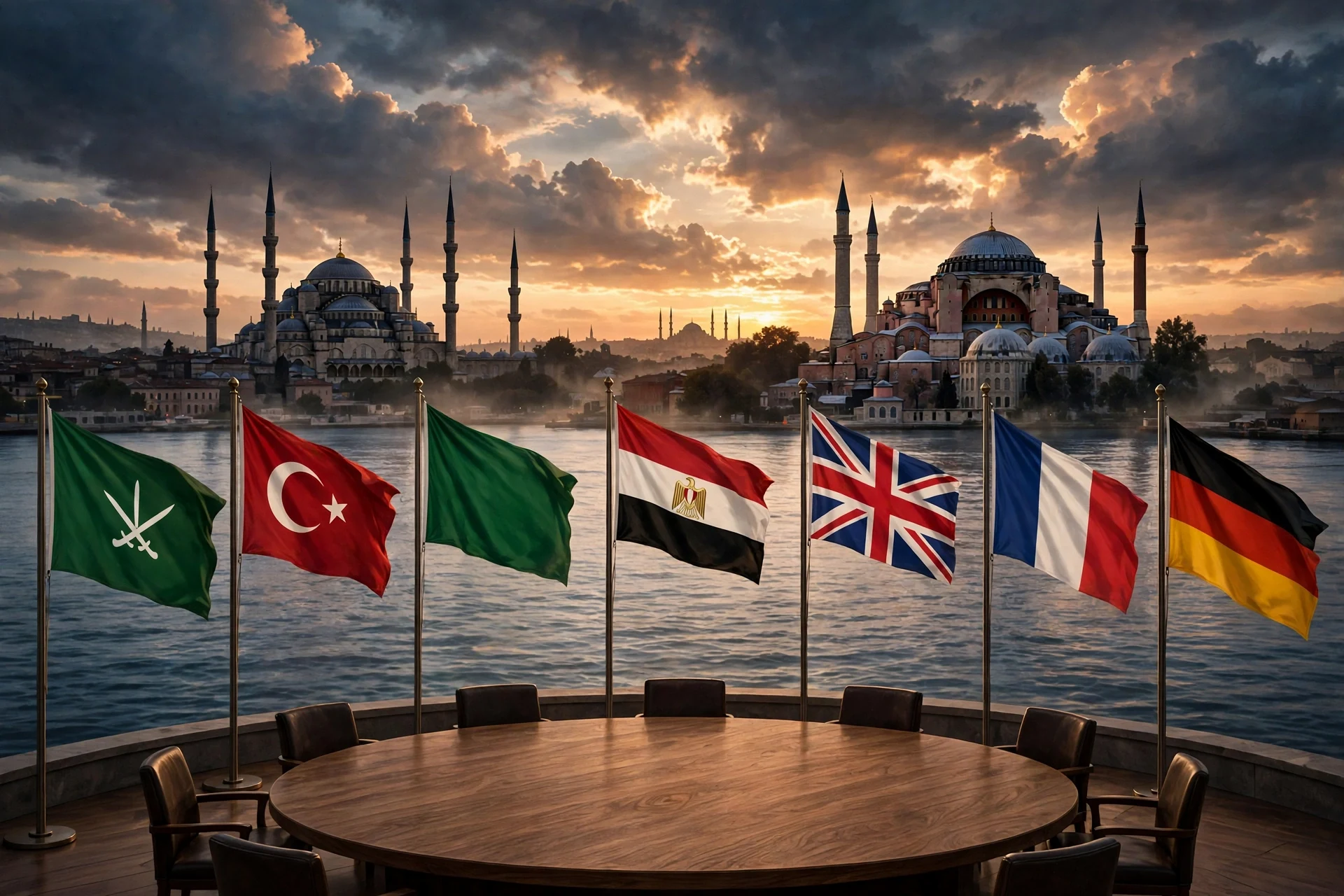

Deputy Prime Minister and Foreign Minister Ishaq Dar departed Islamabad for Istanbul on Friday morning to attend the foreign ministers’ meeting of the R-4 group, which will be followed by the first-ever combined R-4+E-3 meeting bringing seven countries into a single format. The Foreign Office confirmed the schedule on Thursday night, saying the seven countries would meet in this format for the first time. Beyond the handshakes, today is the first real-world stress test of the defence architecture Pakistan has been assembling since August, because the agenda runs straight through the shipping lanes that carry more than four-fifths of Pakistan’s fuel imports.
What the R-4 and the E-3 actually are
The R-4 emerged in March as a consultative framework for regional security, with mediation between the United States and Iran as one of its stated focuses. Turkish foreign ministry sources cited by Anadolu Agency add a harder edge: the grouping rests on the Makkah Joint Defence Agreement, a mutual defence pact set up in August by Turkiye, Saudi Arabia and Pakistan, with Egypt now at the table.
The E-3 is the trio of France, Britain and Germany, formed more than twenty years ago to coordinate diplomacy over Iran’s nuclear programme. Dar is attending at the invitation of Turkish Foreign Minister Hakan Fidan, and will hold bilateral meetings with his counterparts on the sidelines. The Foreign Office said Pakistan’s participation reflects its continued commitment to constructive diplomacy and the peaceful resolution of disputes.
Why this format is new, and what is on the table
A Turkish diplomatic source told Reuters the seven countries would meet in the R-4+E-3 format for the first time at Turkiye’s initiative, as wars involving Iran, Yemen and Ukraine threaten shipping routes and regional security. Turkish ministry sources briefed to Anadolu put the agenda at the Palestinian issue, the situation in the Strait of Hormuz, developments related to Yemen, and efforts to end the Russia-Ukraine war, along with opportunities for cooperation between the two groupings in the coming period.
Fidan’s expected message has been leaked in unusual detail. He will stress that regional security requires countries of the region to assume responsibility, and that disputes must not feed one another, conflicts must not spread to new areas, and tensions must not turn into broader instability, according to AFP’s account of the Turkish briefings. He will call for more international pressure on Israel over settlement expansion, underline freedom of navigation in the straits of Hormuz and Bab el-Mandeb, and reiterate Turkiye’s support for Saudi Arabia’s security against Houthi attacks under the Makkah Joint Defence Agreement.
The Pakistan stake: two new defence deals face their first agenda
Pakistan’s seat at this table rests on signatures put down in the past three months. The Makkah Joint Defence Agreement of August was followed by the Badr defence accord Islamabad signed earlier this month, which PakMirror reported as Pakistan’s second defence deal in ten weeks. That makes the Istanbul agenda the first live test of what those agreements were supposed to buy: regional security underwritten by the region’s own defence architecture rather than by outside powers.
What is at issue today is not a new commitment from Pakistan, but whether the architecture it signed up to can deliver coordination on the exact threats it was designed for, a question that builds on Pakistan’s condemnation of a Houthi attack on a Riyadh airport earlier this month.
The fuel route on the agenda
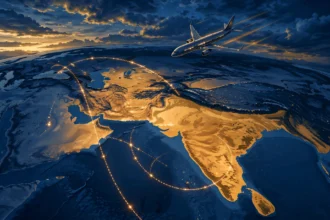
Freedom of navigation in Hormuz and Bab el-Mandeb is not an abstract principle for Pakistan. Pakistan’s FY26 oil import bill of $16.86 billion already runs above the IMF’s $15.28 billion estimate, 81 percent of the country’s fuel imports come from the Gulf, and Brent crude has been trading near five-month highs. Any disruption in Hormuz lands directly on that bill and on the foreign exchange reserves the State Bank has spent months rebuilding.
That gives Islamabad a direct, measurable stake in whatever the seven agree about straits security today. It also explains why Pakistan, a non-Gulf state, sits at a table dominated by Gulf security concerns: its economy rides through the same waterway.
What to watch next
Three things will decide whether today matters beyond the photographs. First, whether the meeting produces a joint statement or concrete cooperation steps for the coming period, which the Turkish briefings have hinted at but not promised. Second, what Dar carries out of his bilateral sidelines, particularly with the Saudi, Turkish and Egyptian ministers. Third, whether the R-4+E-3 format becomes a recurring fixture or a one-off experiment; the first meeting of any format is the cheapest to hold and the hardest to repeat.
Outcomes are expected later today. Follow latest national news from Pakistan for what the seven agree to, and what it means for Islamabad’s new defence bets.