
The International Monetary Fund has sharply cut its growth outlook for the Middle East, North Africa and Pakistan, saying the region’s economy will contract 1.3% this year because of the war against Iran, before rebounding 6.6% in 2027. The forecast was released on Thursday in Dubai. Pakistan sits inside that contracting number, yet the IMF’s own analysis puts it in the more resilient camp. The real question is whether its two lifelines, Gulf remittances and Gulf fuel, survive another escalation.
What the IMF announced on Thursday
In its regional economic outlook, released in Dubai, the IMF said output across the Middle East, North Africa and Pakistan would contract 1.3% in 2026 on the war’s impact on energy production, shipping, tourism, trade and confidence, Reuters reported. Output would rebound sharply in 2027 but stay below pre-war projections. The impact has been uneven: oil exporters suffered most, while oil importers proved more resilient on remittance flows and policies shielding consumers. The baseline assumes the conflict abates in early 2027, but the outlook remains clouded by “exceptionally high uncertainty”, with the main risk being further disruption to energy and trade routes.
Where Pakistan sits inside the forecast
Pakistan was named inside the contracting aggregate, but its own numbers sit apart. In its October 13 World Economic Outlook, the IMF projected Pakistan’s growth at 3.5% for the fiscal year ending June 2027, below the government’s 4% target, while inflation is forecast to surge to 9.9%, well above the official 8.2% target, with the current account swinging to a 1% deficit from a 0.5% surplus, Business Recorder reported. The Express Tribune noted the inflation forecast was revised up 1.5 points from April on the conflict’s effect on energy prices.
The Fund’s early-October staff-level review was cautiously better: real GDP grew about 4% in the first three quarters of fiscal 2026, inflation peaked in May and eased to 10.3% in September, the current account stayed broadly balanced on strong remittances, and reserves reached about $21.5 billion by end-September, opening the way to about $1.21 billion in disbursements. Pakistan’s record $21.5 billion reserve rebuild is why the country entered this shock with thicker buffers than in past crises.
Why the IMF still calls Pakistan resilient
The IMF’s resilience case for oil importers rests on two pillars, and Pakistan scores on both. First, remittances: State Bank data showed $3.59 billion in September 2026, up 12.7% year on year, while first-quarter inflows hit $10.87 billion, up 14%, ARY News and Dunya News reported. Saudi Arabia led with $899.1 million, up nearly 20% on the year, followed by the UAE at $748.5 million, per Mettis Global. Pakistan’s record $10.9 billion remittance quarter props up the external account. Second, consumer protection: the government delayed fuel price increases after the war began and rolled out targeted fuel assistance. The catch is that the IMF wants the broad, costly fuel subsidy scheme ended immediately, Dunya News reported.
The catch: Pakistan’s resilience sits on the Gulf
The IMF’s own analysis undercuts the comfort. In its April staff report, published by the Finance Ministry, the Fund called Pakistan “highly exposed”: 81% of fuel imports come from the GCC region, and remittances equal about 9% of GDP, of which 55% come from the GCC. A major disruption to Gulf economies or a return of migrant workers could weigh on those flows, the Fund warned, and Arab News carried it.
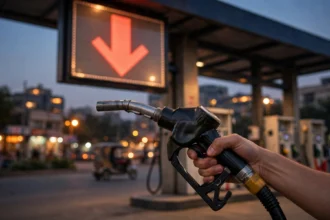
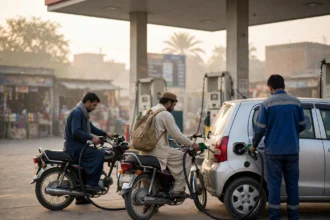
The energy side is already straining. Pakistan’s petroleum import bill hit $16.86 billion in fiscal 2025-26, exceeding the IMF’s $15.28 billion estimate by $1.58 billion, Dunya News reported, and the Fund projects $16.31 billion for this year. With Brent near five-month highs, Business Recorder reported on Wednesday, that estimate could break fast. September’s current account deficit already widened to $356 million from $73 million in August as imports jumped 23% year on year, which is why the USD to PKR exchange rate today bears watching.
What could break the forecast
IMF regional director Jihad Azour acknowledged this month that pre-war surpluses, alternative routes and inventory drawdowns bought time against the energy shock, but warned those buffers are limited: inventories have fallen and spare capacity has declined, so renewed disruption could bring much larger price adjustments. In Bangkok, Azour said Gulf economies “will not go back to the pre-war trajectory in the medium term”, ARY News reported.
For Pakistan the translation is direct: the 6.6% regional rebound in 2027 depends on the conflict abating in early 2027. If it does not, Pakistan faces the double blow the IMF flagged: a higher oil import bill and weaker Gulf remittance flows. Watch three numbers: Gulf remittance flows, the petroleum import bill against the IMF’s $16.31 billion estimate, and the IMF board’s decision on the pending $1.21 billion disbursement. For more, see PakMirror’s business and economy news from Pakistan.