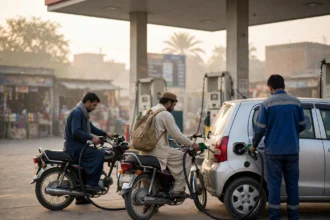

Diesel crossed the Rs400 line in Pakistan on October 30, while petrol did not move at all. Under the revised prices announced by the Petroleum Division, high speed diesel now costs Rs400.67 a litre, up Rs0.85 from Rs399.82 a day earlier. Petrol stays at Rs377.91 a litre. The split between the two fuels, and the speed of the diesel climb, is what will decide what households pay next.
The new rates took effect on October 30, 2026, after the Oil and Gas Regulatory Authority revised ex-depot prices for the day. Petrol had risen Rs1.85 a day earlier; diesel rose for a second straight day, this time past a round number every transporter and farmer will notice.
The new prices, in full
Petrol, sold as motor spirit, remains Rs377.91 a litre, exactly where it stood on October 29. High speed diesel moves from Rs399.82 to Rs400.67 a litre, a rise of Rs0.85. The gap between the two fuels is now Rs22.76 a litre, with diesel the more expensive of the two. That ordering matters: diesel powers trucks, buses, tractors and generators, while petrol mostly powers cars and motorcycles.
The revision follows the daily pricing system in place since July 17, 2026, under which OGRA revises ex-depot prices every working day, with prices unchanged over weekends and public holidays. Petroleum Minister Ali Pervaiz Malik has said daily prices are based on a seven day average of international market prices. The next revision is due on Monday, November 2.
A Rs10.56 climb in just over a week
The 85 paisa rise looks minor on its own. Put it against the last eight days and it looks different. Diesel stood at Rs390.11 a litre on October 22. By October 30 it had reached Rs400.67, a climb of Rs10.56 a litre, or about 2.7 percent, in just over a week. The rise came in daily steps, but the total is what a buyer pays.
In real quantities: filling 100 litres costs Rs85 more than yesterday, and Rs1,056 more than on October 22. A 200 litre tank costs Rs170 more than yesterday and Rs2,112 more than on October 22 to fill. Those are the numbers transporters carry into their next fare and freight decisions.
Why the split matters more than the 85 paisa
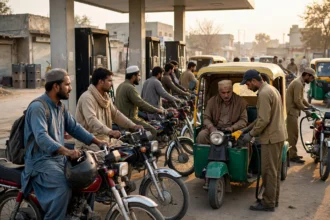
Freezing petrol while raising diesel is a choice about who feels the pain first. Car and motorcycle owners see no change today. The cost instead lands on goods transport, passenger buses and farm operations, where it reaches consumers second hand, through freight charges, bus fares and food prices, rather than at the pump itself.
The split also follows a week in which household fuel costs rose on another front. LPG at a record Rs600 a kilo has already squeezed kitchens that depend on cylinders, so the diesel rise arrives on top of an existing household fuel bill. And for exporters, fuel is only one part of a rising cost stack: the Afghan trade halt cost exporters a year of disrupted routes, which makes every extra rupee on freight harder to absorb.
The Rs100 tax floor that never moves
One part of the diesel price does not change with the international market at all. The government collects Rs100 a litre in taxes and duties on diesel, and Rs114 a litre on petrol. That means Rs100 of every litre of diesel sold today goes to the state before any crude oil, refining, transport or dealer cost is counted. When international prices fall, that floor stays in place, which limits how far pump prices can drop even in a good week.
The same logic appeared in an earlier flashpoint: Petrol would cost Rs298 a litre without the levy, showing how much of the pump price is policy rather than product. The daily revision moves only the market portion; the tax portion changes only when the government decides.
What to watch on Monday
Three things will show whether Rs400 is a stopping point or a staging post. First, the Monday, November 2 revision under the daily system: if international prices keep pushing the seven day average up, diesel moves again. Second, the response of transporters and bus operators, who have made no fare announcement yet: any fare or freight increase will be the first visible pass through of the Rs10.56 weekly climb. Third, whether the government touches the tax portion, the only lever that could bring diesel down sharply without waiting for the world market.
Until one of those three moves, petrol is frozen at Rs377.91, diesel has crossed Rs400 at Rs400.67, and the people who burn diesel for a living are paying Rs10.56 a litre more than they did just over a week ago. For the latest business and economy news from Pakistan, remember the weekly total, not the daily 85 paisa.