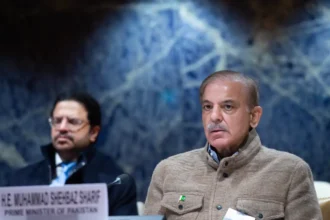

Pakistan has thirteen days to answer an invitation that took nine days to confirm. On Friday, the Foreign Office confirmed that India has invited Pakistan to the first SCO Forum on Civilisational Dialogue, to be held in New Delhi from 20 to 22 November. The invitation went to all ten SCO member states, and the named invitee is Aurangzeb Khan Khichi, the Minister for National Heritage and Culture. The decision, the Foreign Office said, will be taken by the country’s leadership after consultations and established procedures. Nothing about that sentence sounds dramatic. Everything about the calendar is.
Nine days to confirm, thirteen to decide
Formal invitations went out on 28 October, reports say. The Foreign Office confirmed receipt on 6 November, nine days later. From today, the forum opens in thirteen days. The decision chain has three stages: consultations, procedures, and a leadership decision. No date for the decision has been given. The gap matters, because a ministerial visit needs protocol, security clearance and a delegation list, and none of that can be arranged in the final forty-eight hours. Every day of silence narrows the options from three to two to one.
Three doors, three different prices
Door one: Khichi goes. That would be the first ministerial-level Pakistani visit to India since Bilawal Bhutto Zardari travelled to Goa for the SCO foreign ministers’ meeting in May 2023, and the first since the four-day standoff of May 2025. Door two: a lower-ranking delegation. The forum still functions, Pakistan keeps its seat, and nobody has to defend a ministerial visit to Delhi. Door three: decline. India has already banked its credit as host by inviting all ten members, so a refusal costs Delhi nothing and leaves Islamabad the empty chair among more than 25 expected delegations. Each door is defensible, and each has a different price.
The precedent ladder: Goa, Islamabad, Dushanbe
The SCO has become the one room where the two countries still meet. Bilawal in Goa in May 2023. S. Jaishankar in Islamabad in October 2024, the first Indian foreign minister to visit Pakistan in nine years. In September 2026, India’s SCO national coordinator Alok Dimri travelled to Pakistan to discuss organisational work. On 20 October, Indian Defence Minister Rajnath Singh and Pakistan’s Ishaq Dar sat in the same SCO session in Dushanbe. Pakistan also took part in the SCO Culture Ministers’ meeting in India in 2023, as the Foreign Office recalled on Friday. The ladder shows the pattern: multilateral rooms stay open while bilateral doors stay shut.
The 2027 boomerang
Here is the part no one in the briefing said out loud. Pakistan holds the rotating SCO presidency for 2026-27 and is scheduled to host the SCO Summit in Islamabad in 2027. Whatever Islamabad decides about Delhi in November, Delhi will decide about Islamabad next year, with the same three doors. A ministerial visit now buys goodwill Islamabad will need when it sends its own invitations. A refusal now hands Delhi a ready-made reason to send a junior delegation in 2027. The invitation is not only about a cultural forum in November. It is the first move in a twelve-month exchange of hosting obligations.
The second track in the same briefing
The same Friday briefing carried a second, quieter message. The Foreign Office said Pakistan has not stopped issuing visas to Indian citizens. It issued 9,318 visas to Indian religious pilgrims in 2025, another 4,000 to Sikh pilgrims in the first six months of 2026, and 300 to Hindu pilgrims. Yet the Kartarpur Corridor, built in 2019 for more than 5,000 visitors a day, has been shut by India since May 2025. Pakistan says it is ready to welcome Sikh pilgrims for the 557th birth anniversary of Baba Guru Nanak Dev Ji once India lifts the restriction. The contrast is the point: visas flow through high commissions while the walk-across corridor stays closed. The same briefing also noted that the Makkah Alliance held its first consultative meeting with Iran, days after Turkiye’s parliament ratified the pact, and Pakistan and Turkiye signed a separate anti-terror pact in October. Islamabad is running more than one regional track at a time.
What to watch next
Three tests will settle what the invitation really meant. First, timing: an answer this week signals a ministerial visit, because protocol needs days, while a late answer signals a junior delegation or a refusal. Second, the name on the delegation list: Khichi, a senior official, or no one. Third, the language: whether Islamabad frames attendance as an SCO obligation or as engagement with India, because that framing will be quoted back when the 2027 invitations go out. The forum opens on 20 November. The answer has to come first. For more national news from Pakistan, follow PakMirror’s coverage as the decision unfolds.