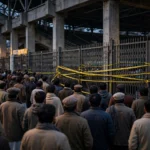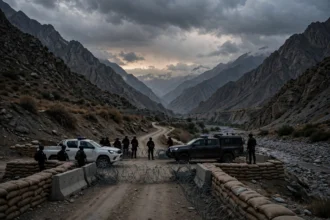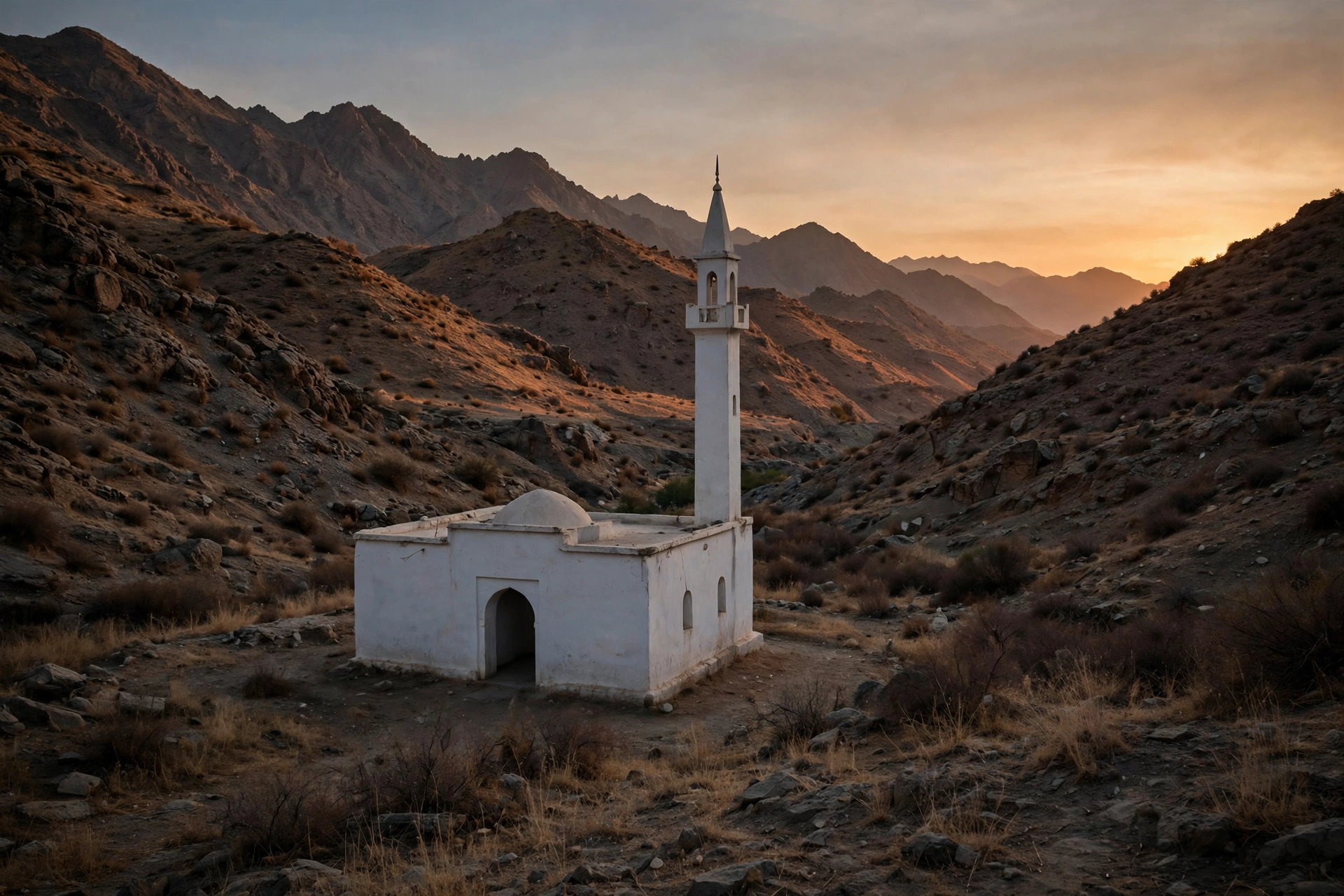

Security forces cleared two militant hideouts set up inside mosques in Muzak village, on the southern outskirts of Mir Ali in North Waziristan, during an intelligence-based operation on Sunday, 8 November, the military’s media wing said on Monday. Troops recovered a large quantity of improvised explosive devices, explosives, weapons and ammunition. President Asif Ali Zardari praised the operation the same day, and Khyber Pakhtunkhwa Governor Faisal Karim Kundi condemned the misuse of mosques and promised more operations across the province. But the official account leaves two basic questions unanswered: no one was reported killed or arrested in the operation, and nothing was said about what happens to the two mosques now.
What the operation found
According to the Inter-Services Public Relations, the operation targeted hideouts of the group the military calls Fitna al-Khawarij, which it describes as Indian-backed. The statement said the militants had turned the two mosques into stores for explosives and centres for violent activity, and that torture cells were being run from the sites. It called the use of mosques for such purposes a blatant desecration of Islam and said the group had nothing to do with the basic teachings of the religion. The military said a sanitisation operation was continuing to find any remaining hideouts, and that the counterterrorism campaign under the Azm-e-Istehkam framework would continue at full pace.
Every published account of the operation traces back to the same ISPR statement. Dawn, Daily Times, Pakistan Observer and Abb Takk all reported the two hideouts, the recovered material and the continuing clearance, each citing the military’s media wing. No outlet has independently verified the operation. The statement is the only source for the most serious claims in it, including the torture cells and the foreign backing. They are ISPR’s allegations until something independent supports them.
What the statement does not say
The first gap is the people. The statement reports no militants killed, no one arrested and no one named. The operation’s result is infrastructure: two sites cleared and material seized. That is a sharp contrast with other recent operations in the same area, where the military gave casualty figures. On 30 September, state media reported three militants killed in an intelligence-based operation in Mir Ali. That raises a plain question: did the people using the sites leave before the troops arrived, or were the sites already empty?
The second gap is the mosques themselves. The statement does not say whether the two mosques were functioning places of worship or abandoned buildings, who prayed there, or what condition they are in after the operation. It does not say whether they will be sealed, repaired, or handed back for prayer. For the villagers of Muzak, that is the practical question: a mosque that held explosives cannot simply reopen, and one closed indefinitely leaves a village without its place of worship.
A pattern the governor himself named
Governor Kundi, reacting to the operation, said he was deeply disturbed after watching footage that showed the mosques being used to store weapons. He added that complaints about the misuse of mosques had also surfaced in the former tribal districts in the past, and that society could never accept such practices. That line looks beyond this single operation: it suggests the Mir Ali case is not the first of its kind. Mir Ali keeps appearing in security reporting: the district saw North Waziristan’s violent week in October, when two attacks hit the district within 72 hours. The wider province remains violent: two police officers guarding polio workers were shot dead in Mohmand on 3 November. Paired-site operations have happened elsewhere too, including a two-site security operation in Gwadar in October.
The reactions
President Zardari, in a statement from the Presidency, commended the professional competence of the security forces and said using mosques to store explosives and as hubs for violence was a blatant violation of the fundamental teachings of Islam. He said elements operating with Afghan Taliban support had no connection to Islam. Governor Kundi congratulated the agencies, said mosques teach peace, and reaffirmed that operations would be intensified to restore peace in Khyber Pakhtunkhwa. He said the provincial government and people stood with the security forces.
Three things to watch next
First, the sanitisation operation: whether it produces further hideouts, arrests or names. Second, the two mosques: whether any authority says what will happen to them, and when the people of Muzak can pray in them again. Third, the identification question: whether anyone is ever named as having run the sites, or whether the case will rest entirely on the material recovered from them. Until those answers come, the record stands as this: two mosque hideouts cleared, explosives seized, and no one held to account for them yet.