
Defence Minister Khawaja Asif said on Sunday that Pakistan should consider creating 12 provinces, becoming the first senior minister to publicly back the number since Planning Minister Ahsan Iqbal denied that any draft amendment was being prepared. Speaking to Geo News in Sialkot, Asif said the proposal had been under discussion for two months and that new units should be drawn on administrative grounds, not language, ethnicity or political interests. His words reopen a debate PakMirror mapped yesterday, when the 28th Amendment was shown to face seven gates before it can become law.
Two ministers, two lines
Ahsan Iqbal proposed 12 to 15 new provinces on 4 September and asked the prime minister to set up a committee to review the administrative structure. On 30 October he denied that a draft amendment was being prepared. Nine days later, Asif said: “If there is a proposal for 12 provinces, then make it 12.” The two positions cannot both describe the same government plan. Either a proposal exists and has been discussed for two months, as Asif says, or nothing is being drafted, as Iqbal said. No draft, bill, map or committee terms have been published, so two cabinet ministers now stand on the record saying opposite things about the same proposal. PakMirror reported yesterday that the 28th Amendment faces seven gates, and the first of those gates is a published proposal, which Asif’s statement does not clear. It only proves the debate is alive inside the cabinet.
The map: four, three, three, two
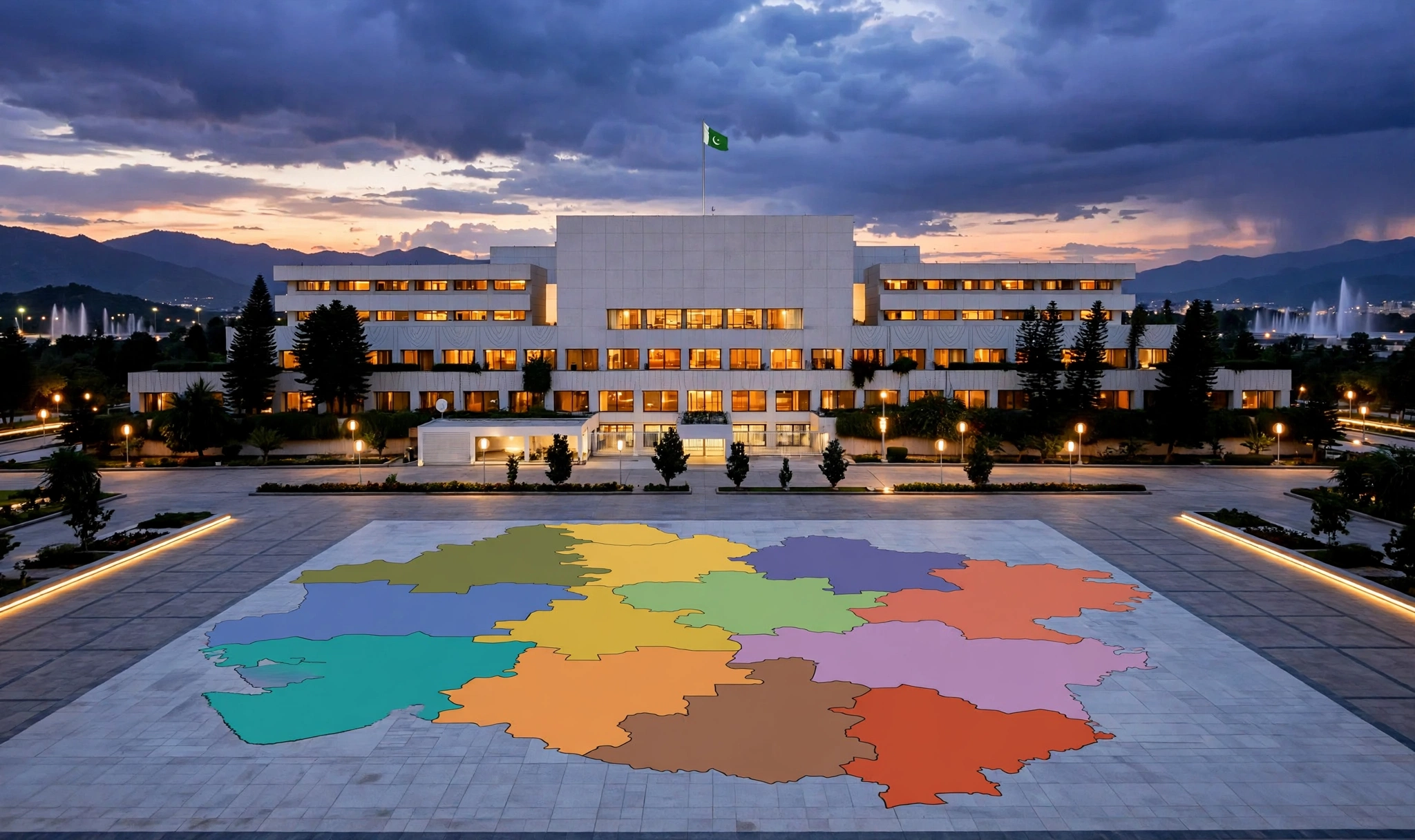
The News reported the proposed map behind the 12 figure. Punjab would be split into four provinces, Khyber Pakhtunkhwa into three, Balochistan into three and Sindh into two. Punjab alone would gain three new provinces. Sources told The News the amendment could be considered in the first half of 2027, with preparatory steps in the first quarter, and a nationwide referendum envisaged before it. But no final decision has been taken on provincial boundaries, administrative structures or the constitutional process.
The scale of the change is visible in the Senate. Each province elects 23 senators, so 12 provinces would return 276 senators, plus four for Islamabad, a house of 280 against 96 today. That arithmetic was part of PakMirror’s seven-gate audit yesterday, and no minister has yet addressed it as a cost. Asif also floated a second shape in the same debate, saying Pakistan could use its existing 36 divisions as the basis for a new arrangement. Twelve provinces and 36 divisions are very different maps, and both were offered in one weekend, so even the proposal’s supporters have not settled on one shape.
The attack on the PPP
Asif also took the argument to the Pakistan Peoples Party in a post on X, accusing it of a double standard. He said the PPP backs a Saraiki province in Punjab but raises the Sindhudesh issue when broader restructuring is discussed. He said there was “something else” behind the position and that he would explain it “at some point”, adding that “we are Pakistanis, first and last”. He also called for genuine devolution under the 18th Amendment, saying the principle was established in the constitution but not respected in practice, and that devolution was inevitable.
The money argument
Asif’s core case was about money and where power sits. He said funds transferred from the Centre remain at the mercy of provincial governments, although their real destination is local government institutions, which themselves remain dependent on the provinces. Power, he argued, should not stay concentrated in Lahore, Karachi, Quetta and Peshawar, and the country’s growing population makes smaller units necessary for public services to reach people. He recalled the One Unit merger of the provinces and its later reversal, and cited Afghanistan, saying its provinces had risen from eight or ten to more than 30. Local government is the tier Asif says the money is meant for, and Punjab’s local polls date for February 2027 will be the first test of whether that tier gets real power.
What happens next: three tests
First, will preparatory steps actually begin in the first quarter of 2027, as the sources quoted by The News suggest, or will the proposal stay at the talking stage for another year? Second, will the PPP answer Asif on the record, and will the government publish a draft map, a committee, or a referendum question? Third, which shape wins, 12 provinces or 36 divisions, and who pays the Senate price of 280 seats? Until one of those questions is answered with a document rather than an interview, the idea remains what it was yesterday, a proposal with a champion, a contradiction, and no paper. More national news from Pakistan.