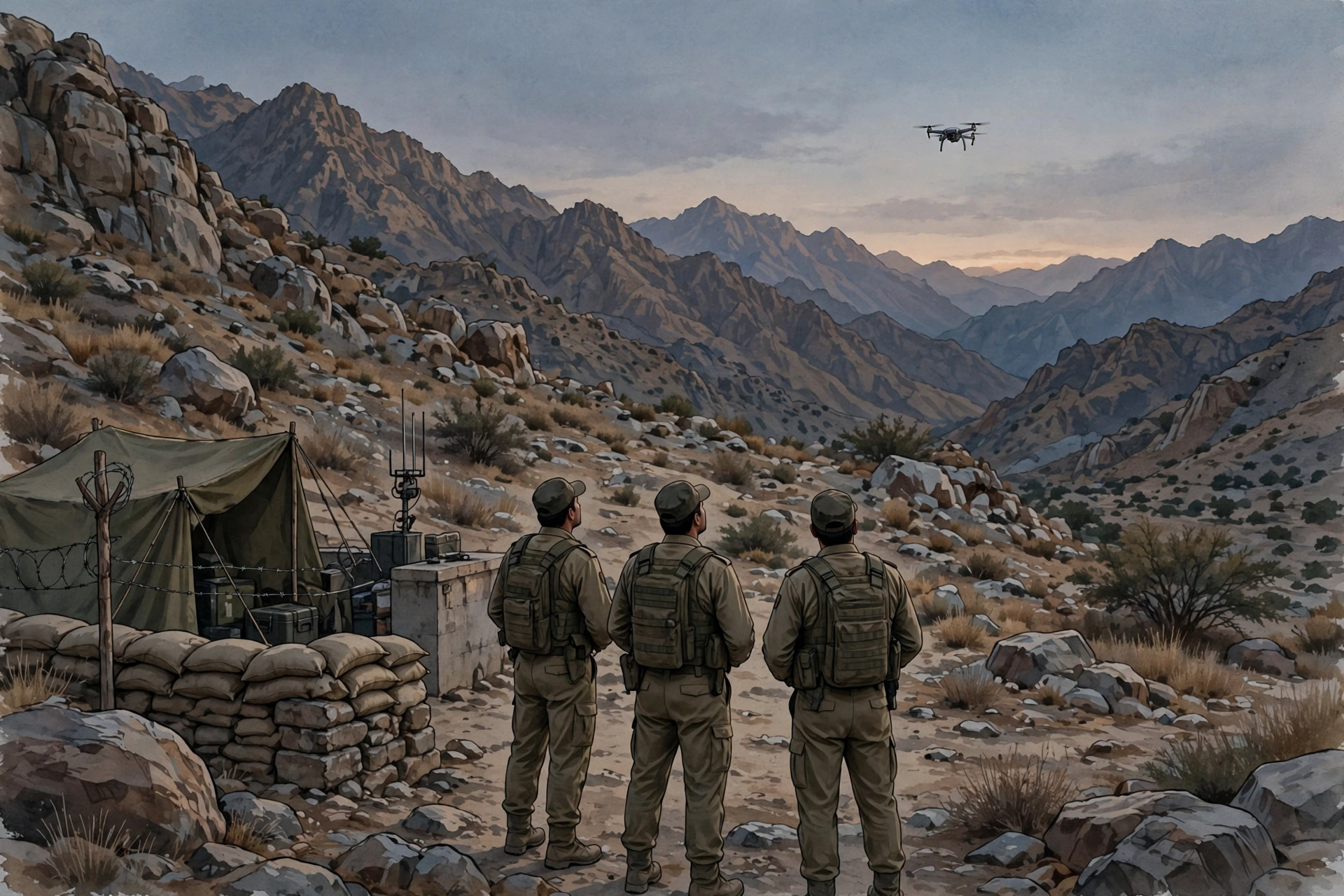

Security forces in Balochistan stopped five drones aimed at a check-post in Kharan district on October 30, according to security sources quoted by The News, Islamabad Post and Abb Takk. The official version is short and clean: five low-grade drones, one target, all destroyed before they reached it, no loss of life and no property damage. A second set of reports, drawn from local sources, tells a wider and messier story about the same district on the same day. That gap decides whether Kharan was a single foiled attack or the first visible day of a drone campaign.
What the official version says
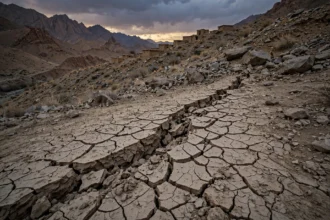
In the official-source version, militants linked by security sources to Fitna al-Hindustan, the label Pakistan uses for Balochistan-based groups it calls Indian proxies, tried to strike a check-post in the Albat area of Kharan. Personnel responded promptly and destroyed all five drones before they could hit the target, the reports say. Geo News published a collage of stills from a video showing drone wreckage in Kharan District, which The News captioned as dated October 29. The same reports add a second precedent: last month, Pakistan’s air defence system intercepted eight drones that entered its airspace from Afghanistan, with the Pakistan Air Force system along the border described as fully operational around the clock.
What the local-source version adds
Reports based on local sources, carried by Zrumbesh English and summarised by NationPress and ReportWire, describe two Kharan sites rather than one. A main camp in the Patkin area was hit by five drone strikes followed by mortar fire, they say, while a separate camp in the Albat area was targeted by a drone whose explosive payload did not detonate. Some of those reports mention casualties and material losses, but none gives a confirmed figure, and ReportWire notes that deaths, injuries and property damage were not confirmed. No organisation had formally claimed responsibility for the October 30 attacks at the time of reporting, although the reports note the Baloch Liberation Army’s past drone claims and its QAHR aerial wing, announced earlier in 2026 as part of the second phase of Operation Herof.
Where the two versions agree, and where they split
Both versions agree on the place, the weapon and the scale: Kharan district, drones, and five in the headline count. They agree that security personnel were the target and that a drone threat was real enough to report on the same day. They split on three points. First, the number of sites: one check-post in the official version, two camps in the local-source version. Second, the outcome: clean interception with no damage in one, strikes plus mortar fire with unconfirmed losses in the other. Third, timing: written reports are dated October 30, while the Geo News wreckage collage is captioned October 29, which leaves the exact incident time open. Until an official statement names the sites and the time, readers should treat the Albat interception as confirmed by multiple mainstream outlets and the Patkin mortar account as reported but unconfirmed.
Why Kharan fits a wider pattern, not a one-off
Kharan does not sit in isolation. The Pakistan Institute for Conflict and Security Studies counted 131 terrorist attacks in Balochistan in September 2026, which was 58.2 percent of the national total of 225, alongside 35 counterterrorism operations and 171 terrorist fatalities, according to Khyber Chronicles. Earlier in October, twelve terrorists were killed in 72 hours of Balochistan operations across five districts, and a Gwadar two-site security operation left three attackers dead. Three days before the Kharan reports, a camp at Tarki Dam in Surab was targeted in a similar drone attack, according to local-source reports. Border pressure was also visible in the cross border infiltration attempt foiled in Kurram. Put together, the sequence is a shift in method rather than a single incident: ground attacks and clearance operations continue, while small drones are now being tested against fixed posts in at least two districts.
Three tests that will settle it
First, an official statement that names each site, gives a time, and confirms or denies the Patkin mortar reports and any casualty claim. Second, the next monthly PICSS count: if Balochistan’s share stays near September’s 58.2 percent and drone incidents appear in it as a separate pattern, Kharan will look like a trend rather than an exception. Third, geography: if the next drone report comes from the Kharan and Surab corridor again, the threat is concentrated; if it appears in a new district, the defence problem is wider. For residents near a check-post, the practical question is narrower: can the post detect a small, low-flying drone at night before it reaches its target? Kharan’s official answer is yes. The local-source reports are the reason that answer still needs proof. Follow national news from Pakistan for updates.