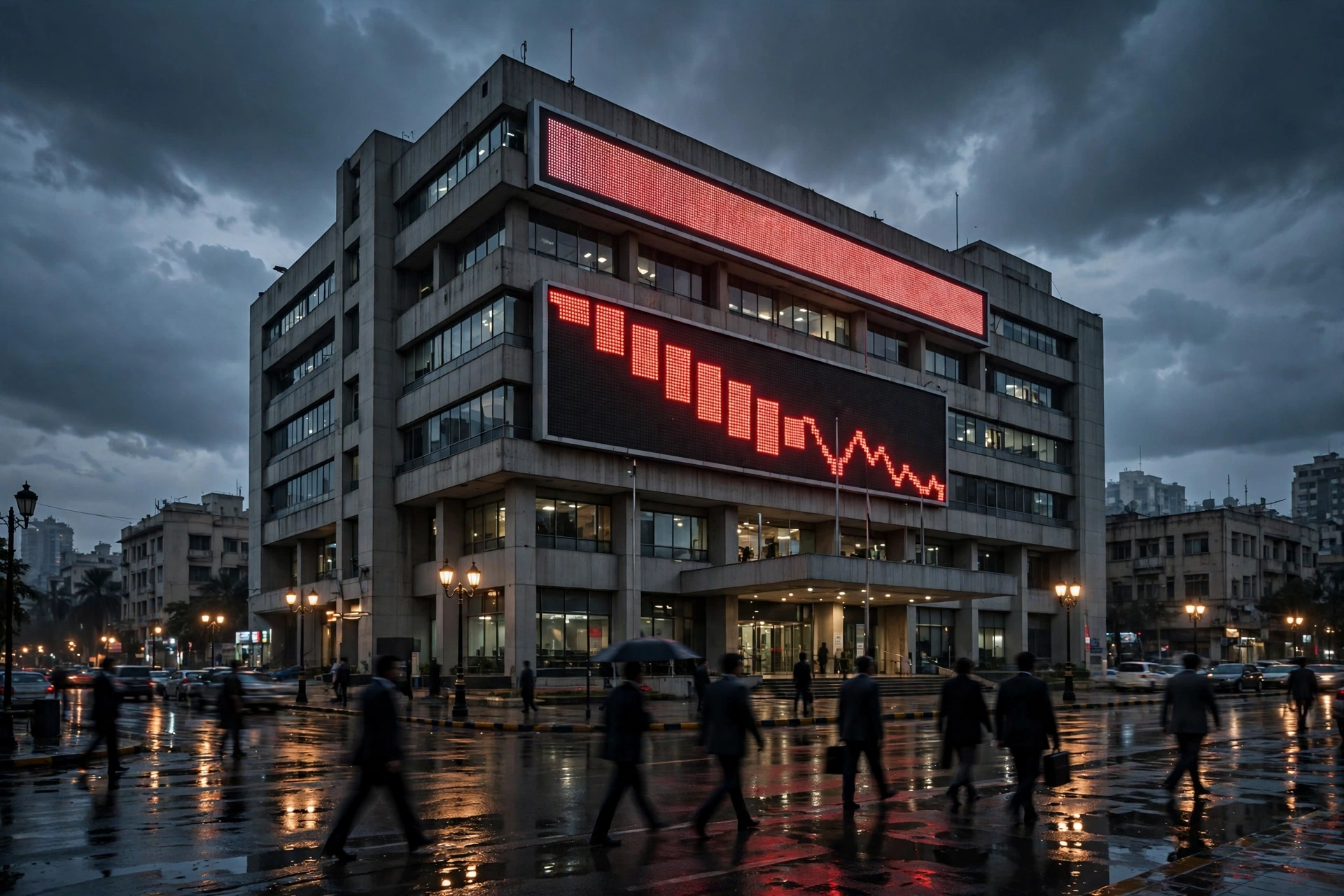

Pakistan’s stock market opened the week under heavy selling pressure on Monday, October 12, as the benchmark KSE-100 index shed 1,964.86 points, or 1.18 percent, to close at 165,124.41. Investors reduced their exposure to equities after the federal government imposed emergency rule in Khyber Pakhtunkhwa on Sunday, adding domestic political uncertainty to already elevated global oil prices and escalating geopolitical tensions in the region.
How the Session Unfolded
The index started the day with a brief rally, touching an intraday high of 166,988.32 in early trade. But the gains faded quickly as selling took hold across the board. A short recovery around midday failed to sustain, and the decline accelerated after 1pm, with the index sliding toward its intraday low as the session closed. With market participation subdued, there was little counter-buying to absorb the sell orders.
Why Investors Hit the Sell Button
The immediate trigger was political. President Asif Ali Zardari approved the federal cabinet’s recommendation on Sunday to impose an emergency in KP and suspend the provincial government, a move analysts said deepened domestic political uncertainty. The market had already been in a cautious mood amid geopolitical worries, including persistent US-Iran tensions, Houthi attacks on Saudi airports and energy infrastructure, and threats to shipping through the Strait of Hormuz, all of which have kept crude oil prices elevated. Saad Hanif, head of research at Ismail Iqbal Securities, told Business Recorder that the emergency decision had added to an already cautious mood and that subdued participation was putting pressure on the index.
Selling Spread Across Sectors
The decline was broad based, with selling seen in automobile assemblers, cement, commercial banks, oil and gas exploration companies, oil marketing companies and power generation. Index heavyweights carried much of the damage: HUBCO, Mari Petroleum, OGDC, POL, PSO, MCB, Meezan Bank, NBP and UBL all traded in the red, pulling the benchmark lower through the session.
Monday Followed a Bruising Week
The fall extended a difficult stretch for the bourse. Last week the KSE-100 fell 1,066 points amid geopolitical tensions, closing Friday at 167,089.28, as US-Iran tensions and the expanding Houthi strikes on Saudi civilian and energy infrastructure weighed on sentiment. The week’s optimism over the IMF staff-level agreement worth $1.2 billion, which is subject to the IMF Executive Board’s approval, had not been enough to lift the market. Elevated crude prices are also feeding through to domestic costs, with petroleum levies topping Rs1.3 trillion and petrol prices near Rs398 per litre keeping household budgets under pressure.
What Traders Are Watching Next
For now the market’s direction rests on two fronts. At home, investors will watch whether the political situation in KP stabilises and how the province is administered under the emergency. Abroad, the trajectory of Middle East tensions and crude oil prices will matter most, since any de-escalation could moderate oil prices and open room for recovery, while further escalation could keep the index under pressure. Traders are also keeping an eye on the State Bank’s monetary policy decision later this month. For more coverage, see PakMirror’s business and economy news in Pakistan.