
Deputy Prime Minister and Foreign Minister Ishaq Dar warned on Monday that the Afghan Taliban regime would eventually face consequences if it continued to let terrorists operate from its territory against Pakistan. Dar delivered the warning while addressing the ISSI International Conference on “Pakistan’s evolving terrorism landscape” in Islamabad, telling the gathering that terrorism remained the biggest challenge for the region and the world.
“If the Afghan government does not take action against terrorists, one day it will have to face the consequences itself,” Dar said. He stated that Pakistan had one clear demand from Kabul: that Afghan soil must not be allowed to be used for terrorism against neighbouring countries.
Warning at the ISSI conference
Addressing the conference in Islamabad on October 12, Dar said the presence of the banned Tehreek-e-Taliban Pakistan (TTP) and other militant groups on Afghan soil posed a direct threat to regional peace. He urged the Afghan Taliban authorities to immediately stop providing terrorists with weapons and other forms of assistance, and warned that safe havens used to launch attacks against Pakistan could eventually endanger other countries too.
According to Dar, Pakistan has repeatedly urged the Afghan authorities not to let their territory be used for terrorism against neighbouring countries. He said Pakistan had held talks with Afghan officials and undertaken visits to Afghanistan on counterterrorism, including a trilateral meeting with China and Afghanistan in Kabul last August. However, the Taliban regime had failed to fulfil its commitments on terrorism, he said.
Record surge in militant attacks
Dar’s warning comes as Pakistan records its highest monthly number of militant attacks in 12 years. According to data compiled by the Pakistan Institute for Conflict and Security Studies (PICSS), an Islamabad-based independent think tank, 225 militant attacks were recorded across the country in September 2026, compared with 199 in August, a 13 percent increase. Attacks rose for the third consecutive month.
Both sources confirm Pakistan has witnessed a sharp rise in cross-border terrorist incidents, particularly in Khyber Pakhtunkhwa and Balochistan, since the Afghan Taliban returned to power in 2021. On the ground, the fallout continued over the weekend: security forces foiled a cross-border infiltration attempt in Kurram on October 11, killing 12 militants while losing a soldier of their own.
Pakistan’s sacrifices and daily operations
Dar told the conference that Pakistan had sacrificed more than 90,000 lives in the war against terrorism, calling on the international community to acknowledge the country’s losses. He pointed to recent tragedies, including the Jaffar Express hijacking and the abduction and killing of workers in Balochistan, as evidence of the challenge Pakistan faces.
He said operations against terrorists were being conducted daily on the instructions of Chief of Defence Forces and Chief of Army Staff Field Marshal Syed Asim Munir. Dar also sought international cooperation to strengthen the capacity of Pakistan’s law enforcement agencies, saying that recognition of the country’s sacrifices alone was not sufficient.
Separately, Dar defended the federal government’s emergency proclamation in Khyber Pakhtunkhwa issued a day earlier, saying it had not been an easy decision and that protests and sit-ins had damaged the national economy.
Border closures and humanitarian passage
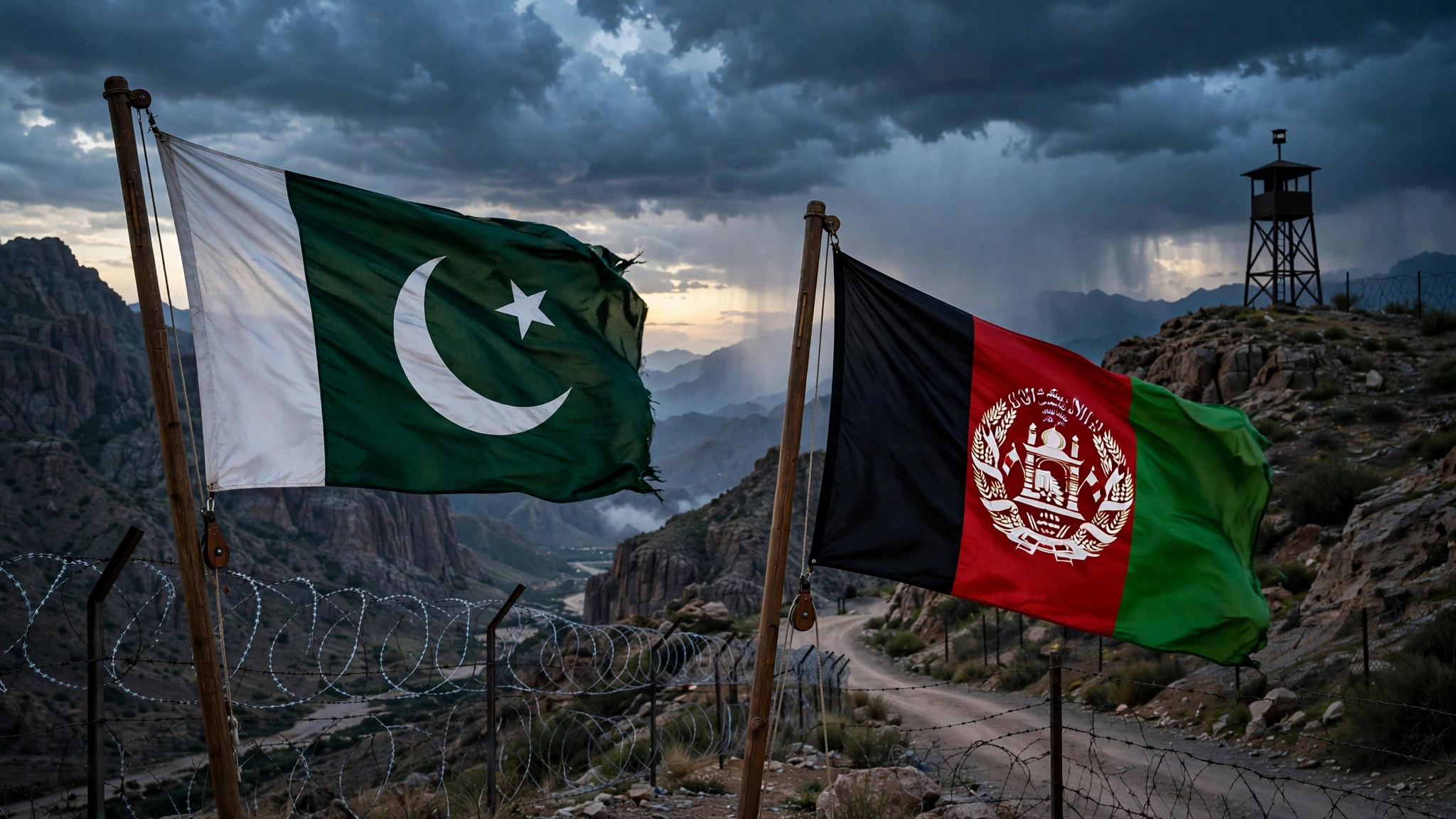
Dar said militants crossed into Pakistan through mountainous areas to carry out attacks before returning to safe havens across the border, and that the serious increase in attacks had forced the closure of the Pakistan-Afghanistan border. He added that Pakistan later allowed 1,000 containers of humanitarian supplies to pass into Afghanistan following contact from the United Nations.
Pakistan has been expanding its security partnerships in response to the regional threat, including the recent Pakistan-Turkiye anti-terror cooperation pact, as counterterrorism cooperation becomes central to its foreign policy.
Dar alleges Indian involvement
Dar also alleged that India was supporting terrorism inside Pakistan, referring to Indian national Kulbhushan Jadhav, whom Pakistan says was a serving Indian naval officer involved in espionage and sabotage. He said the terrorist groups targeting Pakistan received external support, and that security forces and law enforcement agencies had confronted terrorism with determination even as the threat damaged the country’s image.
Describing the banned TTP as a serious threat to Pakistan’s security, Dar repeated that Pakistan had only one demand from Afghanistan: that it must not allow its territory to be used for terrorism. For more developments, see PakMirror’s national news coverage.