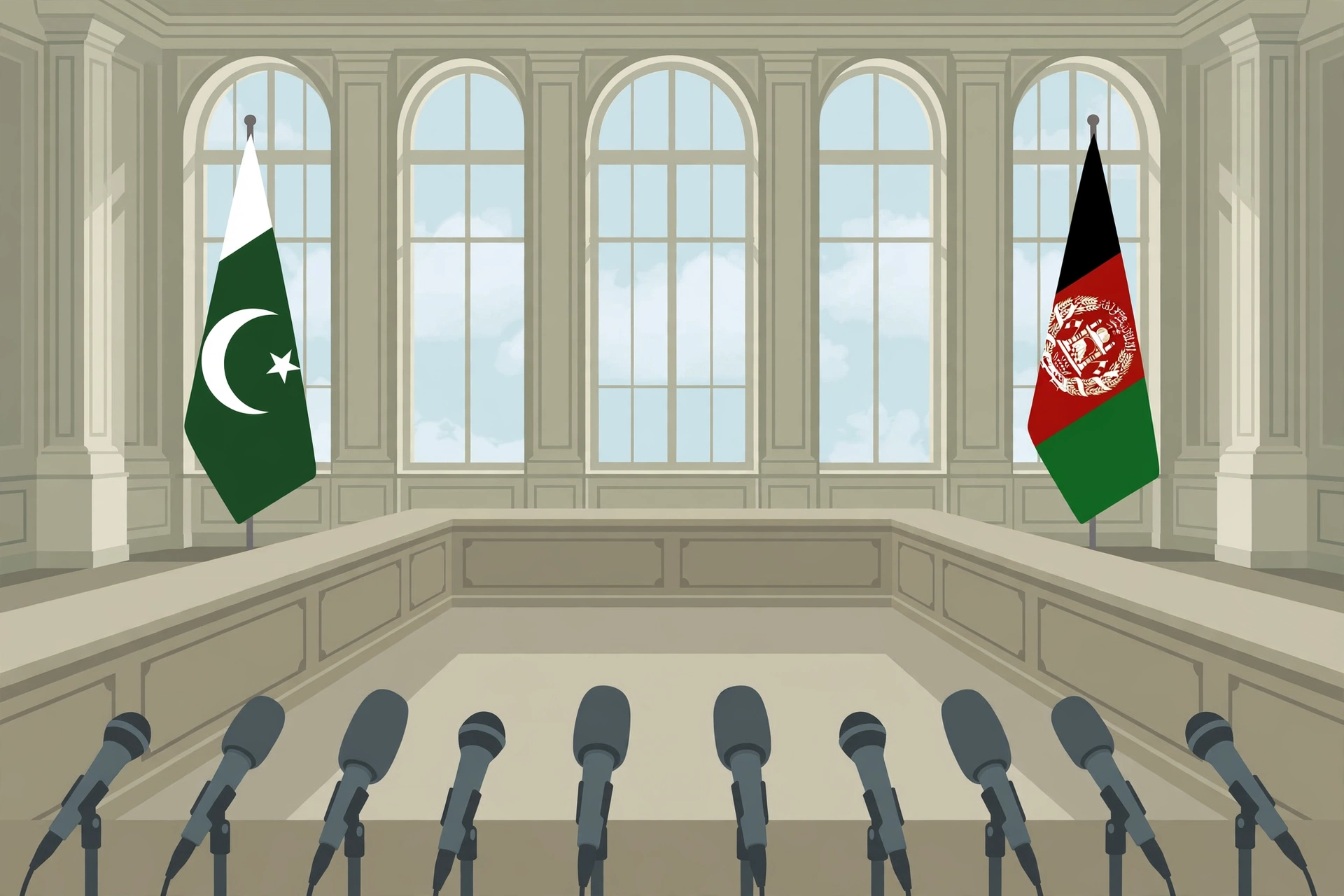

At the Foreign Office’s weekly media briefing on Friday, spokesperson Sajjad Haider Khan ruled out unconditional talks with Afghanistan, saying Pakistan had only one demand: a verifiable mechanism to ensure a complete cessation of terrorist activity emanating from Afghan soil against Pakistan. In the same briefing, he said Pakistan was not aware of any formal Russian mediation initiative under discussion, and he warned India of a stronger response after remarks by Indian Defence Minister Rajnath Singh earlier in the week.
What the Foreign Office actually said
Khan said talks with Kabul would not be unconditional. Pakistan’s single demand, he said, was a verifiable mechanism that would guarantee an end to terrorism directed at Pakistan from Afghan territory. He denied knowledge of a formal Russian mediation effort, even as Moscow renewed its readiness to mediate between the two sides. Separately, he rejected the Indian defence minister’s remarks and warned against any misadventure, saying any response from Pakistan would be stronger than before.
Why verification is the sticking point
The demand is not for another promise. Pakistan’s envoy to Afghanistan, Mohammad Sadiq, made the same point at the eighth Moscow Format meeting on October 5, calling for “concrete and verifiable actions” against terrorist networks. The emphasis on verifiability reflects a trust deficit: Pakistan’s position is that Kabul has not acted against groups operating from its soil, and every failed round has pushed Islamabad to insist that the next agreement must come with proof, not just words. That stance follows Ishaq Dar’s warning to the Afghan Taliban over cross-border terrorism earlier this month, when Pakistan publicly laid down the consequences of inaction.
What has already been tried
Pakistan and Afghanistan have cycled through several verification arrangements in the past year. In October 2025, talks in Istanbul produced a ceasefire that was signed in Doha on October 19, 2025, with Turkish and Qatari involvement, a framework that was widely described as fragile from the start. Saudi Arabia hosted discussion rounds, and China brought the sides together in Urumqi in April. Then the eighth Moscow Format meeting on October 5 ended without a joint communique: Russia’s special envoy Zamir Kabulov confirmed that the Afghan delegation rejected language on terrorist networks that it had accepted the previous year, while Pakistan’s Sadiq demanded concrete and verifiable action. Each mechanism dissolved when the commitments could not be checked.
What could work next
Nothing new is on the table yet, but the ingredients are visible. Russia has renewed its readiness to mediate, though the Foreign Office says no formal initiative is under discussion. Türkiye and Qatar, the brokers of the 2025 truce, are the natural candidates to act as guarantors again. What a verifiable mechanism would actually need is straightforward in theory: named commitments against specific groups, a monitoring arrangement both sides accept, agreed consequences for violations, and regular review meetings. What to watch: whether any side tables a draft framework with those elements before the next round of contact, and how Syed Haider Shah’s first 75 days in New York will shape Pakistan’s diplomacy on the terrorism file at the UN. Until such a mechanism exists, Pakistan’s one condition stands. More international news from Pakistan follows the developing diplomatic track.