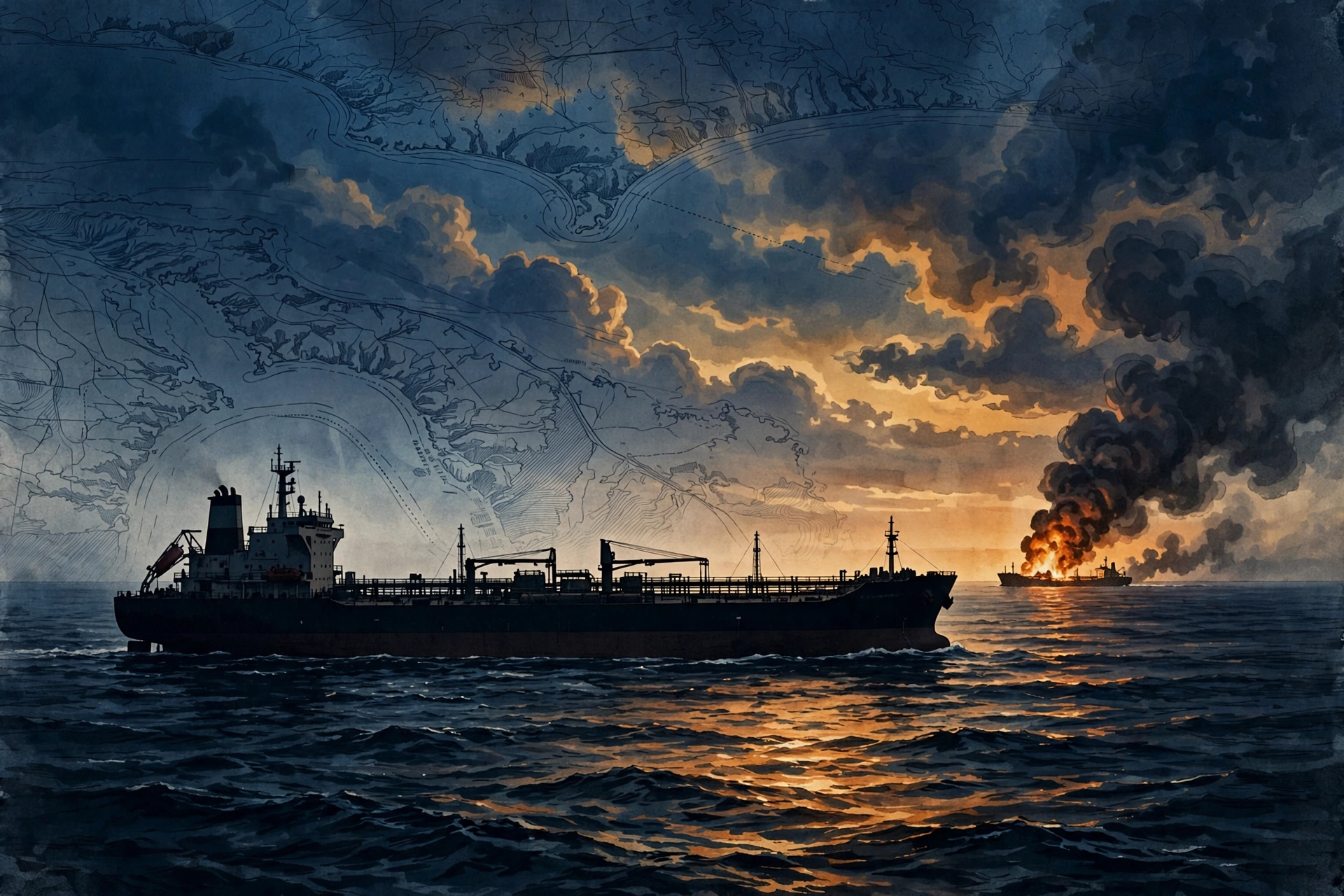

Three oil tankers have struck naval mines in the Strait of Hormuz in about 48 hours, according to Iran’s Islamic Revolutionary Guard Corps, marking a sharp escalation in the standoff over the waterway that carries about a fifth of the world’s oil. The latest incident, announced on Monday October 19, saw a tanker catch fire after an explosion in its engine room. With petrol in Pakistan standing at Rs386.30 a litre under a three-day price notification and the next revision due after October 19, the question for Pakistani motorists is direct: how fast will this reach the pump?
Three mine strikes in two days
The IRGC said the tanker struck a naval mine south of the Strait of Hormuz while trying to exit the waterway on what Tehran calls an unauthorized southern route. Iranian state media reported that the vessel had switched off its positioning and navigation systems from the start of its voyage. The blast hit the engine room and set it on fire. The Guards did not name the tanker or give casualty details.
This was not an isolated incident. On Saturday, the IRGC Navy said a supertanker carrying more than two million barrels of crude oil struck a naval mine and caught fire while attempting to cross the strait through the same unauthorized route. A day earlier, the Iranian force reported that another tanker had hit a mine, triggering an explosion and fire. All three show the same pattern: vessels moving through the strait with their tracking systems switched off.
The pattern Iran is enforcing
Earlier this week, the IRGC’s naval commander, Admiral Ali Ozmaei, warned that any merchant vessel switching off its tracking and navigation systems while navigating the chokepoint would be classified as hostile, and said vessels operating with their identification systems off would face severe and decisive measures.
Iran asserted control over the strait after open conflict erupted between Iran, the United States and Israel in late February 2026, and has since demanded that all ships seek its authorization. Washington responded with a naval counter-blockade on Iranian oil exports. A June memorandum on freedom of navigation stalled over security disagreements.
Why Pakistan’s pump is exposed
Petrol is currently priced at Rs386.30 per litre and high-speed diesel at Rs396.96, under a Petroleum Division notification effective from October 17 to October 19. That followed a Rs3.93 cut on Friday and an Rs8.73 fall over the week before, per Business Recorder’s weekly review.
Yet Brent crude climbed back above $106 a barrel, up from about $102 the week before. The explanation lies in how Pakistan’s daily fuel pricing mechanism works: OGRA uses a seven-working-day rolling average of Platts Arab Gulf assessments for refined products, not the Brent futures price in the headlines. Cargo premiums, incidentals and customs duty are factored in, and the Petroleum Division attributed the latest revision to Platts rates, premiums and incidentals.
That is where the Hormuz escalation bites. If mine strikes push up premiums and shipping costs on Gulf cargoes, Pakistan’s formula will pick that up within days. The pressure is not limited to petrol either: the Iran border closure that has already squeezed LPG supplies shows the same regional tensions hitting fuel supplies on more than one front.
What happens next
The three-day notification expires after October 19, so the next revision is due shortly. Under the daily mechanism, OGRA can publish new prices without prior federal approval, and Friday prices hold through the weekend. Watch the Platts assessments and cargo premiums: sustained disruption in the strait would reach Pakistani pumps within the week.
Diplomacy is the other variable. Iran’s foreign minister said on October 18 that a seven-day proposal is on the table under which the strait could reopen on the sixth day, if Washington meets its terms. As long as the waterway stays constricted, the risk premium stays in the oil price, and at the USD to PKR exchange rate today, any dollar-denominated rise in import costs lands even heavier on the rupee price at the pump.
What to watch this week
Three things will decide whether the relief continues or reverses: the next notification after October 19, whether the IRGC’s warnings escalate or a diplomatic opening emerges around the seven-day proposal, and the Platts assessments over the next seven working days. For now, motorists pay Rs386.30 a litre, but the Strait of Hormuz is deciding how long that lasts. Read more business and economy news from Pakistan for continuing coverage.