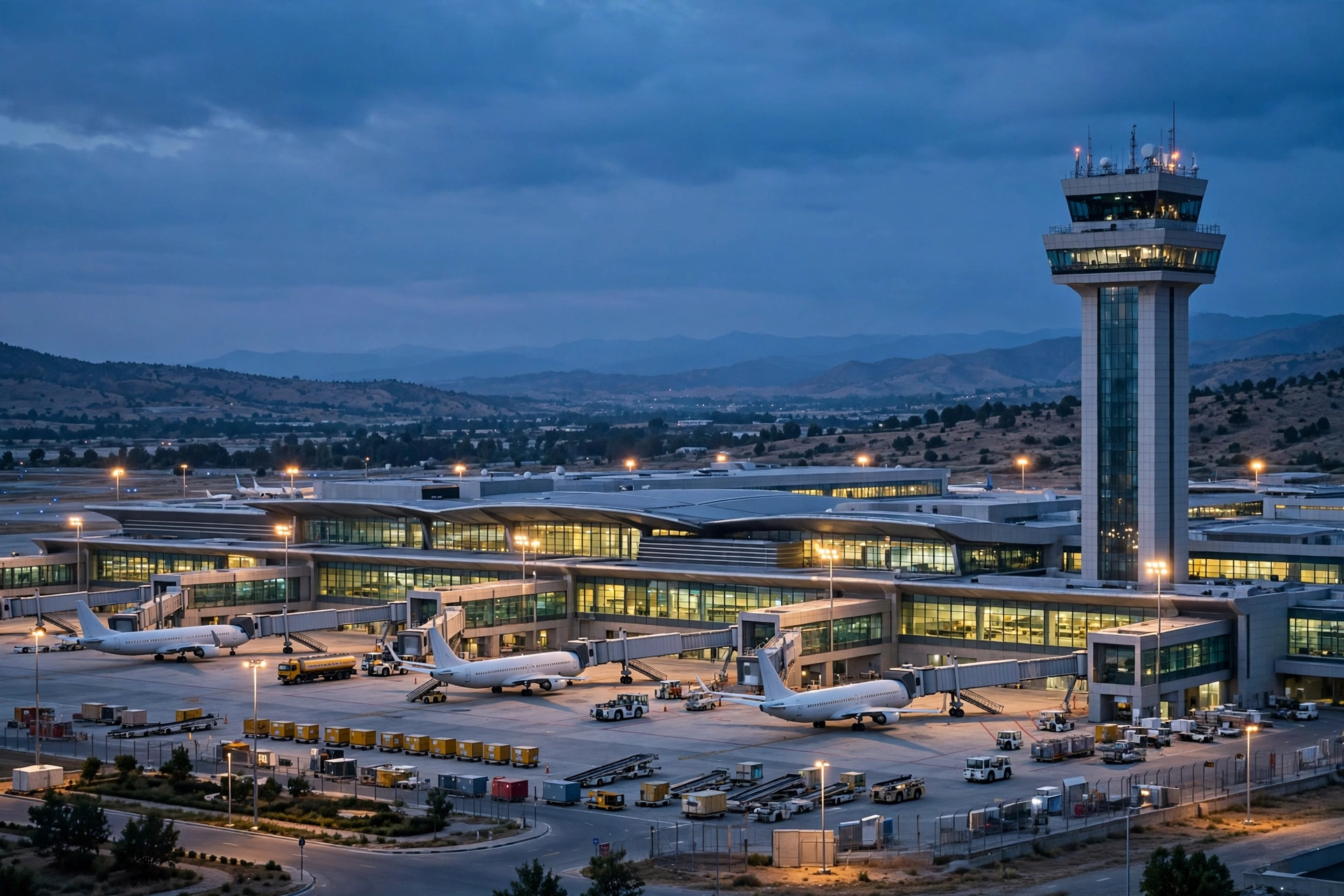

Prime Minister Shehbaz Sharif approved the expansion of Karachi and Lahore airports on October 29, but the most important part of the announcement is what it left out. No total cost, no added passenger capacity and no completion date for either airport was published with the approval. What was approved is a direction, under each airport’s master plan, to expand and meet international standards. What was not published is any number against which that direction can later be judged.
The decision was taken at an Islamabad meeting, according to the Prime Minister’s Office statement. The approval covers Jinnah International Airport in Karachi and Allama Iqbal International Airport in Lahore. The prime minister said passenger convenience must remain the top priority, construction quality must not be compromised, and expansion work must undergo independent third party validation.
What was actually approved
Three things are clear. First, both expansions will proceed under their respective master plans, which set out the proposed work and schedules. Second, internationally recognised organisations will be brought in to lift services to global standards. Third, a survey by an international firm on travel facilities at major airports was reviewed, although its findings were not published.
Progress already made was also recorded. Officials said runway expansion at Jinnah International Airport in Karachi had been completed. The Civil Aviation Authority has reactivated 14 airports for domestic flights over the past year, and work is progressing on automated border systems, including e-gates, at major airports. The approval is therefore the next stage, not the start of airport work.
The February plan, and what it does not prove
Karachi’s recent history shows why the missing numbers matter. In February 2026, the Pakistan Airports Authority announced a Rs100 billion expansion plan for Karachi’s Jinnah International Airport, including a new terminal, a modern cargo village and other facilities. The reconstructed Karachi runway, upgraded to Code 4F for the Airbus A380, was also inaugurated that month.
That February plan is not the same thing as the October approval, and the two should not be merged into one figure. The October statement gave no cost for either expansion, and it did not say whether the February Karachi figure still stands, has changed, or covers only part of the work now approved. Until the government publishes an updated cost and scope for each airport separately, any single price tag attached to the October decision would be guesswork.
Karachi as a cargo hub: the idea is clear, the target is not
The most concrete new direction concerns cargo, not passengers. The prime minister directed authorities to develop Karachi into a major air cargo hub, with an Air Cargo Village under development. No completion date, investment figure or cargo handling target for the village was announced.
That gap matters because a cargo hub is judged on throughput, not on buildings. The test will be whether the government later publishes cargo volumes, clearance times and the operators involved. Until then, the cargo village is a stated goal, not a measured result. As the trade halt costs at the Pak-Afghan border show, the flow of goods decides whether a route works.
Three tests that will show whether this approval delivers
Because the main numbers are blank, this article sets out three tests for any future update. The first is dates: will the government publish milestones and completion dates for Lahore and Karachi separately, rather than a single promise to finish on time? The second is validation: will the third party validator be named, and will its findings be published? The third is capacity: will officials state how many more passengers each airport will handle, and how much cargo the Karachi village is built to move in a year?
Those three tests are the original contribution of this article. Straight reports of the meeting record the approval, the quality instruction and the cargo goal. None assembles the missing numbers into a checklist, and none tests the approval against the February Karachi plan and the completed runway. Meeting all three would give passengers something real to hold the government to.
What passengers should watch next
Two other items deserve attention. The Hyderabad aviation institution is being upgraded into an international standard aviation university, with work expected to begin by February 2028. Automated border systems follow self boarding kiosks installed at Lahore, Karachi and Islamabad airports in November 2025.
Karachi’s runway is done, 14 domestic airports are back in service, and Lahore and Karachi have approval to expand. The cost, the extra capacity and the finish dates are not yet public. The next announcement will show whether this is a programme with numbers or a promise without them. Follow the next step in our national news from Pakistan, alongside PIA’s Boeing 787 Dreamliner deal with Norse Atlantic and Airport Security Force inspector recruitment.