
NEPRA has reserved its decision on the September fuel adjustment, so the Rs2.56 per unit figure in the headlines is not yet your November bill. The Central Power Purchasing Agency asked for Rs2.5624 per unit for September consumption, billed in November, covering about Rs32.7 billion. But that figure replaces an existing adjustment, so the extra amount would be about Rs1.45 per unit, not Rs2.56. At the same October 29 hearing, the Power Division and industry raised a deeper question: petroleum levies on diesel and furnace oil used for generation add about Rs10 per unit to power costs. No November rate is final yet.
The headline number is not the bill number
The fuel charges adjustment, or FCA, is a gap payment: when actual fuel costs exceed NEPRA’s reference cost in the tariff, the difference is recovered two months later. For September, the reference was Rs7.4596 per unit and the actual cost delivered to distribution companies was Rs10.0220 per unit. The gap is Rs2.5624 per unit, requested by the Central Power Purchasing Agency. It would also apply to K-Electric consumers under the uniform adjustment policy.
Here is the step other reports skip. The September adjustment replaces the October adjustment of Rs1.1086 per unit, which was the August FCA. So the change a consumer feels is Rs2.5624 minus Rs1.1086, about Rs1.45 per unit. On a 100 unit bill, that is about Rs145 extra, not about Rs256. On a 200 unit bill, about Rs291, not about Rs512. On a 300 unit bill, about Rs436, not about Rs769. These assume NEPRA approves the full request, which it often trims.
Where September’s fuel money went
Total fuel cost for September was Rs127.87 billion, and distribution companies sold 12.76 billion units. Generation was 13,217 gigawatt hours. Hydropower led at 36.58 percent (4,834 gigawatt hours). The expensive end did the damage: imported coal cost Rs37.14 billion, re-gasified liquefied natural gas cost Rs31.93 billion, diesel cost Rs13.26 billion and furnace oil cost Rs11.81 billion.
Per unit fuel costs explain why small volumes still hurt. Diesel generation cost Rs62.14 per unit, furnace oil Rs44.86 per unit and re-gasified liquefied natural gas Rs39.74 per unit, against nuclear at Rs2.90. Diesel produced only 213 gigawatt hours and furnace oil 263 gigawatt hours, together just 3.6 percent of generation, yet their combined bill was Rs25.07 billion.
The levy hidden inside your unit price
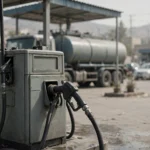
Industrial representatives argued that the government itself is a large part of that bill. The petroleum levy is about Rs80 a litre on diesel and about Rs76,000 a tonne on furnace oil, and participants said those levies add around Rs10 per unit to generation costs. They said removing the levies could bring generation costs down from about Rs62 per unit to between Rs44 and Rs50 per unit.
The same Rs80 levy sits at the centre of October’s petrol levy talks, where the debate is about pump prices. In generation, the same levy lands a second time, inside the electricity bill. Diesel, which crossed Rs400 a litre on October 30, is both a transport fuel and a generation fuel, so a diesel shock reaches households through the FCA line. Households already face a second fuel shock, with LPG at a record Rs600 a kilo.
Why NEPRA did not just approve it
NEPRA reserved its decision after the October 29 hearing. Its senior adviser for monitoring and enforcement questioned the consistency of information from the Power Planning and Monitoring Company and the Independent System and Market Operator, noting that figures given to the regulator differed from those presented at the hearing. Industry also questioned a previous Rs16 billion adjustment linked to liquefied natural gas prices, and demanded a transparent breakdown first.
The gas numbers show why scrutiny matters. Demand for re-gasified liquefied natural gas was put at 350 million cubic feet per day, against supply of 218 million cubic feet per day from Sui Northern Gas Pipelines and actual consumption of 194 million cubic feet per day. Haveli Bahadur Shah received 10.7 million cubic feet per day against a request of 78 million cubic feet per day. When gas does not arrive, the system burns costlier fuel instead, and the FCA carries that cost to consumers.
Three things to watch before your November bill
First, NEPRA’s written decision and notification, which will set the final rate and any exemptions. Until it appears, Rs2.5624 is a request, not a charge. Second, whether the government moves on the levy itself, since only it can cut the Rs80 diesel levy or the furnace oil levy. Third, the ruling on the disputed liquefied natural gas adjustment, which will show whether the regulator will disallow costs, not merely pass them through. More business and economy news from Pakistan will follow both decisions.