
Prime Minister Shehbaz Sharif has set up an eight-member committee to review LPG reforms, after market prices for a domestic cylinder reached Rs6,000 to Rs7,200 against Ogra’s notified Rs3,296. Headed by the petroleum minister, it has one month to report. A Petroleum Division summary dated October 27 separately seeks approval to move pricing from Ogra to state-owned enterprises from November 1. The question is who will set the price, and what check will stop a higher number.
The gap the committee inherits
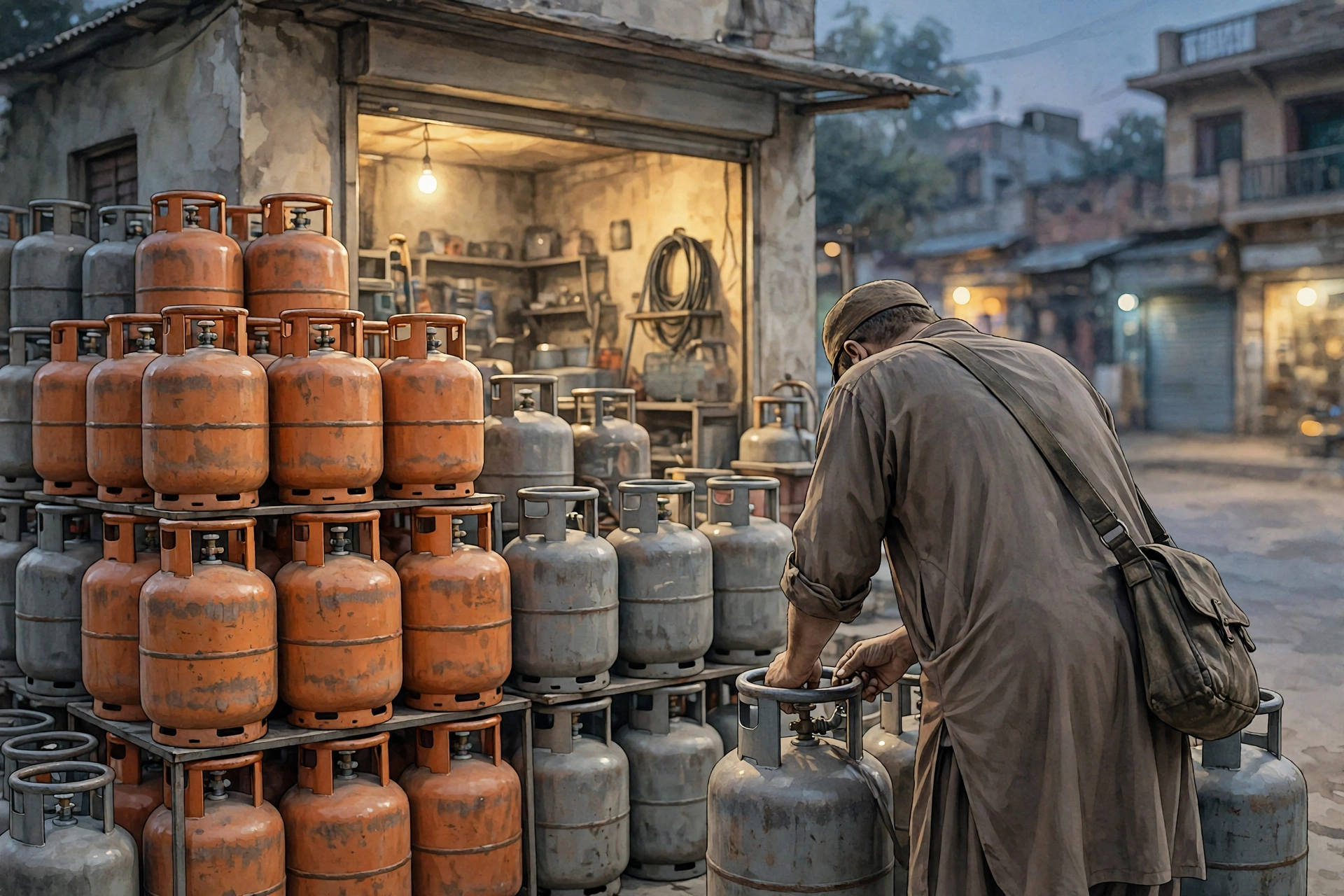
The Pakistan Bureau of Statistics found an average of Rs6,310.76 for an 11.67kg cylinder in 17 cities in the week ended October 22, up 22.44 percent in a week. Ogra’s October maximum for an 11.8kg cylinder is Rs3,296.23, about Rs3,260 for the survey size. On that basis, the average shopper paid about Rs3,051 extra, about 94 percent above the cap. No city was near it: Larkana, the cheapest, averaged Rs5,600, while Bahawalpur averaged Rs7,033. Sizes differ slightly, so this is approximate.
Dawn links the jump to halted trade at the Iranian border and fewer sea shipments. It follows LPG at a record Rs600 a kilo in the hilly areas, alongside diesel crossing Rs400 a litre on October 30. Daily use is 4,000 to 4,500 tonnes, rising to 6,000 to 7,000 tonnes in peak winter, against domestic output of about 2,000 to 2,500 tonnes. The rest must be imported, so the pricing mechanism matters more than any announcement.
What would change on November 1
Under the proposal reported by The News, Ogra would stop issuing LPG notifications from November 1, and Pakistan State Oil and SSGC LPG Limited would set market prices. The two firms would publish monthly landed costs online, forming the benchmark under Import Parity Pricing linked to Saudi Aramco rates plus freight, insurance, and taxes. Local producers would be paid at that price, and the 2017 LPG Pricing Committee would be de-notified.
The reviewing committee is not a pricing body. Its members are the petroleum minister, the economic affairs and information ministers, the adviser on interprovincial coordination, the special assistant on energy, the petroleum secretary, the director general for liquefied gases, and the head of the Government Relations Unit. Its brief covers the reform plan, illegal cylinders, cylinder standards, and the local model for the Economic Coordination Committee, with a report due in late November.
Where the money would go
Three money rules decide who gains. First, 10 percent of local LPG would go to state marketers at producer prices for remote areas, while 90 percent would be auctioned monthly at a floor 5 percent below the benchmark. Second, the gap between the import benchmark and the local price would enter a Differential Fund, audited by the Auditor General, funding targeted BISP subsidies. Third, marketer margins would rise from Rs35,000 to Rs50,000 per tonne, or Rs413 to Rs590 per 11.8kg cylinder, up Rs177, about 43 percent.
Two transparency details deserve equal weight. The News reports the state firm could give 75 percent of its auctionable share to its subsidiary, Pakistan Petroleum Gas Limited, which stakeholders say undermines transparent auctions. Dawn adds that bidder financial proposals for state imports would be exempt from publication on the procurement regulator’s website. Both exceptions need explaining, since a closed process can hide a higher price.
Why dealers and insiders object
Dealers protested the lack of consultation, and that complaint created the committee. They say state firms have little LPG import experience and want a bigger private role. They also dispute the Saudi benchmark, noting much private supply comes from Iran and Oman, not Saudi Arabia. The News adds a sharper warning: letting PSO and SLL set their own landed costs as the benchmark creates a conflict of interest, with over-invoicing fears, and local producers could gain at consumers’ expense. The Division’s case is that Ogra’s formula is commercially unviable.
Three tests before winter bites
First, watch November 1: does Ogra stop notifying, and do PSO and SLL publish checkable landed costs? A finished price without a breakdown changes the letterhead, not accountability. Second, watch the late November report and cabinet decision: does Ogra keep any role, does the BISP fund survive, and does the private sector get a named role? Third, watch the first auction and BISP payment: does it clear near the floor, does the 75 percent allocation survive scrutiny, and does the PBS average fall toward the cap or merely legitimise Rs6,000 to Rs7,200?
Households should check the notified rate, keep every receipt, and report overcharging, since the PBS table shows the cap breached in every surveyed city. November also tests the wider fuel bill, with NEPRA holding its Rs2.56 fuel decision for November bills. For the latest business and economy news from Pakistan, judge this story by those three tests, not by another committee.