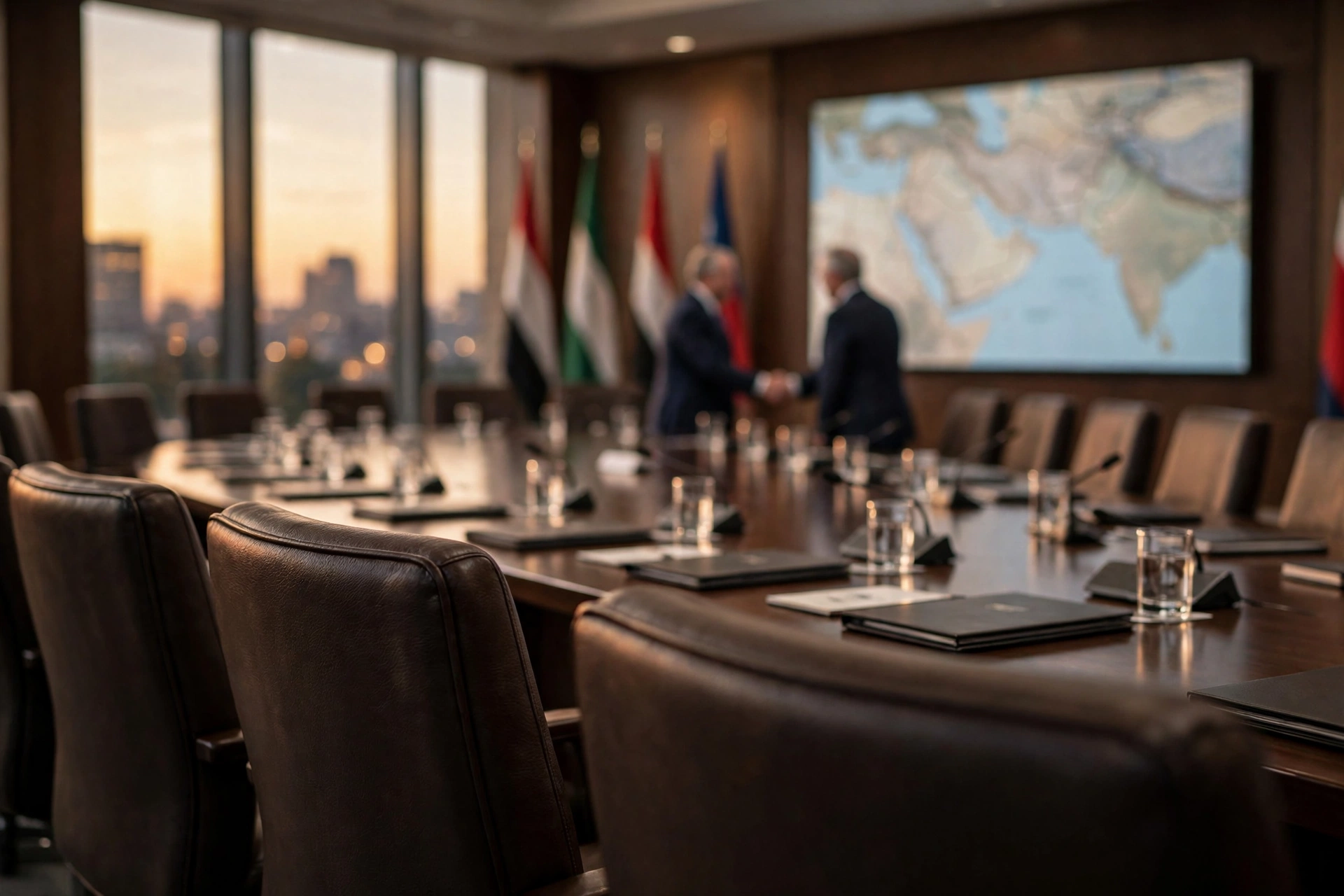

Pakistan’s military spokesman has given the country’s Iran mediation effort a label meant to be read in two parts at once. Speaking to Reuters in Rawalpindi on October 30, ISPR Director General Lieutenant General Ahmed Sharif Chaudhry said Pakistan is “cautiously optimistic” about its mediation between Iran and the United States. The optimism points to movement; the caution, to what is not yet settled.
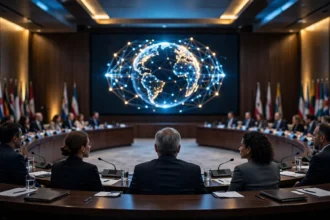
This was Chaudhry’s first interview since a high level delegation travelled to Tehran earlier in the week. Field Marshal Asim Munir, described by Reuters as Pakistan’s chief mediator in the effort to de-escalate the now eight month old Iran war, has been to Tehran twice this month. His latest trip, on Monday, was made alongside Saudi Defence Minister Prince Khalid bin Salman and Turkish intelligence chief Ibrahim Kalin. That company turns a bilateral mediation into a regional one.
The two words that carry the whole message
Asked whether the repeated trips were a positive sign, Chaudhry answered with a question of his own. “Why would the Field Marshal be going twice if it is not for some positivity? So yes, of course,” he said. “The word that we would use is always cautiously optimistic,” he added. Two visits are evidence something is worth pursuing, not proof a deal is near.
The caution has a named cause, even if the people behind it are not named. Chaudhry warned that there were still “powerful spoilers and detractors” who believed conflict serves them. Naming one would narrow Pakistan’s room to talk to every side. After Monday’s talks, Iran’s Mohsen Rezaei called the discussions positive.
What he deliberately did not say
Three withholdings matter as much as the headline phrase: what was discussed, whether the United States backed the trip, and who the spoilers are. Each gap protects the talks: no side must defend a position in public before it is agreed, Washington is neither claimed nor embarrassed, and the warning is not a charge against a specific capital.
Asked about more Pakistani troops for Saudi Arabia, Chaudhry said that would depend on the situation and both countries’ political leadership. He restated Pakistan’s commitment to defending Saudi Arabia and the holy sites of Mecca and Medina, while adding, “We are not part of the Yemeni conflict, which is an intra-Yemen conflict.”
The pact door left open
The most concrete new line concerns the Makkah Joint Defence Agreement, signed by Pakistan, Saudi Arabia and Turkiye on August 7. Asked whether Iran could join, Chaudhry said the wording of the pact does not bar new members. “Anyone who has a shared vision of collective deterrence and regional peace, why not? Everyone is most welcome,” he said, adding that it was for the political leadership of the three principal parties to decide.
Admission remains a political decision for Riyadh, Ankara and Islamabad together, and none has announced one. The Makkah Joint Defence Agreement ratification and its three steps to deployment still leave Turkiye’s vote, the undisclosed forces, and the defence trigger unresolved. The Istanbul R-4+E-3 meeting put Pakistan’s new defence architecture to its first test, and the Tehran visit fits that pattern.
The second half of the interview: Khyber Pakhtunkhwa
The interview did not stay on foreign policy. In Khyber Pakhtunkhwa, the federal government suspended the provincial government on October 11 and detained Chief Minister Sohail Afridi over alleged failure to tackle militancy. The Pakistan Tehreek-e-Insaf rejected the allegations, said its government took part in counterterrorism efforts, and called the move a pretext to crush protests.
Asked whether there would now be larger military led campaigns in the province, Chaudhry said that was not how the army conducted counterterrorism. “Our counter-terrorism operations are based on what we call IBOs, intelligence-based operations… The tempo of the freedom of action of (those) IBOs will further increase,” he said. That means more frequent, targeted operations, not a sweeping campaign. Parliament backed emergency and governor rule in Khyber Pakhtunkhwa on October 15, but the courts and the detained leadership remain live fronts.
The timeline, and three tests to watch
Fighting began with United States and Israeli strikes on Iran in February. Islamabad brokered an April ceasefire that halted the initial phase, but a lasting settlement has since stalled. On October 26, the four countries agreed to continue dialogue, Monday’s visit was the next step, and Friday’s interview is the military’s first public reading of it.
Three tests will show whether “cautiously optimistic” was justified. First, a concrete next signal. Second, whether any incident forces Pakistan to name its unnamed detractors. Third, whether the promised IBO tempo is visible in reported operations, and any troops decision. Until one test is passed, the honest reading is his own: positivity, carefully fenced. For more national news from Pakistan, follow PakMirror’s continuing coverage.