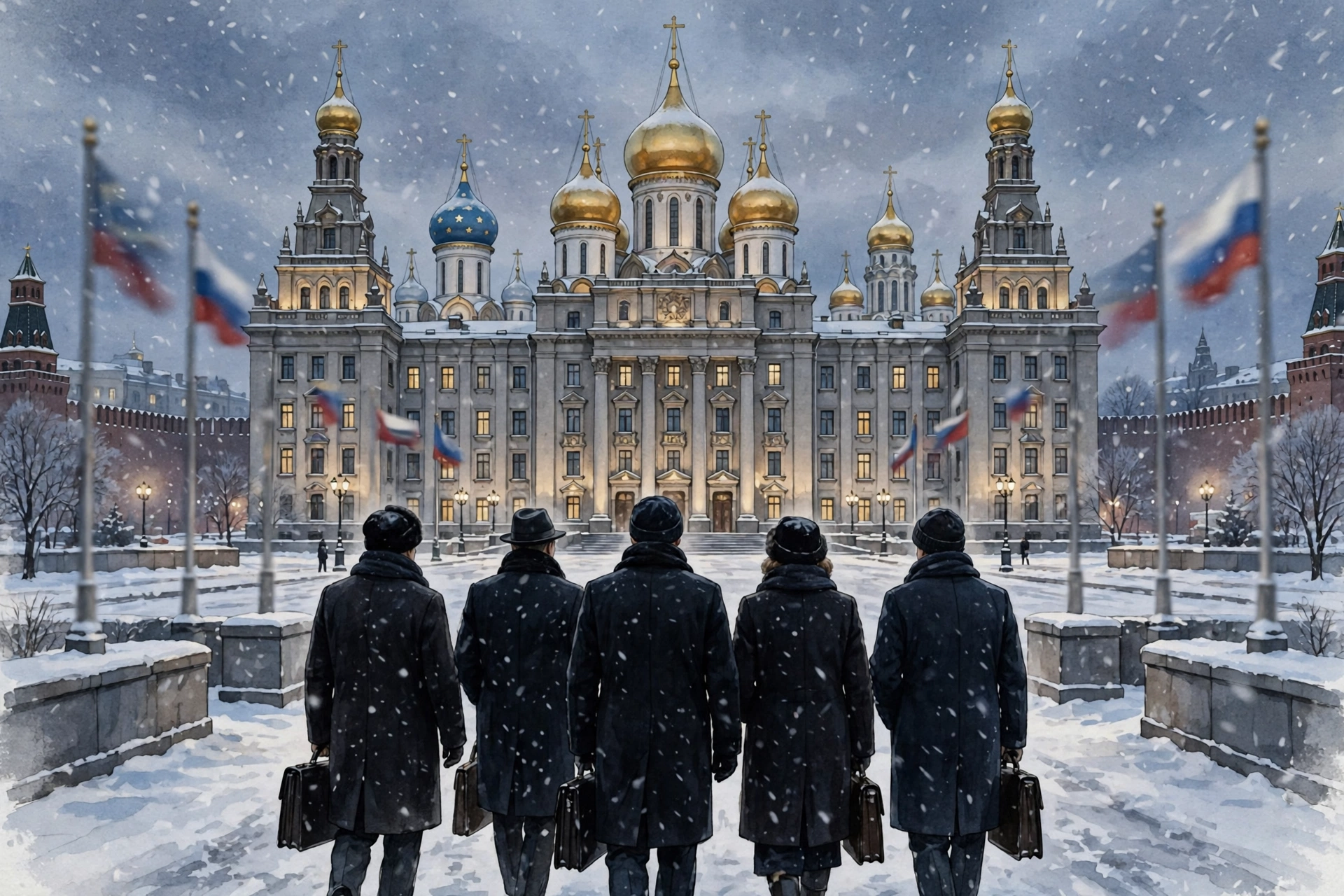

Prime Minister Shehbaz Sharif is preparing a second attempt at Moscow in December, after a trip planned for March was cancelled a day before departure. Reports on October 31 say he chaired a meeting to review arrangements for a first week of December visit with a large business delegation. No official announcement has been made, no exact dates have been published, and no delegation list has been named. That gap is the story. December will be judged not by the photograph, but by whether it returns with something March could not produce.
A trip cancelled a day before it began
Islamabad had pencilled in March 2 to 5. On March 1, the Prime Minister’s Office called the trip off, pointing to regional and domestic developments. Trade drove the March plan too. Pakistan’s ambassador in Moscow, Faisal Niaz Tirmizi, said at the time that Islamabad hoped to come home with a preferential trade agreement that would lift trade between the two countries. No report since has said whether that agreement is still on the agenda. A revived trip without an answer to that question is a revival in name only. March also warns that a visit announced in outline can still be pulled at short notice.
What has moved since March
The invitation itself is not new. When Sharif met Russian President Vladimir Putin in Beijing, he told Putin that Pakistan was very keen to deepen ties in trade, energy and other key sectors. Putin asked him to come to Moscow, and Sharif said he would be glad to. The groundwork since then has been steady rather than dramatic. Russian Prime Minister Mikhail Mishustin visited Islamabad in October 2024. Two months later, Energy Minister Awais Leghari led Pakistan’s side at the ninth Inter-Governmental Commission meeting in Moscow, where the two countries signed eight agreements on health, education and trade. On October 12 this year, Russian Interior Minister Vladimir Kolokoltsev travelled to Islamabad and met Pakistan’s civilian and military leadership. Those steps make a visit plausible, not productive.
December arrives alongside Pakistan’s cautiously optimistic Iran mediation, while the Istanbul meeting put Pakistan’s new defence architecture to its first test and the Makkah pact moved to its final parliamentary vote. Moscow will be read alongside those files.
The three gaps no report has closed
First, the date. One set of reports points to the first week of December. Another, published on October 24, names November 30 to December 3 for a four day visit. Those windows overlap, and neither has been confirmed officially. Second, the delegation. Reports describe a large business delegation and a Pakistan-Russia business forum, with one report putting the business turnout at around 100 people, plus direct business to business meetings. Yet the October 31 report is explicit: the sources did not say which companies or sectors the delegation will represent. Third, the deliverable. Eight commission agreements are already signed. Unless December names something beyond them, it risks repeating the March pattern, where a big objective was discussed in public and then left without a public outcome.
Why energy is the hardest test
Energy is the item most often named for the talks, and the one with the most obstacles. Government sources cited in earlier reporting say discussions could include long term cooperation on Russian oil, liquefied natural gas and gas pipeline projects. Other reporting adds steel mills, food security and financial channels. Analysts note that United States sanctions on Russian oil still constrain what Moscow can offer Pakistan in energy, and any long term arrangement would depend on commercial, technical and policy considerations that have not been published. A joint statement that promises energy cooperation without a named supply, a payment route and a timeline would not pass the test March set. The same applies to trade: if the preferential trade agreement hoped for in March is no longer on the table, Islamabad should say so, and say what has replaced it.
Three tests to watch before December
Test one is confirmation. An official announcement should give the dates, the Putin meeting and the delegation’s composition. Until then, the visit remains expected, not confirmed, however many preparation meetings are reported. Test two is a named deliverable. December should state whether the preferential trade agreement is revived, dropped or replaced, and what is new beyond the eight commission agreements already signed. Test three is an energy item with a workable route: a named area of supply, a payment and financing channel that survives sanctions scrutiny, and a timeline for the next step. Until at least one test is passed, the honest reading is modest. The Moscow trip is back on the calendar. It is not yet back as a result. For more national news from Pakistan, follow PakMirror’s continuing coverage.