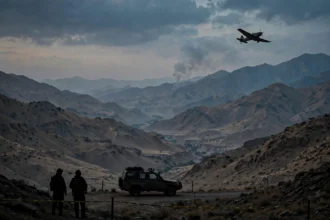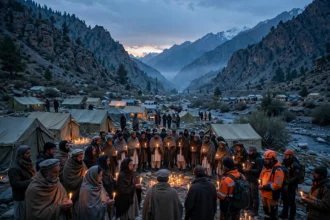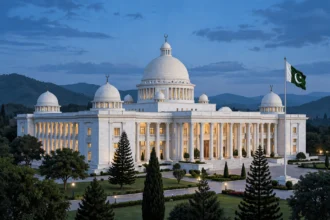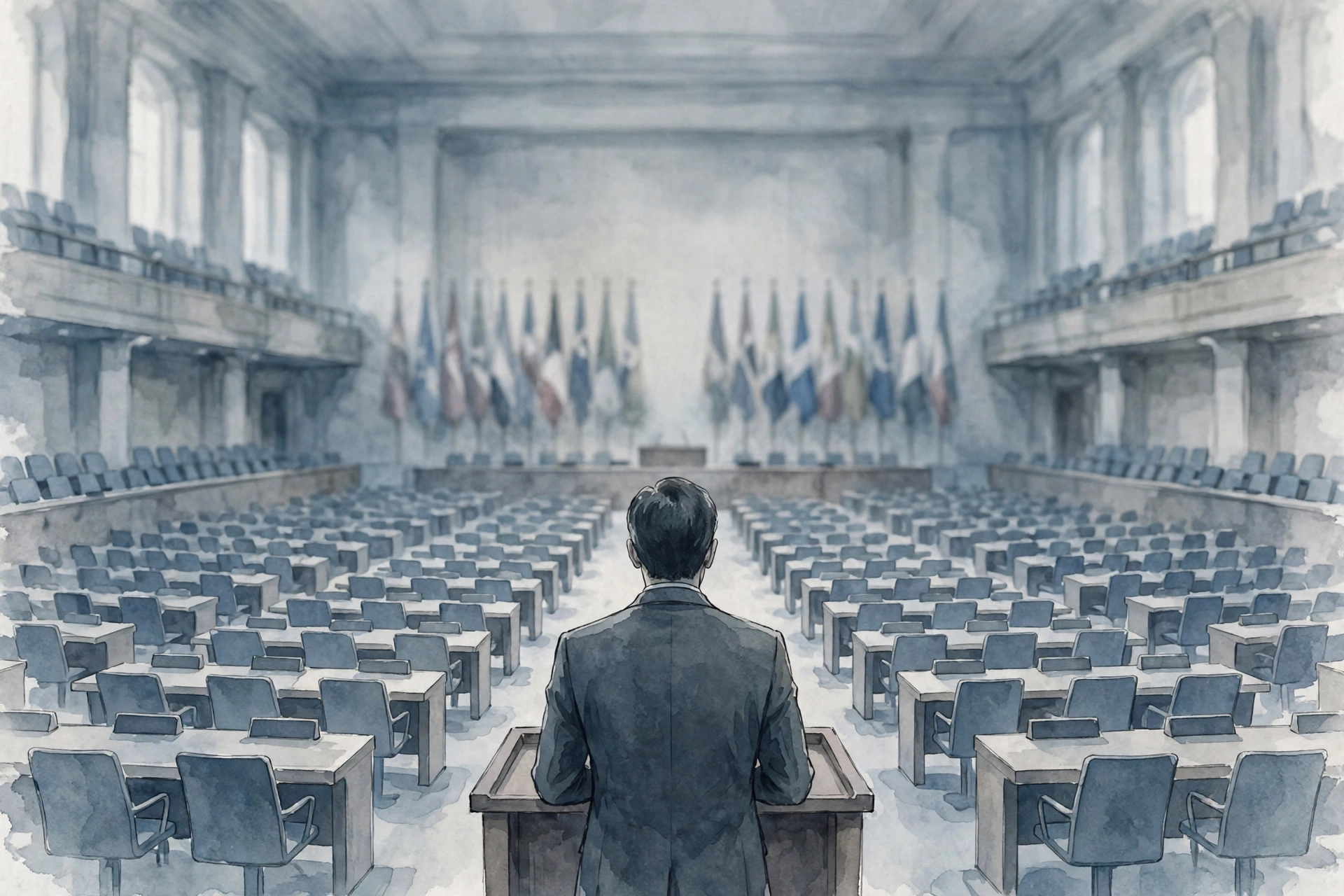

Pakistan has taken the same stark casualty claim back to the United Nations. Counsellor Muhammad Jawad Ajmal, of Pakistan’s Permanent Mission, told this week’s UN debate on Afghanistan that more than 4,700 Pakistanis have been killed in terrorist attacks originating from Afghanistan over three years, in a Mission statement issued on October 30. He named five groups, accused the Afghan Taliban of complicity through silence, and reserved Pakistan’s right to self-defence. The figure is not new; the warning is.
The number is not new, and that is the point
The same toll was put before the UN Security Council in September by Ambassador Asim Iftikhar Ahmad. Repeated in a rights debate, not a security debate, it becomes an official baseline. Over three years it works out at about 1,570 deaths a year, or more than four a day. That arithmetic is Pakistan’s own. No independent dataset is cited, and the Afghan Taliban response to these specific allegations was not included in the reports. Treat 4,700 as Pakistan’s stated toll. The forum shift is the story: one pattern, judged on security, rights and refuge together.
Five names on the charge sheet
Ajmal named the Tehreek-e-Taliban Pakistan, the Balochistan Liberation Army, the Majeed Brigade, Islamic State Khorasan Province and the Eastern Turkistan Islamic Movement. It spans Pakistani Taliban, Baloch separatist, Islamic State and ETIM currents, so the charge targets an ecosystem, not one outfit. The core accusation is that the Taliban authorities maintain close links with these groups, allow them to operate with impunity, and have failed to publicly denounce them, a failure Ajmal presented as evidence of complicity.
That framing connects to recent border reporting. A cross border infiltration attempt foiled in Kurram in October, in which 12 militants and Afghan Taliban personnel were killed according to the military, was presented by the ISPR as proof of the same failure to deny Afghan soil to attackers. The UN statement generalises that claim: if Kabul will not denounce the groups, Islamabad argues, it cannot credibly claim it is trying to stop them.
Self-defence, kept in reserve
Ajmal referred to Pakistan’s actions on March 16, when Islamabad said it targeted military installations and what it described as terrorist support infrastructure. He then reaffirmed that Pakistan would exercise its right to self-defence when necessary and in accordance with international law. That is a reservation, not an announcement of a new operation. It frames future action in advance, so any strike reads as response, not escalation. At home, ISPR statements gave district by district detail for how twelve terrorists were killed in 72 hours of Balochistan operations. The UN statement gives no new detail.
The other half of the statement
Ajmal paired the security case with two subjects often reported separately. On women and girls, he said the denial of fundamental freedoms contradicted the Taliban authorities’ international commitments and was inconsistent with Islamic values. He cited the July 2026 OIC women’s conference in Islamabad, which expressed concern about the Taliban restrictions. On refugees, he said Pakistan had hosted millions of Afghans over several decades and called for shared international responsibility. The government’s account is that more than 2.4 million Afghan refugees have been deported since 2023.
Running alongside Pakistan’s statement, UN Special Rapporteur Richard Bennett told the General Assembly that five years after returning to power, the Taliban had shown no commitment to ending systematic human rights violations, and urged member states not to normalise relations without verifiable improvements. His report documented arbitrary arrests, torture, sexual violence and extrajudicial killings. Bennett gives Pakistan’s rights argument an independent UN voice. Both arguments meet at one word: verifiable.
Three tests that will settle it
First, Kabul’s response. A public denunciation of the named groups, arrests, or the closure of camps would weaken Pakistan’s complicity claim. Continued silence would strengthen it in the UN record. Second, the status of the 4,700 figure. If future UN sessions repeat it without challenge, it becomes the accepted shorthand for the cost of cross border terrorism. If a Taliban rebuttal or an independent dataset contests it, the debate will shift from the toll to the counting, and Pakistan will have to show its working.
Third, the self-defence reservation. The next serious border incident will reveal whether March 16 was a precedent or a warning. The recent reports of five drones aimed at a Kharan check-post show how a new drone method can become the test case. A strike justified in Ajmal’s language would prove the reservation; a diplomatic answer would make it read as pressure. Until then, the honest summary is narrow: Pakistan has not produced a new death toll, it has given an old one a harder edge. Follow national news from Pakistan for updates.