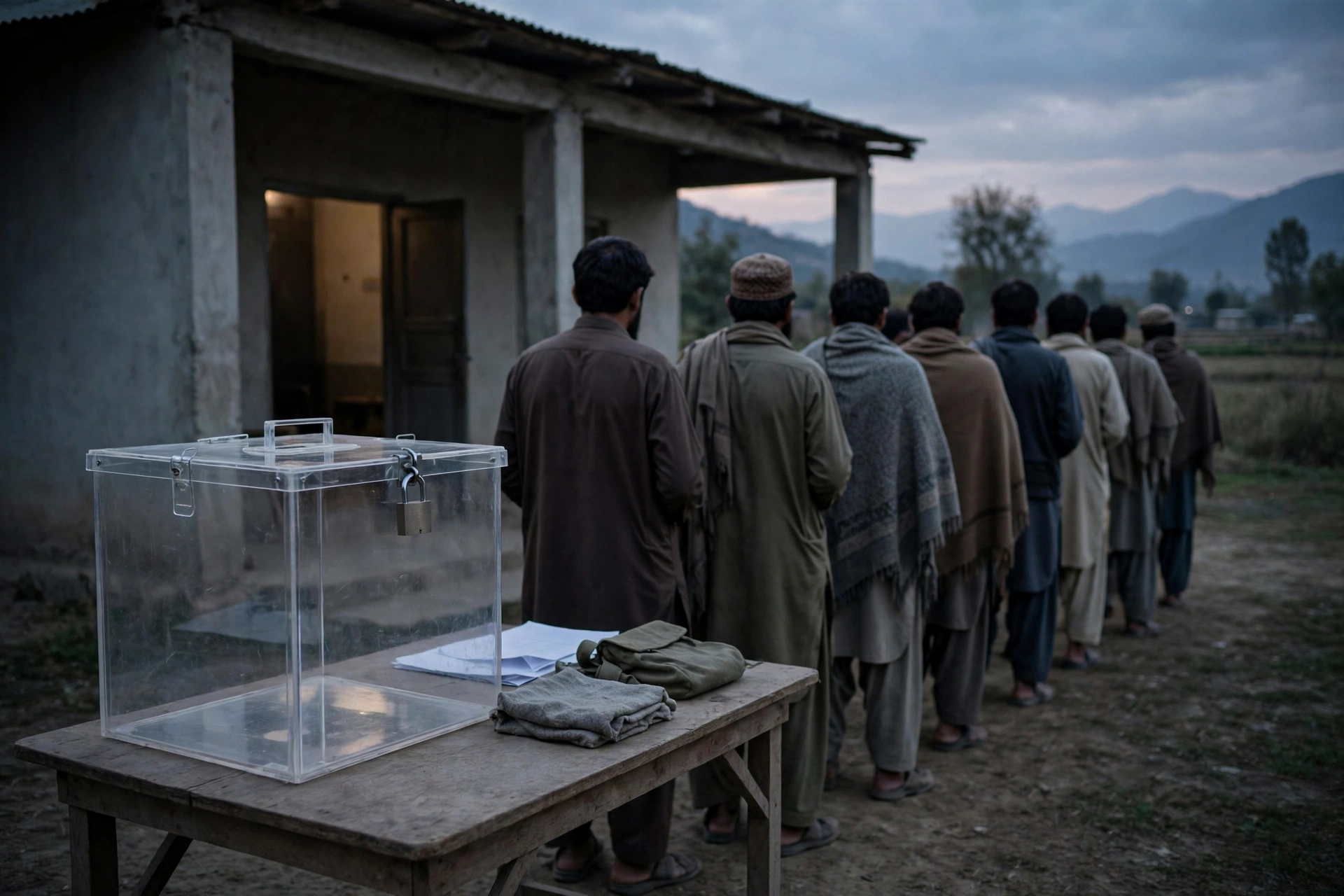

The Election Commission of Pakistan gave Punjab a date for its local government elections on the same day it took the date away from Khyber Pakhtunkhwa. On Thursday it suspended every step taken so far for local government elections in the province, until further orders. The two decisions turned on the same article of the Constitution.
What the Election Commission decided
Chief Election Commissioner Sikandar Sultan Raja chaired the 5 November meeting that reviewed Federal Government Order No. 3 of 4 November. Its Clause 2 extended the suspension of Article 140-A to every district of Khyber Pakhtunkhwa.
Article 140-A requires every province to establish a local government system and devolve political, administrative and financial responsibility to elected representatives, with sub-article (2) assigning the conduct of local government elections to the Election Commission. The commission noted that duty, then said the federal order made it impossible to exercise it in the remaining districts.
A seven day reversal
The striking part is how quickly it reversed the commission’s own direction. Only last week, the commission directed its office to prepare the election programme for districts where delimitation had been completed, with 12 districts excluded. The order came on 29 October, after the provincial government asked for a deferral, citing law and order and troops under Article 245.
Seven days later, that programme has been suspended in full. Nothing suggests the security situation changed in that week. What changed was the legal ground: a federal order dated 4 November that widened the suspension of Article 140-A from some districts to all of them. The commission did not say the elections were unsafe. It said they had become impossible: an election halted because the article that requires it is itself suspended has no date to return to until the suspension is lifted.
How Article 140-A became the off switch
The suspension arrived in two steps. The first came with the federal order of 11 October, issued the day the emergency was imposed and governor’s rule began. Under it, the commission ruled out elections in Bannu, Lakki Marwat, Mohmand, Orakzai and North Waziristan, five of the 12 districts under special arrangements.
The second step came on 4 November, when Order No. 3 extended the suspension to all the other districts. Reviewing its Clause 2 on 5 November, the commission concluded that holding elections in the remaining districts was no longer possible either. The result is a province-wide halt.
The emergency was imposed on 11 October for an initial six months, with Governor Faisal Karim Kundi taking charge with an advisory council. The legal fight is already running: the Peshawar High Court formed a larger bench on 3 November, and the Federal Constitutional Court barred the Peshawar High Court from hearing detention cases in Khyber Pakhtunkhwa on 5 November, the same day the election process was suspended.
The July amendment that stalled the polls first
In July 2026, the provincial government raised the population threshold for village and neighbourhood councils from 5,000 to 15,000 to 30,000 to 40,000, without changing the Ninth Schedule to match. The commission said this made delimitation impracticable there.
The same month, the commission said last minute legislative amendments had obstructed elections in Punjab and Khyber Pakhtunkhwa. It had completed delimitation and started preparations on several occasions, only for changes in local government laws to force the process to restart. The commission has since proposed that major restructuring of local government systems be legislated at least one year before the expiry of elected councils, with safeguards against changes to local government laws and district boundaries after their terms expire.
That proposal now measures what went wrong. The province’s polls were first delayed by a law change, then narrowed by an emergency order, then halted by a suspension of the article that requires them.
What happens next
Three tests will decide how long the halt lasts, the first being the courts. The emergency and governor’s rule are already before the superior judiciary, and suspending the article that guarantees local government invites a constitutional challenge.
The second is the calendar. The emergency runs six months from 11 October, to April 2027, but the suspension order has no expiry date, so the halt would need a separate decision to lift even if the emergency lapses. The third is the commission’s safeguard proposal. If it presses its demand that local government law be settled a year before council terms expire, the next polls will be fought over the rules before the votes.
Meanwhile the contrast with Punjab is complete: Punjab finally gets a local polls date, 7 February 2027, after eleven years without one, while Khyber Pakhtunkhwa loses the programme it had only just been told to prepare. Islamabad’s own local polls are already scheduled for 20 December.
More national news from Pakistan follows.