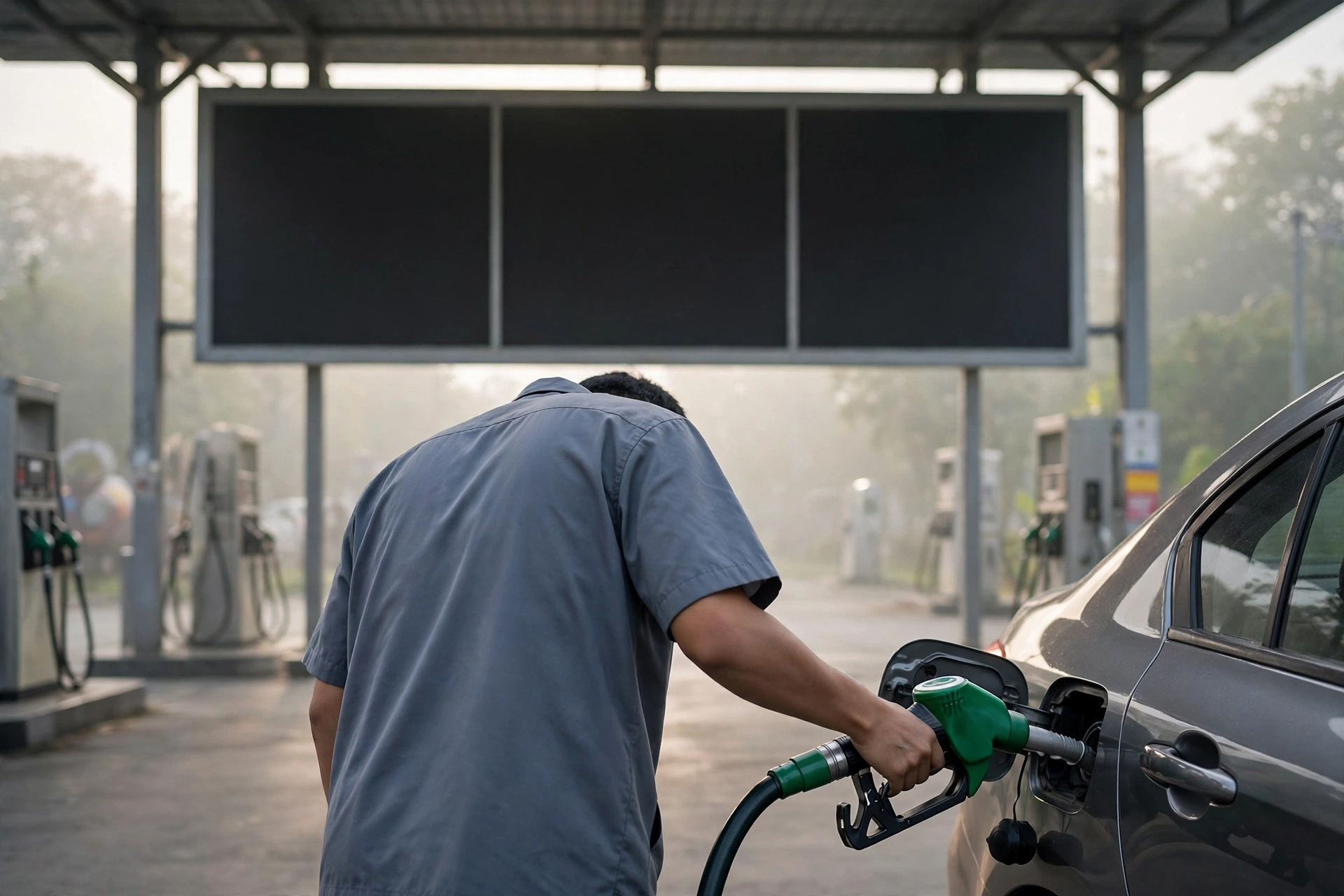

Petrol now costs Rs346 a litre in Pakistan, after the government cut the price by Rs6.59 on Friday night. High-speed diesel fell by Rs4.25 to Rs378 a litre. The new rates took effect on Saturday 7 November and run until 9 November. It is the fifth cut in five days. Since Monday, petrol has fallen Rs31.91 a litre, or 8.4 percent, and diesel Rs24.96, or 6.2 percent. Prime Minister Shehbaz Sharif has also confirmed that the Rs100-a-litre Sasta Petrol relief will continue until at least 31 December 2026.
Five days, five cuts: the diary
On Monday 2 November, petrol stood at Rs377.91 a litre. It fell Rs3.40 on Tuesday, Rs5.45 on Wednesday, Rs7.06 on Thursday and Rs9.41 on Friday, before Saturday’s Rs6.59 cut took it to Rs346. The five cuts add up to Rs31.91. Petrol had already fallen Rs25.32 in four days to Rs352.59 before this latest cut. Diesel started the week at Rs402.96, fell to Rs391.52, rose Rs3.68 on Wednesday to Rs395.20, then fell three more times to Rs378, a net fall of Rs24.96.
A three-day price, and a holiday test
This is the first rate under daily pricing set for only three days. The Oil and Gas Regulatory Authority (OGRA) said the new prices run from 7 to 9 November, and Bloom Pakistan reported they will hold until 10 November because 9 November is a public holiday. The next review is therefore not expected until after the holiday, the daily system’s first holiday test. The system is new: the cabinet approved the changes on 30 October after US-Iran war volatility. Prices were fortnightly before that, then weekly after the Israel-Iran conflict broke out in February and the Strait of Hormuz was disrupted. OGRA now publishes daily prices on its website, and the import price is set from the actual cost of the relevant PSO cargo, with a $2.95 per barrel per day smoothing adjustment.
The tax share keeps climbing
None of the five cuts has touched the tax. Petrol still carries Rs114 a litre in tax and diesel Rs100, unchanged all week. So the tax takes a bigger share of every litre as the price falls. On Monday the Rs114 was 30.2 percent of Rs377.91. By Friday it was 32.3 percent of Rs352.59, and today it is 32.9 percent of Rs346, about one rupee in every three. Diesel shows the same pattern: Rs100 was 24.8 percent of Monday’s Rs402.96 and is 26.5 percent of today’s Rs378. The whole Rs31.91 petrol cut has come from the non-tax part of the price, down from Rs263.91 to Rs232.00. As long as Rs114 stays fixed, every future cut must come from a shrinking non-tax slice.
Who pays for the cut, and who still gets Rs100 off
Part of the cut is paid by refineries. For 30 days, the premium, incidentals and customs duty in the ex-refinery price are fixed at their 7 March 2026 pre-war levels, and refineries surrender the difference under the petroleum levy account. Dawn reported the arrangement costs refineries about Rs15 billion over the 30 days. The targeted relief is separate, and the government is backing it with the licence crackdown on pumps withholding the relief. The Prime Minister has extended the fuel subsidy to at least the end of December. About Rs28 billion has been spent so far, and Bloom Pakistan reports about 15 million people have been supported. The scheme gives Rs100 off every litre for motorcycles, three-wheelers and cars up to 800cc, capped at 20 litres a month for two- and three-wheelers and 30 litres for small cars. An eligible motorcyclist now pays an effective Rs246 a litre, worth up to Rs2,000 a month. Against Monday’s full price of Rs377.91, that is a fall of Rs131.91, or about 35 percent, in five days.
What to watch next
Three dates will decide whether the relief lasts. The first is 10 November, the next review after the holiday. If global prices move over the weekend, or the USD to PKR exchange rate today shifts, the change could be larger than the recent daily steps. The second is early December, when the 30-day refinery arrangement ends; unless it is renewed, the same import price will produce a higher pump price. The third is the subsidy itself. The International Monetary Fund has pressed for fuel subsidies to end, and its talks treated an extension beyond three months as unlikely. The scheme has now been extended to the end of December, but the Rs75 billion allocation behind it is finite. If the subsidy ends while petrol is still above Rs300, a motorcyclist’s bill will rise by up to Rs2,000 a month overnight. The five-day fall is real, but it rests on three arrangements that all expire within weeks. More business and economy news from Pakistan is available on PakMirror.