
On Friday, the Supreme Court said what every honest electricity consumer in Pakistan suspects: unauthorised power supply cannot run without officials knowing. A two-judge bench called for a microscopic examination of everyone involved in the theft and sent its six-page order to the WAPDA chairman. The trigger was a broken wire in Larkana, and a man electrocuted by it.
The wire that started it
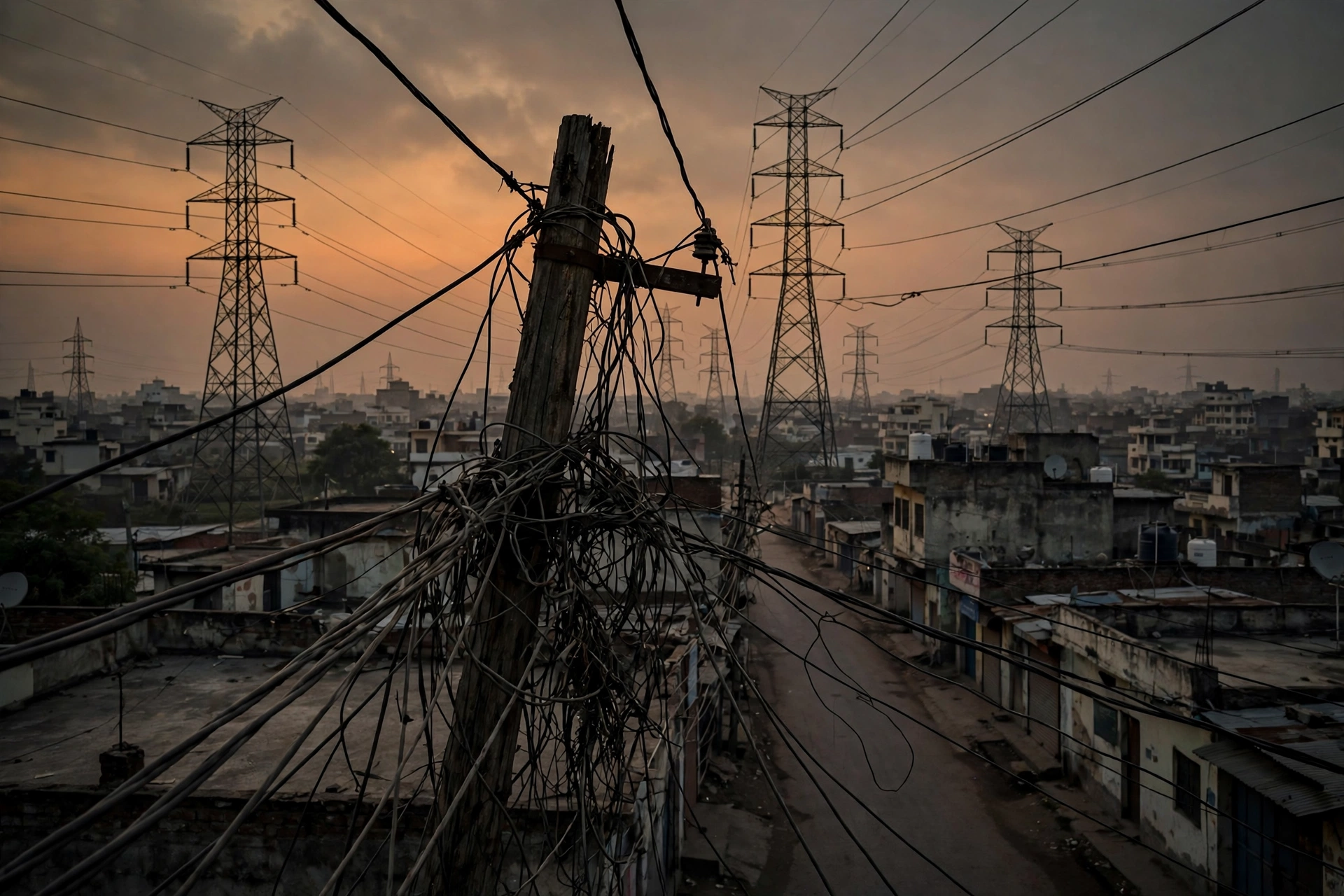
Petitioner Ali Asghar Khokhar of Khuhawar Street, Larkana, asked the court to cancel pre-arrest bail granted to Anwar Ali Kori by the Sindh High Court’s Larkana bench on 20 October 2025. It began in March 2024, when his brother Noor Hussain was electrocuted by a PVC wire that broke and touched a high-tension line. An FIR was registered at Rehmatpur police station against Kori and WAPDA officials. The allegation: the accused, including WAPDA officials, supplied shops through a special line from the disposal phase line, run over his shops.
Khokhar, appearing in person, said the respondent worked as a contractor in collusion with WAPDA officials, supplying his shop for money without ever issuing a bill. Justices Muhammad Ali Mazhar and Irfan Saadat Khan noted the high court granted bail mainly because the FIR came nine months late, the role blamed on the respondent was negligence, and the investigator said he had no contact with WAPDA officials.
The petition ended as withdrawn, Khokhar not pressing for cancellation while the trial was pending. The court said the bail order needed no interference and guilt could only be established after a full trial. But it used the case to say something larger: it was inconceivable that electricity could be supplied without the knowledge of WAPDA or the concerned utility company and its officials, and the roles of all involved in theft and unauthorised supply should be thoroughly examined.
The arithmetic of 17.2 percent
One wire is one connection; the national picture runs into hundreds of billions. Power Division data given to the National Assembly puts distribution losses at 17.2 percent, worth Rs262 billion, down from 18.3 percent two years earlier. The improvement hides a sharp split: Quetta Electric lost 60.2 percent of the power it received, worth Rs82 billion, up from 29.8 percent two years earlier; Peshawar Electric lost 40.7 percent, worth Rs85 billion. Together the two account for Rs167 billion, nearly 64 percent of the total.
Larkana sits in SEPCO territory, and its numbers show why the observation reaches beyond the city. SEPCO lost 38.5 percent, worth Rs34 billion. NEPRA’s report for FY2024-25 puts SEPCO’s losses at 39.18 percent and HESCO’s at 27.89 percent, with recovery at only 74.20 percent and 74.80 percent: roughly one rupee in four billed never comes back. NEPRA put losses above approved targets at Rs36.04 billion for SEPCO and Rs27.14 billion for HESCO, Rs63.18 billion combined.
The enforcement gap
That is why the numbers stay high: twenty months passed between the March 2024 incident and the October 2025 bail order, the FIR itself nine months late. No official has been named, suspended or charged, and the court’s strongest step was to send its order to the WAPDA chairman for information, not for action. The trial court will decide the merits, and guilt cannot be established until a full trial is held.
Enforcement on the ground looks different: SEPCO has launched a crackdown in Sukkur, disconnecting hundreds of illegal connections, imposing fines and recovering millions of rupees in dues. Ordered by Chief Engineer Ejaz Ahmed Channa, it covered Maliri Road and Adam Shah Colony. But hundreds of disconnections sit against losses of 38.5 percent across the network. The crackdown chases the symptom while the system allowing unauthorised supply stays in place.
Who pays for the missing units
The missing units do not vanish: paying consumers carry them in tariffs that include the cost of losses and unpaid dues. NEPRA’s Rs23.3bn quarterly adjustment request, awaiting a hearing, and the Rs2.56 fuel adjustment lined up for November bills both land on the same households. Capacity payments reached Rs1.807 trillion in FY2024-25, and the dollar cost of fuel imports, tracked in the USD to PKR exchange rate today, feeds into generation costs.
What happens next
Three tests will show whether the observation becomes action: first, whether the WAPDA chairman answers the order with an inquiry into the Larkana supply chain rather than filing it away; second, what the trial court decides, including whether any official colluded in the unauthorised supply; third, whether the next NEPRA figures show theft falling in SEPCO and the other high-loss companies, or crackdowns keep producing hundreds of disconnections while losses stay near 40 percent. The court has said the supply could not run without officials knowing. The next step is finding out which officials knew.
For more national news from Pakistan, follow our courts and power sector coverage.