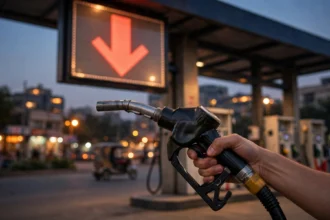
Jamaat-e-Islami chief Hafiz Naeemur Rehman demanded the petroleum levy be abolished at a Karachi press conference on Saturday, citing the listed refineries’ own results. Pakistan’s four listed refineries earned a combined Rs57.06 billion in the July-September quarter, up 1,865 percent from Rs2.90 billion a year earlier, while petrol fell Rs31.91 in five days to Rs346 a litre. The profits came from refining margins widened by global energy disruption, and the government’s cap on them came three weeks after the quarter closed.
Four companies, one windfall
The four companies are Attock Refinery, National Refinery, Pakistan Refinery and Cnergyico. Together they sold Rs567.48 billion of fuel, up 116.5 percent from Rs262.16 billion a year earlier, and gross profit rose 1,004.7 percent to Rs98.52 billion. Mettis Global compiled the figures from the companies’ stock exchange filings; Nikkei Asia also reported the 1,860 percent jump.
Attock Refinery led with Rs18.65 billion, against Rs1.45 billion a year earlier. Pakistan Refinery earned Rs13.97 billion against Rs1.02 billion, its highest quarterly profit on record, with no dividend recommended. National Refinery earned Rs11.57 billion against Rs1.03 billion, and Cnergyico swung from a Rs589 million loss to a Rs12.88 billion profit. The total is Rs57.06 billion, about Rs620 million a day.
Volume helped too. Arif Habib estimated upliftment rose 37.3 percent to 3.192 million tonnes, and capacity use reached 59.5 percent in September against 50.7 percent a year earlier. On PakMirror’s calculation, the sector earned about Rs17,900 of profit per tonne sold.
The pump price fell, the tax wall did not
Petrol fell Rs31.91 in five days to Rs346 a litre, from Rs377.91 on Monday, a cut of 8.4 percent, while diesel fell from Rs402.96 to Rs378. But the cut came from the non-tax part of the price: about Rs114 of every litre’s Rs346 is tax and levy, a 33 percent share that has climbed as the pump price fell.
Naeem’s charge was about scale. He said the government collected Rs1,567 billion in levy last year and still takes roughly Rs150 billion a month, while the relief on offer is only Rs26 billion. Rs26 billion is 1.7 percent of last year’s levy collection and about 17 percent of a single month’s collection. One quarter of refinery profit is 2.2 times the whole relief package, and about double the Rs28 billion spent on the Sasta Petrol subsidy. The prime minister has put the licences of pumps withholding the relief on the line, while the refinery windfall needed no enforcement to arrive.
The cap that came three weeks late
On 20 October the government cut the maximum diesel crack spread in domestic pricing from $41.89 a barrel to $38, down $3.89 or 9.3 percent. The quarter ended on 30 September, so the cap could not touch a rupee of the Rs57.06 billion. Its first real test will be the October-December quarter, not this one.
The margin is the gap between crude oil and finished petrol and diesel prices. Brokerage estimates put average gross refining margins near $30 a barrel, and Nikkei linked the surge to the US-Iran conflict and the Strait of Hormuz closure, which pushed product prices up faster than crude. Daily price updates since 18 July let pump prices move fast, but the refinery margin follows the crack spread formula, not the daily notice.
What each side wants next
Naeem wants relief widened from 800cc cars to 1,300cc vehicles and tractors, a Rs200 a litre tax only above 1,800cc, and the middle class burden cut by Rs30 to Rs40 a litre, with the levy gone in the next budget. Talks reached their final round on 3 November, when both sides agreed relief for farmers and vehicles up to 1,000cc. The government says the IMF programme stops it abolishing the charge outright. Naeem also claimed oil marketing companies owe Rs400 billion in unpaid levies tied up in court. That is his claim alone: he named no companies, and no such total appears in any government statement.
Three tests to watch
First, the October-December results will show whether the 20 October cap shrinks margins, or whether global spreads stay wide enough to keep the windfall going. Second, the next budget will show whether the levy is abolished, cut or kept, and whether the Rs200 a litre tax above 1,800cc ever appears. Third, the Rs400 billion claim will be tested by whether the government publishes the dues list, or whether the figure stays a press conference number. For now the record is plain: petrol fell Rs32 in five days, the levy stayed, the cap came late, and the refineries kept Rs57 billion. The USD to PKR exchange rate today sets the rupee cost of every barrel they buy, so the next currency move will shape the next quarter as much as any cap. More business and economy news from Pakistan