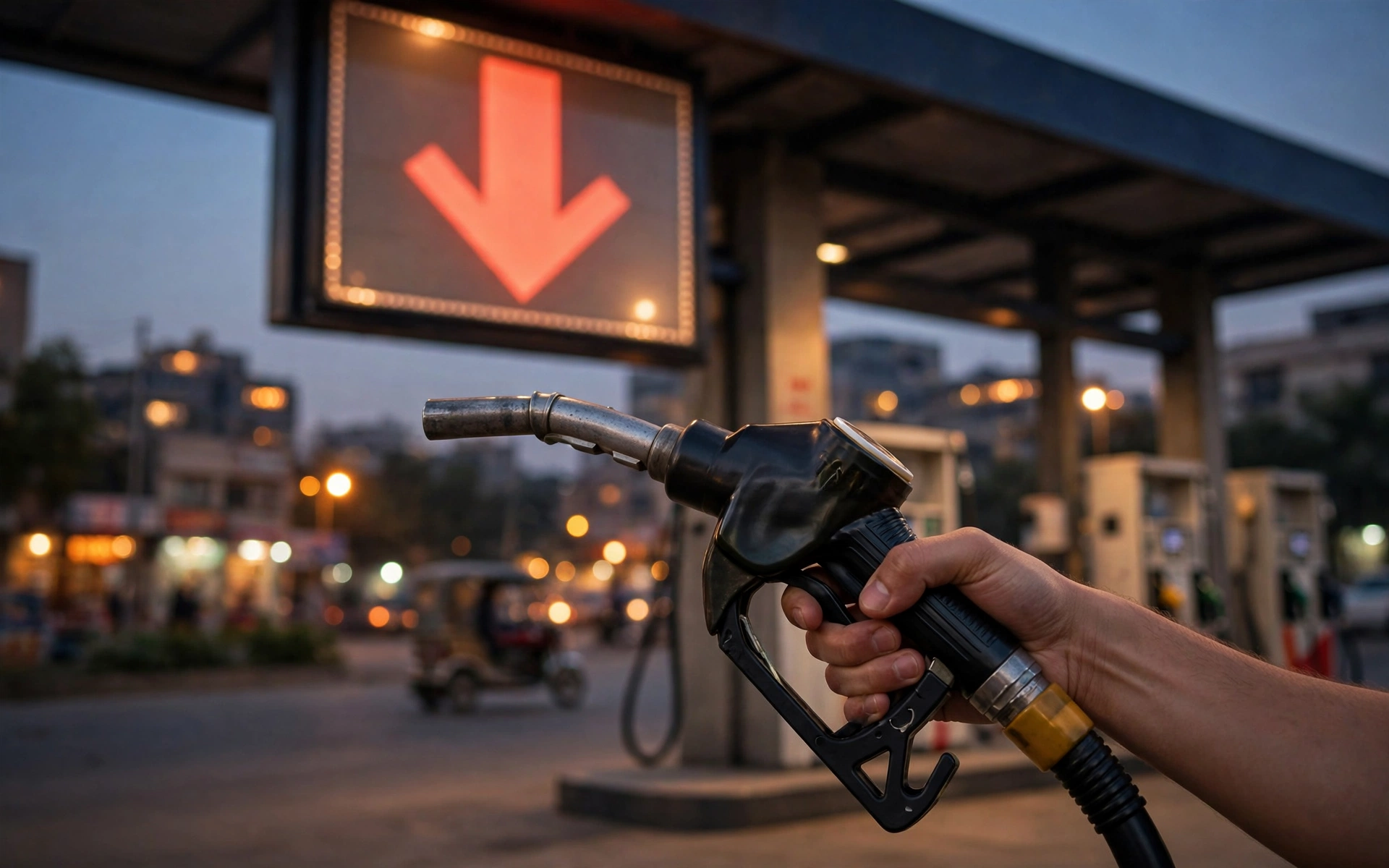

The federal government has cut the price of petrol by Rs5.16 a litre and high-speed diesel by Rs7.69 a litre from Tuesday, October 20, bringing petrol down to Rs381.14 and diesel to Rs389.27, even as international crude prices climbed above $110 a barrel on reports of attacks on Saudi infrastructure and vessels in the Gulf. The paradox has a clear explanation: Pakistan no longer prices fuel on spot crude. Under the daily pricing mechanism, pump prices track a seven-day average of refined product prices, and those fell over the past week even as Brent spiked.
The numbers behind the cut
According to the Petroleum Division notification reported by Dawn, petrol falls from Rs386.30 to Rs381.14 a litre and diesel from Rs396.96 to Rs389.27. Business Recorder reports that the cut mirrors a slide in refined product prices: average refined petrol eased to $121.44 a barrel from $124.39 on October 17, while refined diesel dipped slightly to $108.02 from $108.54. The sharper diesel cut was driven by a significant contraction in the diesel crack spread, which narrowed from $41.89 to $38.00 a barrel.
The import cost of petrol has declined to Rs270.40 a litre from Rs275.56, and the import cost of diesel to Rs281.71 from Rs289.40, the notification states. The gap between diesel and petrol has narrowed to Rs8.13 a litre from Rs10.66, so transporters and farmers, who run on diesel, get the bigger relief this time.
Why the pump moved the other way from Brent
Brent crude futures rose 55 cents to $110.10 a barrel on Tuesday, their highest since May 20, with US West Texas Intermediate at $103.91, according to The Current. Yet local prices fell. The reason is the pricing formula itself. Since the July 17 announcement by Petroleum Minister Ali Pervaiz Malik, fuel prices are fixed daily on the average international market prices recorded over the previous seven days, as Geo News reports from an official document. OGRA now issues daily ex-depot prices without requiring the prime minister’s approval, and prices notified on Fridays stay frozen over the weekend.
That seven-day lag means today’s cut reflects last week’s easing in refined prices, not today’s crude spike. The system replaced fortnightly revisions, then weekly revisions introduced in early March after the US-Iran war began on February 28 and Tehran shut the Strait of Hormuz. The war context has not gone away: three tankers hit mines in the Strait of Hormuz within 48 hours, keeping the supply route Pakistan depends on under threat.
The fixed slice that never moves
What the cut does not touch is the fixed stack on every litre. The Petroleum Division notification shows the import cost of petrol at Rs270.40 against fixed levies and margins of Rs110.74: a petroleum levy of Rs80, a climate support levy of Rs5, dealer margin of Rs9.98, oil marketing company margin of Rs7.87, and an inland freight equalisation margin of Rs7.89. For diesel, the fixed stack is Rs107.56 on an import cost of Rs281.71. Dawn separately reports total taxes and duties of Rs114 a litre on petrol and Rs100 on diesel. In short, nearly 29 percent of the petrol pump price is charges that do not budge when global prices move, which is why fuel costs are already squeezing household budgets even in a week of cuts.
What it means and what comes next
The cuts still leave prices far above where the year began. Petrol peaked at Rs458.41 a litre and diesel at Rs520.35 on April 3, after petrol climbed from Rs266 in the first week of March and diesel from Rs281 following the outbreak of hostilities, Dawn reports. The government has paired the price moves with austerity: markets must close by 9pm and fuel allocations for official vehicles have been cut by 50 percent for three months. On September 13, Prime Minister Shehbaz Sharif announced a relief scheme for motorcycles, auto-rickshaws and vehicles of up to 800cc to ease the burden of rising international oil prices.
For commuters, the petrol cut trims daily running costs. For farmers and transporters, the bigger diesel cut matters more, since diesel powers trucks, buses and tractors, and farmers demanding Rs5,000 per maund as wheat support price will watch whether the diesel relief feeds through to input costs. Whether businesses pass the saving on through lower fares and charges will decide how much of this cut reaches consumers, and under daily pricing the next move could come as early as tomorrow. Follow Pakistan business and economy news for daily updates.