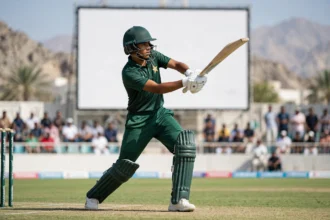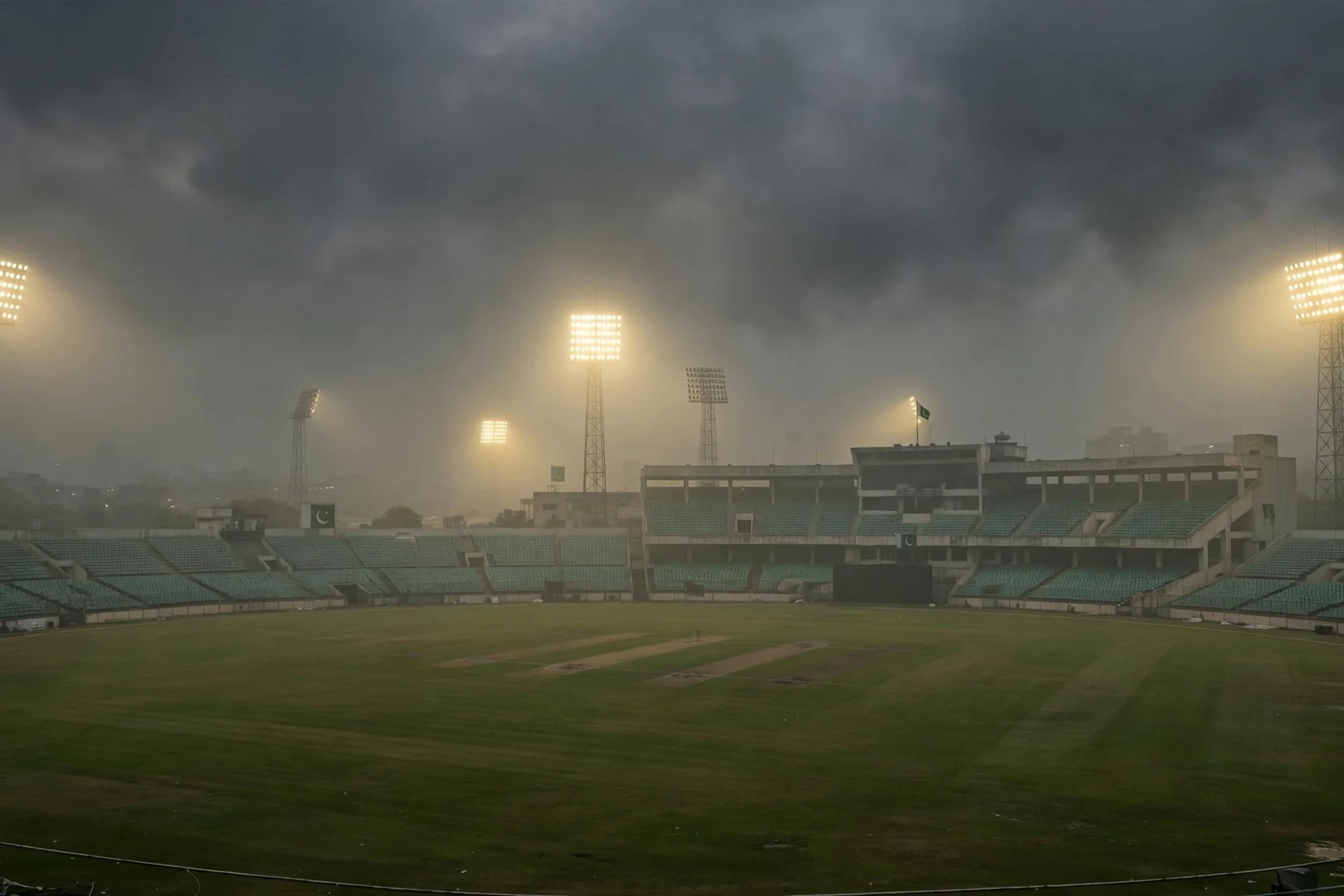

The Pakistan Cricket Board announced on Tuesday that the second Test between Pakistan and Sri Lanka will move from Lahore to Rawalpindi because of worsening smog, with the dates of 17 to 21 November unchanged. Lahore was the most polluted major city in the world when the decision was made, its air quality index at 263. The move solves one problem and walks straight into another. Rawalpindi, the ground that will now host both Tests of the series, has already lost nearly 45 overs to bad light in the first two days of the first Test. It is the third smog-forced move in six years.
What the board decided
The board said the match, originally scheduled for Gaddafi Stadium in Lahore from 17 to 21 November, had been relocated to Rawalpindi Cricket Stadium due to prevailing weather conditions. A board spokesperson said the decision was taken because smog levels in Lahore were rising. The announcement came late on Tuesday, but the decision had effectively been made earlier. ESPNcricinfo reported that broadcasters had raised concerns about broadcast quality from a smog-covered Lahore, and that earlier in the week they had been told not to make travel arrangements while the board prepared the announcement. Both teams are already in Rawalpindi for the first Test, so neither side needs to travel. The dates do not change.
How bad Lahore’s air is
Lahore topped IQAir’s ranking of the world’s most polluted major cities for a second day on Tuesday, with an air quality index of 263, categorised as very unhealthy. The city’s PM2.5 concentration was 37.2 times the World Health Organization’s annual guideline, according to IQAir. Delhi was second in the ranking at 188. The day before, the live reading in Lahore had been around 590, with an hourly peak of 647, and one monitoring station in Allama Iqbal Town crossed 1,000. Punjab Senior Minister Marriyum Aurangzeb blamed pollution drifting from India after Diwali fireworks, a claim that drew mockery when she also said the index had improved to 208. Punjab’s own station readings tell a more complicated story about where Lahore’s pollution comes from. Smog season in Lahore runs from October to December, and the city has now spent about ten days under a severe blanket of it.
The escape ground has its own weather problem
Rawalpindi is not a clean fix. Pakistan declared at 434 for nine in the first Test, and Sri Lanka reached 114 for three at the close of day two, still 320 runs behind. Nearly 45 overs were lost to bad light across the two days. Day one produced only 67.2 overs, day two lost nearly 26 overs, and play ended at 4.20pm on both days even with the floodlights on for about 45 minutes. On the morning of day three, Sri Lanka had moved to 133 for three, still 301 behind, with Kamindu Mendis on 43 and captain Dhananjaya de Silva on 38. The visitors need 101 more runs to reach 234 and avoid the follow-on. Losing a session a day to light is a poor reward for escaping a smog-hit city, and the second Test will be played at the same ground a week later.
A pattern, not a one-off
This is the third smog-forced relocation in six years. In November 2020 a white-ball series against Zimbabwe was moved from Lahore to Rawalpindi, and in December 2022 a Test against New Zealand was shifted from Multan to Karachi. The move also ends an experiment. The board had been trying to stretch Lahore’s season into early autumn, and a Test starting on 17 November would have been the first international match in the city later than 1 November since 2007. That attempt has failed at the first hurdle. Smog season repeats every year, so scheduling a mid-November Test in Lahore and moving it a week before the start raises a planning question the board has not answered. The PCB statement covered the venue and the dates only.
What happens next
The second Test starts at Rawalpindi Cricket Stadium on 17 November and runs to 21 November. Both squads stay put, removing a round of travel a week before the match. Four debutants played in the first Test, three of them passing fifty. The first Test still has to be finished first, with Sri Lanka resuming on day three with seven wickets in hand and 101 runs short of making Pakistan bat again. The question is whether Rawalpindi’s light holds for five full days. If it does not, the board will have moved a Test away from unplayable air and into unplayable light, and the series will have been decided as much by the weather as by the cricket.