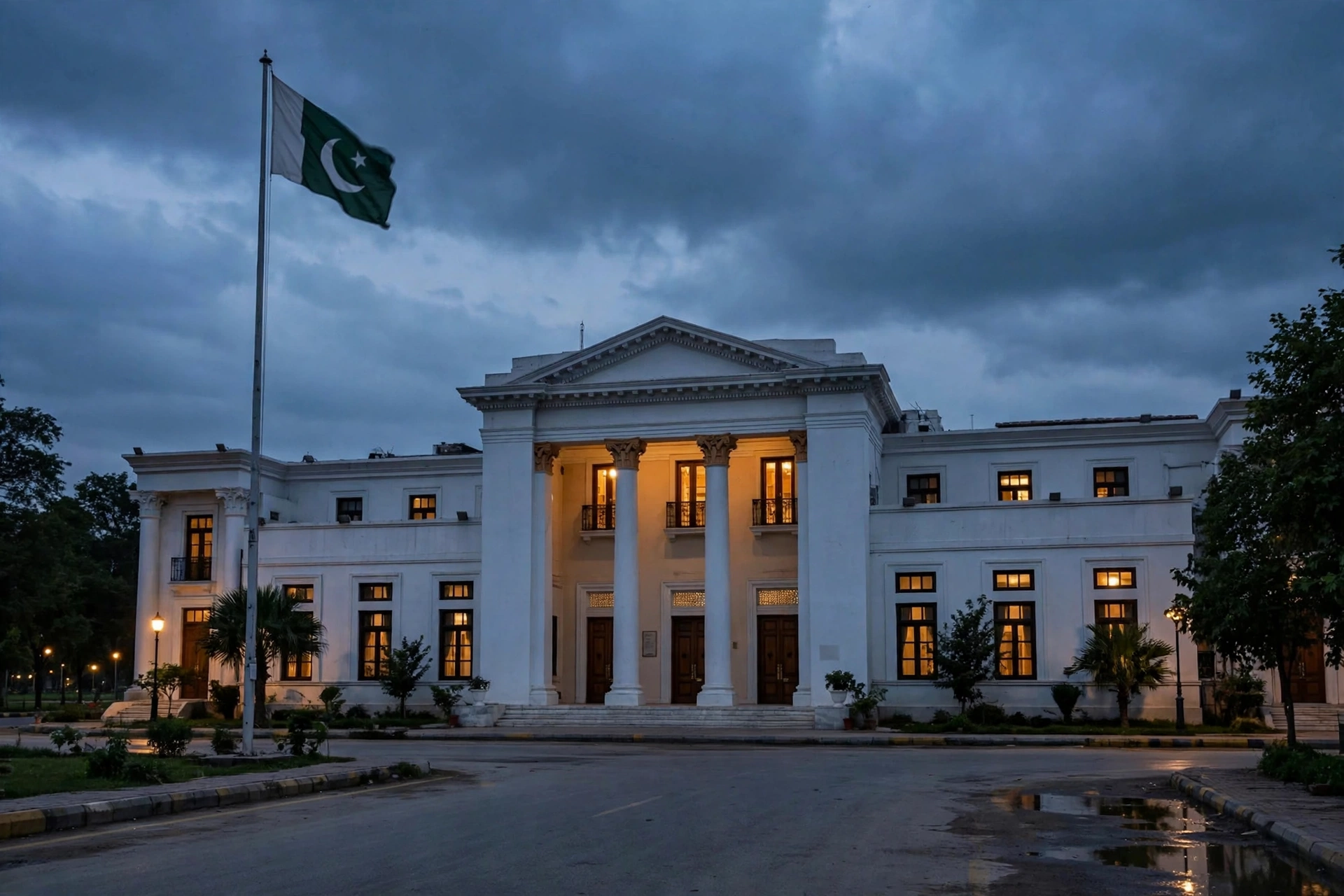

One month after emergency rule was imposed in Khyber Pakhtunkhwa, Governor Faisal Karim Kundi is due to present his one-month performance report at a press briefing today. The record he will defend is stark: the governor now holds the chief minister’s powers, the Peshawar High Court is closed to challenges against the emergency, the opposition has moved its fight to the streets, and the attacks the emergency was meant to stop are happening.
The power moved first, then the courts closed
President Asif Ali Zardari approved the emergency on 11 October under Articles 232 and 234 of the Constitution, on the advice of Prime Minister Shehbaz Sharif. Chief Minister Sohail Afridi and his cabinet were removed, executive authority passed to Governor Faisal Karim Kundi, and emergency measures were imposed in 12 districts. Parliament approved the proclamation on 15 October.
The decisive step came on 4 November, when the federal cabinet approved the transfer of the chief minister’s powers to the governor. Federal Government Order No. 3/2026, gazetted the same day, authorises Kundi to exercise the chief minister’s powers under the Constitution and provincial law. The governor must send Islamabad a monthly report on how he uses the powers.
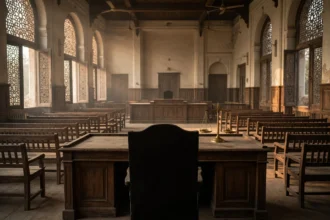
Within three days, the legal route had closed. On 5 November the Federal Constitutional Court barred the Peshawar High Court from hearing cases on arrests under the Maintenance of Public Order ordinance, and a day later it stripped the high court of jurisdiction over Khyber Pakhtunkhwa cases filed after 12 October. On 7 November the high court removed the 105 petitions challenging the emergency and governor’s rule from its cause list and told petitioners to approach another forum. The petitions sought the recovery of the detained chief minister and other leaders. The hearing expected on 10 November never took place.
On Tuesday 10 November, the opposition alliance Tehreek-e-Tahafuz-e-Ayin-e-Pakistan demanded a transparent judicial review of the emergency, warning that centralised rule erodes provincial autonomy and the public mandate. The alliance said it would launch countrywide protests after an All Parties Conference. It also demanded medical reports for Imran Khan and Bushra Bibi and his transfer to Shifa hospital under the Supreme Court’s order.
The security test is still failing
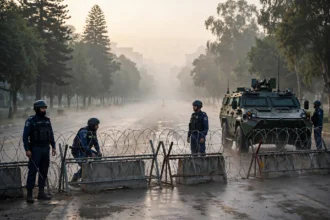
The emergency was imposed because the provincial government had, in the Prime Minister’s Office’s words, deliberately disengaged from the fight against terrorism. A month on, the attacks have not stopped.
On 2 November, four polio workers were abducted in Tank. A day later, gunmen shot dead two police officers guarding a polio team in Mohmand and wounded a third. On 4 November a polio supervisor was abducted in Jamrud and released after three days. Three more polio workers were abducted in Central Kurram the same week, and on the night of 8 November gunmen attacked a checkpost in Hangu, killing Constable Feroz Ali and abducting three colleagues. The three abducted policemen were recovered in Hangu after tribal elders intervened. In Lakki Marwat, four people in a vehicle were abducted at a militant checkpoint.
Provincial figures reported this week put the human cost from 2024 to September 2026 at 2,438 killed: 1,003 from the armed forces, 627 police and 808 civilians, with 3,788 terrorists killed in the same period. Kundi says operations will continue wherever terrorists are, and decisions will be made in Islamabad, not Kabul, Kandahar or Jalalabad.
Two big numbers, nothing delivered yet
The money promises are large and unmeasured. On 22 October the prime minister announced a Rs160 billion programme in Peshawar, “Badalta, Nikharta, Mazboot Khyber Pakhtunkhwa”, with 70 percent meant for the merged districts and 30 percent for the rest of the province. No project list or schedule has been published.
On 8 November the provincial set-up unveiled a Rs70 billion-a-year security plan: Rs59.8 billion for the police and Rs10.3 billion for the Counter Terrorism Department, with faceless anti-terrorism courts to shield judges, prosecutors and witnesses. The courts amendment awaits approval, measures are due in 100 and 180 days, and 17,000 vacant police posts are to be filled. None of that has happened yet. Kundi announced today’s briefing in Lahore on 9 November. Its test is simple: numbers on operations, arrests and spending, or only narrative.
What happens next
Three dates frame the emergency: today, Kundi’s report; the opposition’s All Parties Conference and planned protests; and mid-December, when governor’s rule lapses unless Parliament extends it.
The twelve emergency districts were also left out of the local government elections announced on 28 October, with a 48-member council nominated through jirgas in their place, according to The News. Until elected councils return, a governor reporting monthly to Islamabad runs the province. One month in, every institution that could check it is either closed, sidelined or unelected. That is the month’s real result. More national news from Pakistan is published on PakMirror.