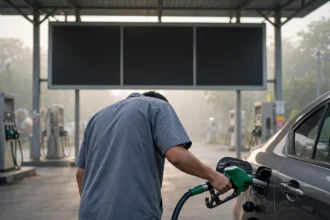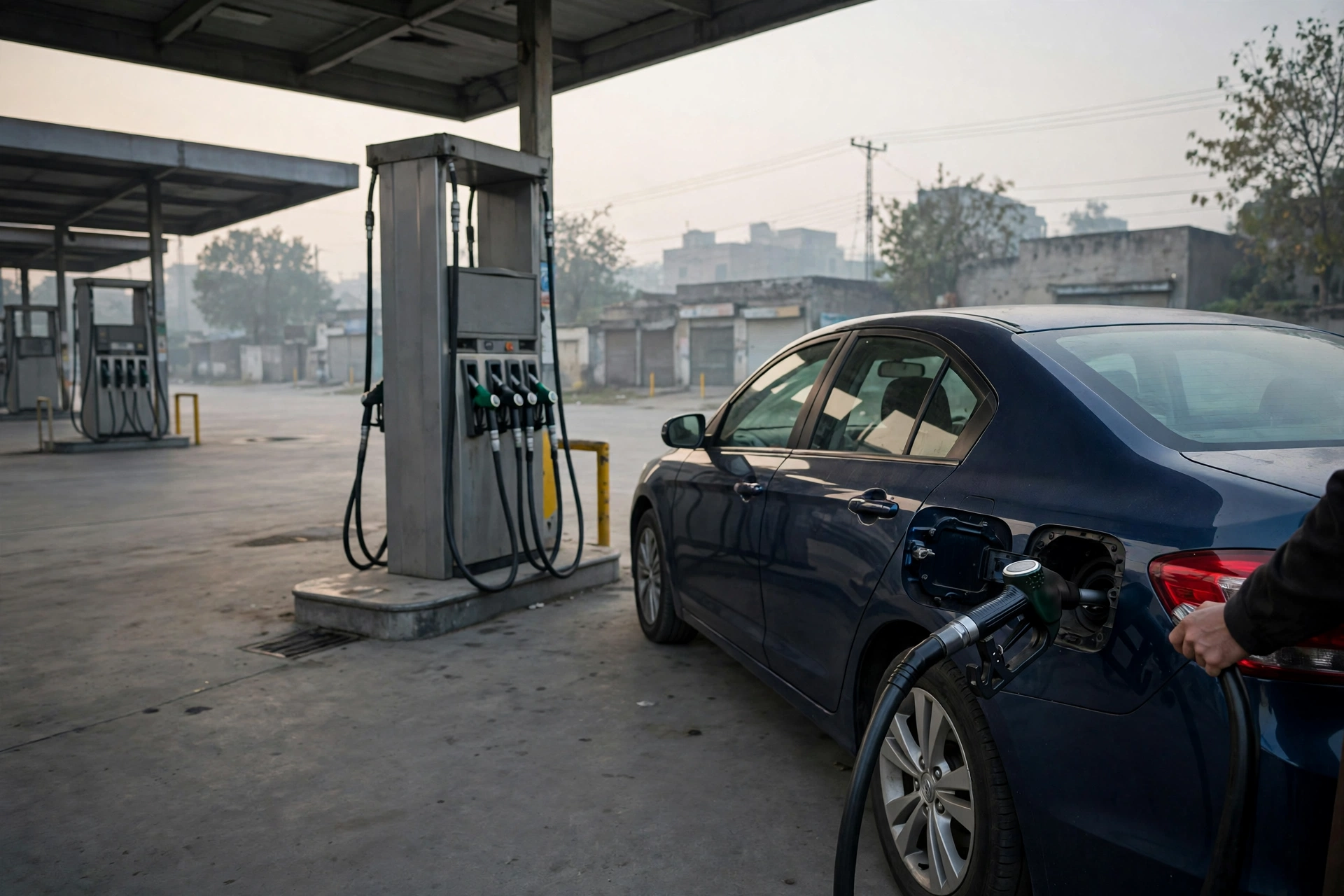

The federal government has cut petrol by Rs8 a litre and high-speed diesel by Rs7, taking petrol to Rs338 and diesel to Rs371 from Wednesday, November 11. It is the sixth cut in nine days, and it leaves petrol Rs39.91 a litre cheaper than it was before the first cut on November 2, a fall of about 10.6 percent. Diesel is down Rs31.96 over the same stretch, about 7.9 percent. The relief is real, but it is built on falling world oil prices and a temporary 30-day freeze on part of the pricing formula, not on any cut in taxes.
The six-cut ledger
The cuts began on Monday, November 2, when petrol fell Rs3.40 to Rs374.51 and diesel fell Rs7.76 to Rs395.20. Petrol then fell Rs5.45 to Rs369.06 on November 4, Rs7.06 to Rs362 on November 5 and Rs9.41 to Rs352.59 on November 6, before the fifth cut took petrol to Rs346 on November 7. Diesel fell in step: Rs3.68 to Rs391.52 on November 4, Rs3.71 to Rs387.81 on November 5, Rs5.56 to Rs382.25 on November 6 and Rs4.25 to Rs378 on November 7. There was no revision on November 8, 9 or 10, with the November 7 rates running through the weekend and the November 9 public holiday. The November 11 cut is the biggest single diesel cut of the sequence, and the second biggest petrol cut after the Rs9.41 fall on November 6.
What it saves at the pump
The savings are easy to count. A 40-litre car tank now costs Rs13,520 to fill, against Rs15,116 before the first cut on November 2, a saving of Rs1,596 on every fill. A 10-litre motorcycle tank costs Rs3,380, against Rs3,779, saving about Rs399. On diesel, a 100-litre tank costs Rs37,100, against Rs40,296 nine days ago, a saving of Rs3,196. The per-litre fall is the same for every motorist, but the rupee saving grows with the size of the tank, which is why transporters and farmers, who buy diesel in bulk, feel the diesel cut first.
The tax wall has not moved
None of the six cuts came from lower taxes. Taxes and duties of about Rs114 a litre on petrol and about Rs100 a litre on diesel have stayed in place through the whole sequence, and the petroleum levy of Rs80 a litre has not moved either. Because the tax is fixed in rupees while the pump price falls, the tax share of the price has crept up: at Rs338, about Rs114 of every litre of petrol, or about 34 percent, is tax, against about 33 percent when petrol cost Rs346. Every rupee of the Rs39.91 relief came from the import and refinery side of the price. That is the part of the price that can move back up.
Why the relief has an expiry date
The mechanism behind the cuts was approved by the federal cabinet on October 30, when it changed the rewritten petrol pricing formula. Under the revised formula, the import price of petrol follows the actual cost of the relevant PSO cargo. For local refineries, the premium, incidentals and customs duty used to work out the ex-refinery price are fixed at their March 7 levels, before the war, for 30 days. The gap between the import price and the resulting ex-refinery price is surrendered by refineries under the petroleum levy account, and the benefit is passed on as a lower pump price. The surrender matters because refineries banked Rs57bn in a quarter while petrol was falling. A short-term smoothing adjustment of $2.950 per barrel per day is also built in. The Oil and Gas Regulatory Authority has also begun publishing daily petroleum prices on its own website, so motorists can check the current rate themselves.
What to watch next
Three things decide whether the relief lasts. First, world oil prices: Brent crude was about $91.56 a barrel on November 10, well below $100, and the cuts have followed that fall. Second, the 30-day freeze: the refinery charges are fixed for 30 days only, so that part of the relief is time-limited, and the government has not said what replaces it when it ends. Third, the daily mechanism itself: prices are now fixed every day, so the same system that cut petrol by almost Rs40 in nine days can raise it just as fast if world prices turn. Until fares and food prices follow fuel down, the relief stays at the pump, not in the household budget. More business and economy news from Pakistan.