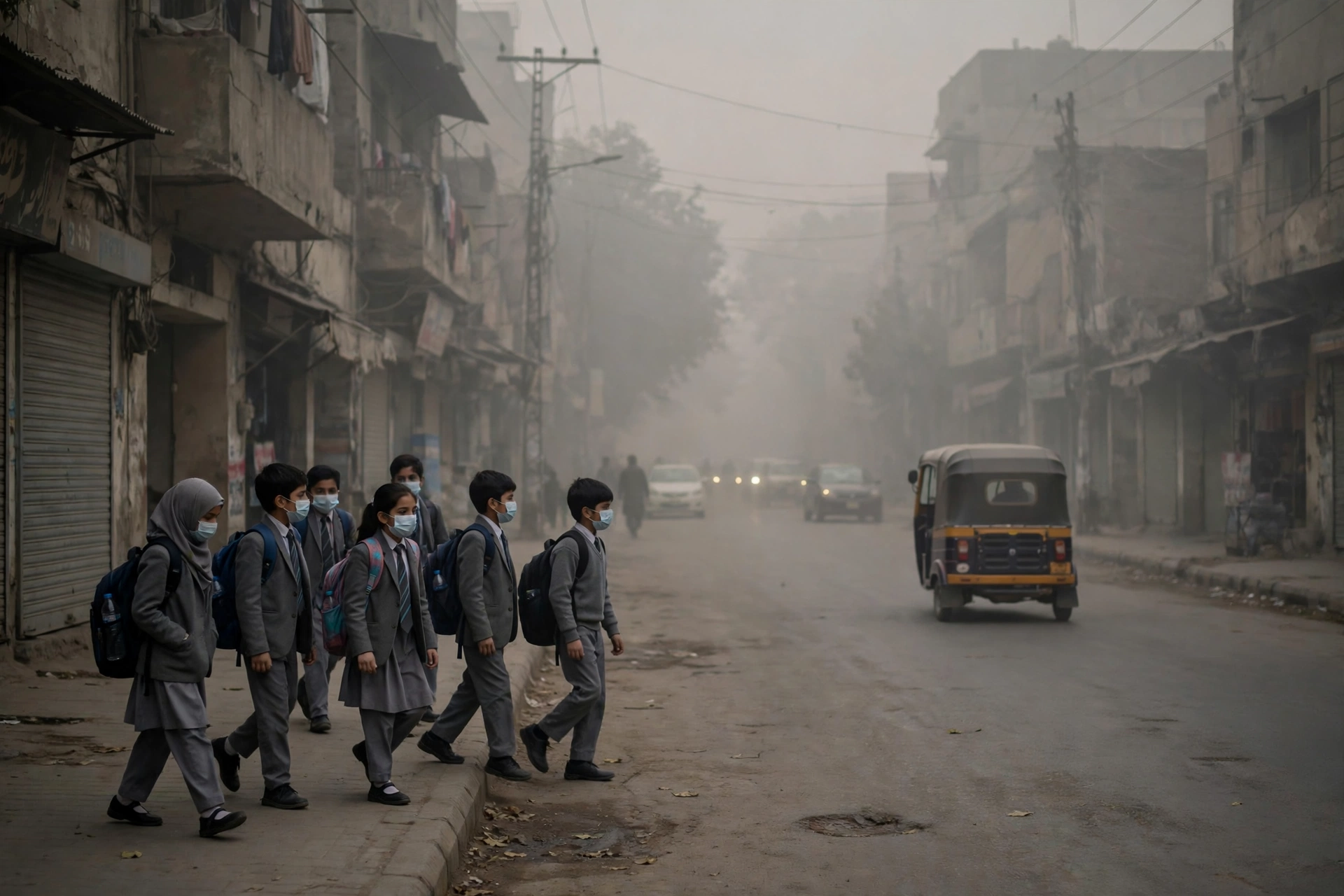

Schools in Punjab will stay open through the smog season, the provincial government has decided, even as Lahore spent much of this week at the top of the world’s pollution rankings. The decision ends days of uncertainty for parents who had been waiting for a closure announcement and watching social media claims about an early winter break. The government says the air is improving. The readings from the past week tell a more mixed story, and that gap is now the real test of the decision.
Deputy Director Environment Lahore Ali Ejaz confirmed that no department had proposed closing schools or colleges, or restricting market timings, this year. The Environment Protection Department reported that smog levels in October fell 33 percent compared with the same period last year, while a separate survey put the decline at 27 percent. Officials expect the air to improve further after 15 November, helped by the wheat-sowing season and forecast rain. More than 30 factories involved in burning tyres have been shut down and fined, and traffic police are running daily checks on smoke-emitting vehicles.
The week in numbers
The claim of easing smog sits awkwardly against the numbers Lahore has actually recorded this week. On Thursday morning, the city’s air quality index reached 419 in IQAir readings taken between 10am and 11am, the worst of any major city in the world at that time, according to Dawn. The Punjab government’s own dashboard put Lahore at 324 the same morning, still deep in the hazardous band. On Wednesday, the citywide index stood at 358, and one neighbourhood, Allama Iqbal Town, recorded 605. On Tuesday, Lahore was again the most polluted major city in the world, a second day in a row at the top of the IQAir ranking, with an index of 263 and fine particle pollution at 37.2 times the World Health Organization’s annual guideline. By Wednesday afternoon the air had eased, and the live reading on Wednesday stood at 192, still classed as unhealthy.
Schools in Lahore stopped outdoor activities on Tuesday, a smaller step than closure, but a sign that the authorities themselves judged the air unfit for children to play in.
Who gets the blame
Senior minister Marriyum Aurangzeb has said light winds carried pollution from India into Punjab after the Diwali fireworks over the weekend. That is the minister’s claim. It has not been independently established, and India’s foreign ministry had not commented on it. Reuters, reporting the same week, listed the local causes too: traffic, dust and crop burning, on top of the seasonal weather that traps it all. The argument matters because it decides where the money and the enforcement go, and the question is whether Diwali fireworks or local sources deserve the blame.
What two earlier Novembers looked like
This is the third November in a row that Punjab has faced the same choice, and the record shows how the answer has changed. In November 2024, Lahore’s air quality index went above 1,100 on 6 November, and the government closed schools and offices in 18 districts. In 2025, the province did not close schools for smog at all. Instead, an order from the Environment Protection Agency told all schools not to open before 8:45am, from 3 November 2025 to 31 January 2026. This year, the government has gone a step further in the other direction: no closures, no changed timings, and no proposal for either on the table. That is a policy, and it deserves to be judged on the numbers it produces, not on the numbers it quotes from October.
The health stakes are high. A national report by the Pakistan Air Quality Initiative found that Lahore’s average yearly level of PM2.5 is above 110 micrograms per cubic metre, more than 22 times the World Health Organization’s guideline, and linked air pollution across Pakistan to about 128,000 early deaths a year.
What happens next
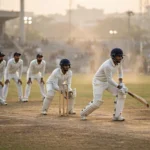
Three things will decide whether the decision holds. First, the rain officials are counting on after 15 November, and whether it arrives in time to wash the air out. Second, the morning readings over the next two weeks, which will show whether the October improvement was a trend or a pause. Third, the formal position: if schools are to close, the order must come from the director general of the Environment Protection Agency, followed by a notification from the School Education Department. Until those notices appear, no closure order is in force, and parents should rely on the official notifications, not on rumours on social media. The smog has already forced one change this week: the second Test was moved from Lahore to Rawalpindi because of the smog. The hazardous November morning that opened the season showed what the air can do at its worst.