
Punjab Chief Minister Maryam Nawaz told the Pakistan Minerals Investment Forum in Islamabad on Thursday that there is significant evidence of placer gold in Punjab’s five rivers, and she named Mianwali and Attock among the areas with notable potential. The claim drew headlines at once. But the number behind it is not new, and the gold is still in the river.
The 2.8 million tola figure
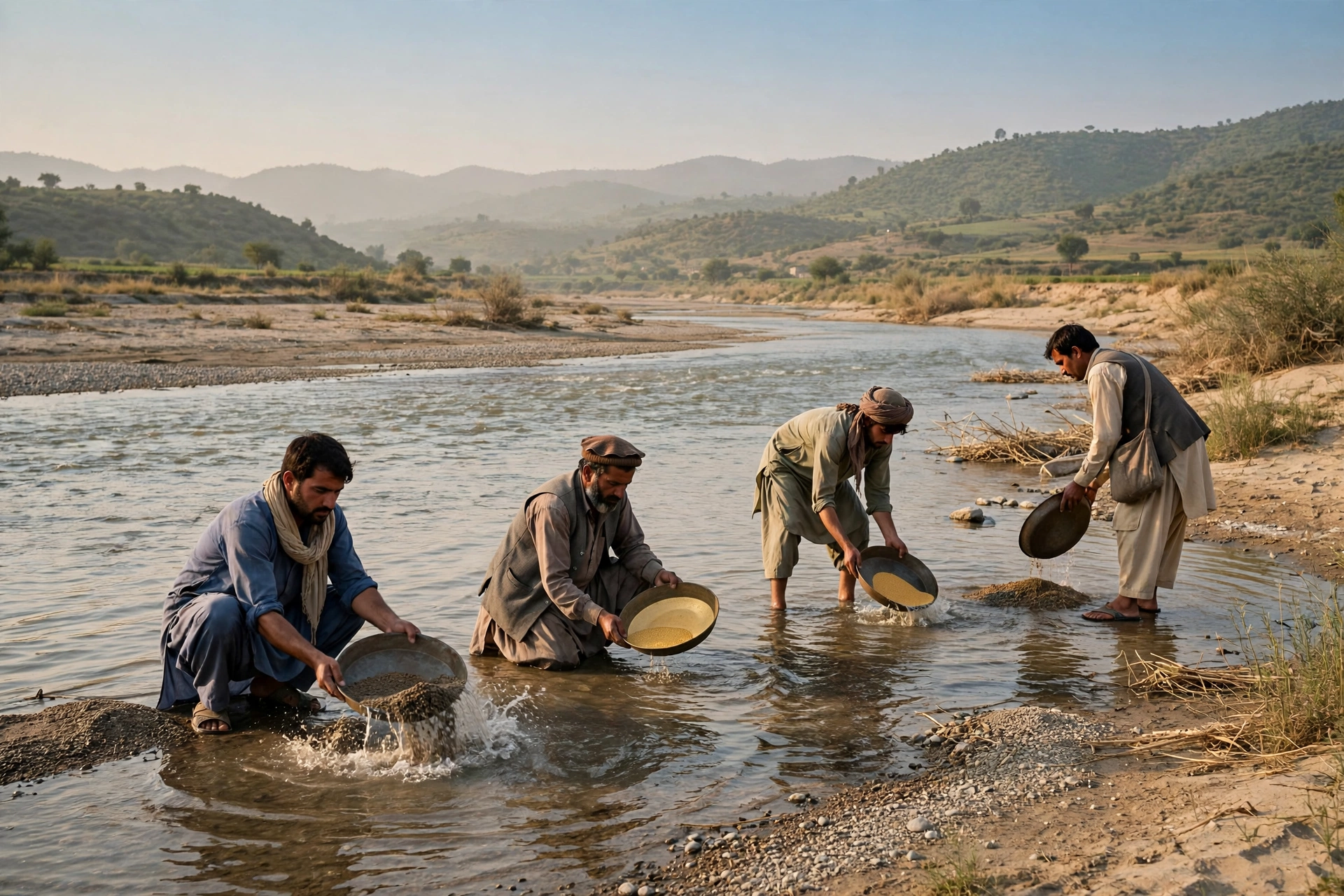
The figure the claim rests on comes from the Geological Survey of Pakistan. Its teams studied a 32 kilometre stretch of the River Indus from Ghazi Brotha to the Attock Khurd bridge, where the Kabul River meets the Indus, and submitted their report on 17 January 2025. The survey estimated 2.8 million tolas of placer gold, about 32 tonnes, in what geologists call the inferred category. That means the estimate is drawn from sampling, not from proven reserves that have been measured and drilled. Reports in January 2025 valued the deposit at between Rs600 billion and Rs800 billion at the prices of the day, and that value rises and falls with the gold price in Pakistan. Prices move fast: gold fell Rs3,600 a tola in a single day in October. Placer gold is not a seam underground. It is fine particles of gold that a river has carried and dropped into sand and gravel over thousands of years, which is why it can be panned from the riverbed.
What is actually ready
The Punjab government’s own brochure for the forum says the surveyed area has been divided into viable blocks that are ready for auction once the reserve price is ratified. That ratification has not happened yet, and no auction date has been announced. The Punjab Mines and Minerals Department says it has stopped illegal digging in the area, prepared the blocks, and completed a pilot plant study to assess the reserve price. Its own estimate is that open auctions could bring up to Rs100 billion in bid money in one year, plus yearly royalty. Auction rules were amended in December 2024 and an auction committee was approved in February 2025. In September 2024 the Punjab government banned unauthorised excavation along the Indus in Attock for two months, and the mines department says it has registered more than 100 cases against illegal diggers. The picture is therefore narrower than the headline. One stretch of one river has been surveyed, the blocks are drawn, and the sale has not started.
The same gold, two very different stories
The contrast with yesterday’s news could hardly be sharper. On Wednesday, ten policemen were martyred in Kohat when militants ambushed a convoy returning from a raid on illegal placer gold mining along the Indus, and police say 18 attackers were killed in the gunfight. The Kohat administration had already restricted excavator parking in the designated gold blocks because the machines were being used for unauthorised extraction. In Punjab, the same mineral in the same river system is being handled the other way: bans, cases, and a planned legal auction. Illegal digging has also been reported near Kalabagh in Mianwali, where the district administration seized six excavators in a raid in October 2025. The gold is the same. The difference is whether the state controls the digging or criminal groups do.
The forum’s bigger pitch
The gold claim was one pitch among many at the two-day forum, which runs on 12 and 13 November at the Jinnah Convention Centre in Islamabad and aims to bring international investors into Pakistan’s mining sector. The government is presenting copper and gold reserves it values at $8 trillion, and it is preparing a tax incentives package under the proposed National Mineral Policy 2026, built on a model by consultancy Wood Mackenzie, which still needs approval from the Finance Division. The flagship project remains Reko Diq, the $8.83 billion copper and gold mine in Balochistan, in which Barrick Mining holds 50 percent and the Balochistan government holds 25 percent. Pakistan has 92 known minerals and commercially exploits 52 of them. The $8 trillion figure is an estimate of what the minerals in the ground might be worth, not money that has been committed, and the incentives package is still awaiting approval.
What happens next
The forum continues on Friday. Three things will show whether the gold claim becomes money. First, whether Punjab announces a reserve price and an auction date for the Attock blocks. Second, whether the Finance Division approves the tax incentives package the government is offering investors. Third, whether any investor signs anything, rather than simply attending. Until the blocks are auctioned, the 2.8 million tolas remain an estimate in a government report, and the gold stays in the river.