
Prime Minister Shehbaz Sharif went to Antalya with a number: $188 billion. That is what Pakistan needs by 2035 to complete its clean energy transition, he told a high-level dialogue at the COP31 climate summit on Wednesday, $138 billion for low-carbon power generation and another $50 billion to replace coal-fired power with solar energy. The number made headlines. What did not is what it leaves out. The $188 billion is barely half of Pakistan’s total climate finance gap, and the only money announced for Pakistan in the same week was $500 million that the country cannot touch until the next disaster strikes.
The ask, in two numbers
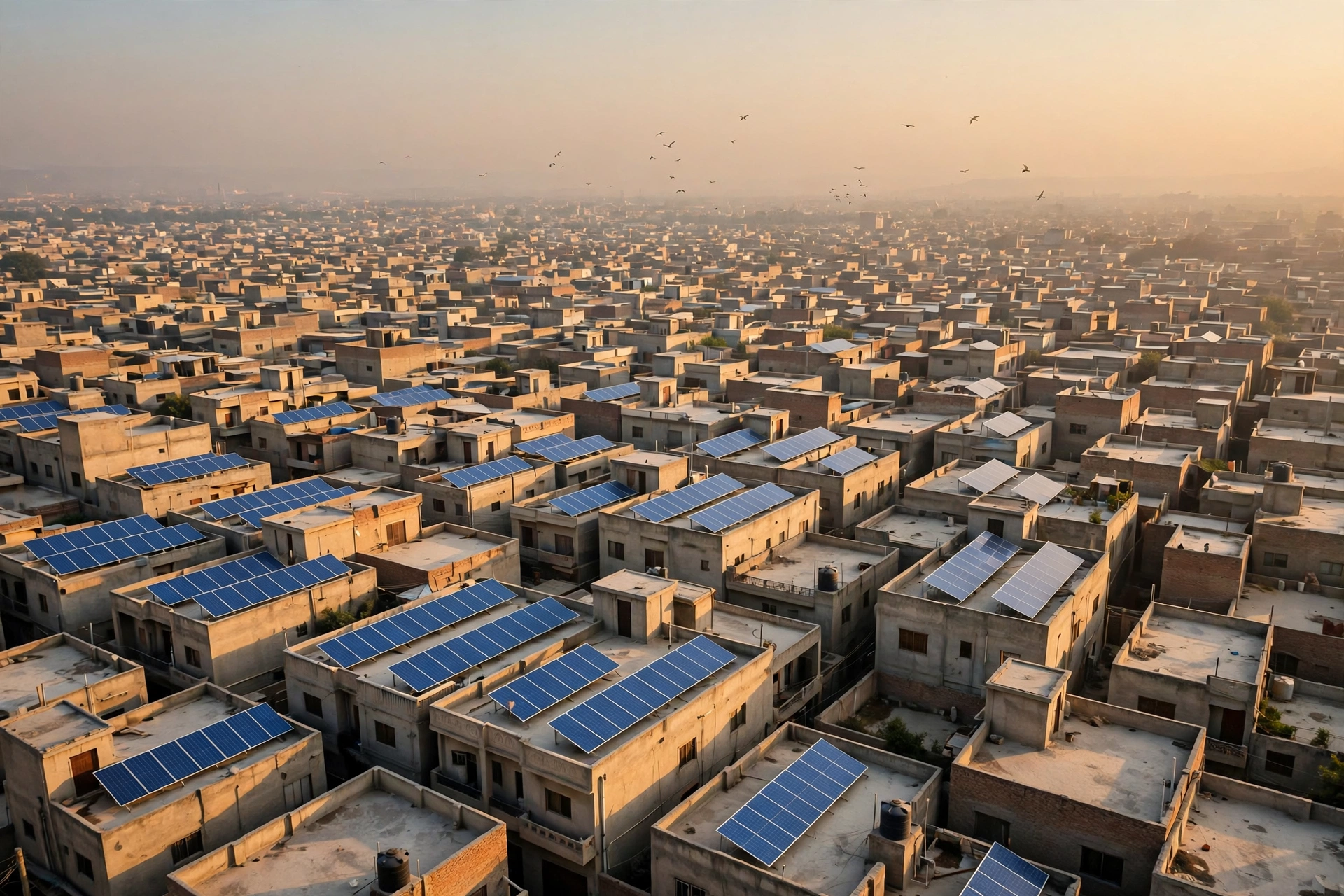
The prime minister said clean energy sources now account for nearly 55 percent of Pakistan’s energy mix, and he backed the global “35 by 35” pledge, which aims to raise electricity’s share of total final energy use to about 35 percent by 2035. “35 by 35 will be achieved only if finance flows at the speed of ambition through concessional capital and the transfer of affordable technology,” he said. He called the rooftop solar boom a “quiet revolution” driven by ordinary citizens, and asked for concessional capital, low-cost loans and grants, not commercial borrowing.
The gap is bigger than the ask
The $188 billion sounds large until it is set against the total need. The World Bank estimates Pakistan’s climate finance gap at $348 billion by 2030, covering mitigation and adaptation, a figure the prime minister’s coordinator, Rana Ehsan Afzal Khan, repeated in Islamabad on November 4. That makes the $188 billion ask 54 percent of the gap, and the ask covers clean energy only. Pakistan has received only $1.4 billion to $2 billion a year in climate finance on average over the past decade. At that pace, the nine years to 2035 would bring $13 billion to $18 billion, under a tenth of the ask.
What actually arrived this week
The only concrete money for Pakistan announced in the same week as the speech was approved on the same day, November 11, when the ADB approved $500 million in contingent disaster financing. It is a pre-approved credit line that Pakistan can draw on only after an eligible disaster, and $500 million is about 0.27 percent of the $188 billion ask. Pakistan is also among the first five pilot countries for the COP31 presidency’s Climate Implementation Bridge, announced at New York Climate Week in September, which aims to turn climate commitments into finance-ready projects but carries no money of its own yet. Pakistan has also repeatedly asked wealthier nations to honour their $100 billion a year climate finance commitment, a target still unmet.
The 22 GW claim, checked
The prime minister also told the summit that Pakistan had added nearly 22 gigawatts of rooftop solar capacity in just two years. The figure depends on what is counted. The International Energy Agency’s September 2026 report says Pakistan imported about 51 gigawatts of solar panels between 2021 and 2025, and estimates installed distributed solar capacity in 2025 at between 28 and 38 gigawatts. The officially registered picture is far smaller: rooftop capacity installed under the net metering policy has only just passed 7 gigawatts. The gap is the uncounted solar, systems installed off-grid or behind the meter. The IEA reports that the median firm in Pakistan faces around 45 hours without grid electricity every month. The boom has a cost as well: as households generate their own power, grid sales fall while fixed costs stay, and the capacity charges behind NEPRA’s latest Rs23.3bn ask keep landing on the bills of those still on the grid.
The delivery record
But does pledged money arrive at all? Less than half of the roughly $11 billion pledged after the 2022 floods had reached Pakistan a year ago, according to the UN humanitarian office OCHA, citing government data. The 2022 floods affected 33 million people and caused more than $30 billion in damage and economic losses, according to a joint government and World Bank assessment. Severe monsoon flooding in 2025 brought further displacement and billions of dollars more in damage. That record is why he asked for money that does not add to the debt burden, in a country where 29 percent of Pakistanis now live below the poverty line.
What to watch
COP31 runs until November 20, and the leaders’ segment closes on Thursday. The test is whether the $188 billion ask converts into commitments before the summit ends, and whether the Bridge pilot produces finance-ready projects rather than another list of intentions. The solar boom will keep growing with or without the summit. The question is whether the grid, the tariffs and the market are redesigned around that reality. More business and economy news from Pakistan is on our business pages.