
Punjab’s World Bank-funded land records project has reached 90 percent physical progress, with 5,805 of the province’s 6,014 revenue villages digitised and nearly 69.92 million land rights registered, according to the World Bank’s latest review. The Punjab Urban Land Systems Enhancement Project, known as PULSE, has beaten its closing target of 50.68 million registered rights by about 38 percent, and the World Bank has upgraded its ratings for the project from Satisfactory to Highly Satisfactory. But the headline figure hides two gaps that matter more to ordinary landowners: only 28 percent of jointly owned landholdings have been partitioned, and only 61.8 percent of the project’s money has actually been paid out, with the project due to close on 30 June 2027.
What the project has actually finished
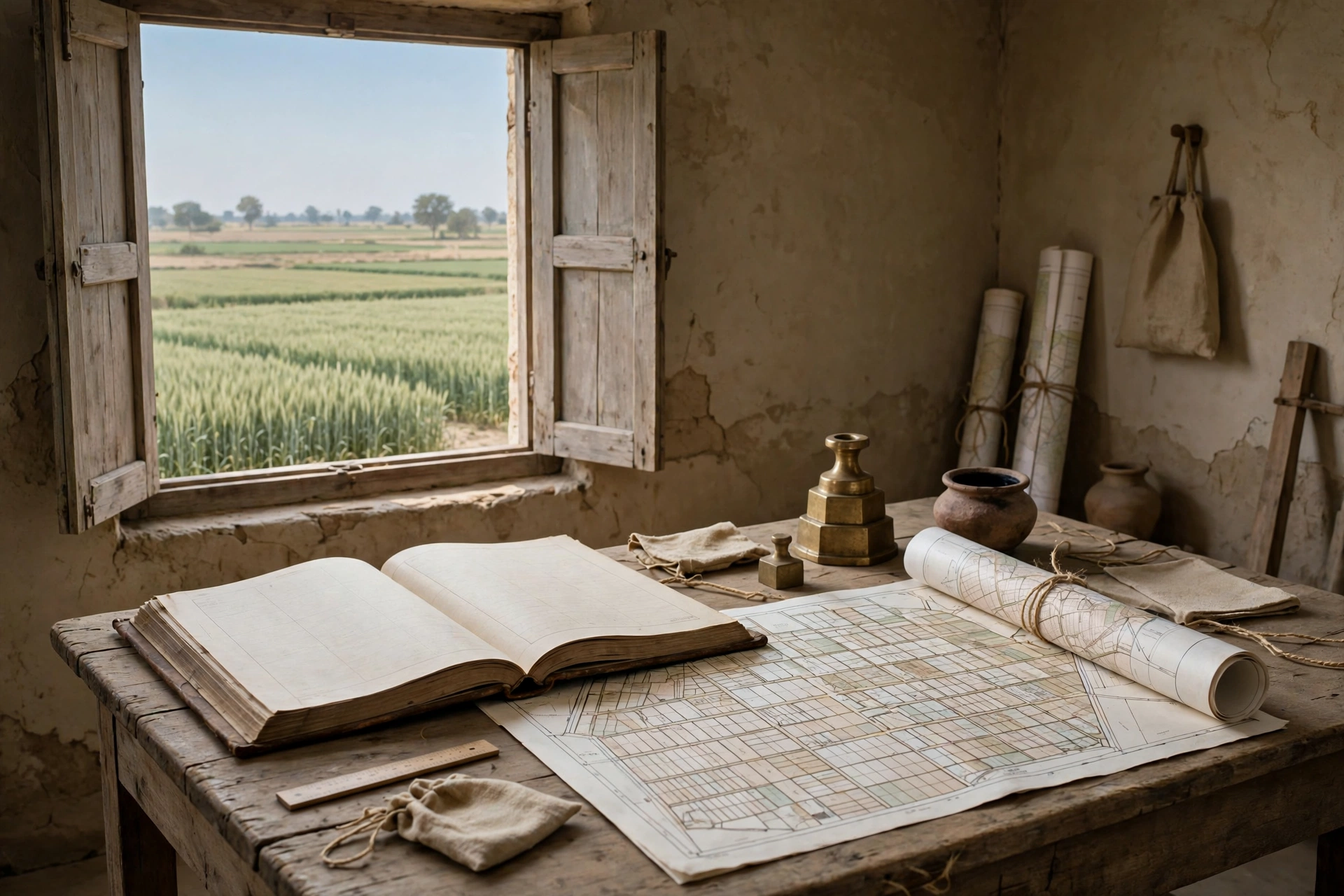
Digitisation covers 96.5 percent of Punjab’s revenue villages, known locally as mauzas. Digital cadastral maps now cover 86 percent of the province, well above the target of 61.8 percent, and more than 31.18 million person-based land records have been converted into parcel-based records, passing a target of 28 million. The exercise covers more than 24.4 million landowners. The project is run by the Punjab Board of Revenue and the Punjab Land Records Authority, and was approved on 10 March 2022 with initial financing of 150 million US dollars, later revised to 145.76 million dollars.
The switch from person-based to parcel-based records is the practical change. Under the old khewat system, a record listed a person’s shares across jointly owned land, often without saying exactly which piece of ground belonged to whom. A parcel-based record ties each owner to a mapped plot, with a parcel map issued alongside the registry. Land is usually a rural family’s main asset, and the Punjab government also sets prices that touch those households, such as the move by which Punjab fixed a 10kg flour bag at Rs1,275.
The unfinished half: joint ownership
The part of the project that actually ends family land disputes is far behind the rest. Of 1.747 million eligible joint landholdings, only 495,163 have been partitioned, or about 28 percent. Partitioning has created around 1.18 million new parcels, of which 94,833 have been registered in women’s names. That leaves roughly seven in ten joint holdings still undivided, which means the digitised record for those plots still shows shared ownership, and the disputes that come with it continue.
This matters because most cases in Punjab’s land revenue courts involve jointly owned land, according to the Rawalpindi Commissioner, who told Dawn in January 2025 that such disputes can run for years. PULSE aims to reach single-owner records for at least 80 percent of holdings so the province can move fully from the khewat system to parcel-based records. Land disputes also slow farm investment, and Pakistan approved sugar exports of 416,000 tonnes this month, a decision that rests on the same farm economy.
Women landowners: a mixed picture
Women account for 31 percent of registered land rights, slightly short of the project’s 32 percent target. On the wider measure, however, the project has done better than planned: 7.57 million land records have been jointly or individually registered or updated by women, passing the target of six million. The partition work has also put 94,833 new parcels in women’s names. The final months will decide whether the 32 percent target is met.
The money is behind the work
Financial disbursement has lagged well behind physical progress. Of the revised credit of 145.76 million dollars, about 90.08 million dollars had been disbursed by October 2026, or 61.8 percent, leaving 55.68 million dollars still to flow. The World Bank kept the project’s overall risk rating at Moderate even as it raised its ratings for progress towards development objectives and overall implementation to Highly Satisfactory. A large share of the spending still has to happen in the final eight months.
What happens next
All activities are expected to be completed by the scheduled closing date of 30 June 2027. Three things will decide whether the project finishes as a genuine reform or as a digitisation exercise: the remaining 182 villages, the roughly 1.25 million joint holdings still awaiting partition, and the 55.68 million dollars still undisbursed. On public land, the project has screened 933.5 hectares for housing against a target of 1,000 hectares and identified 200 public land sites for development programmes, meeting that target. Clear records also decide who can claim relief after disaster, as the NDMA drought alert for Sindh and Balochistan showed this month. For continuing coverage, see more business and economy news from Pakistan.