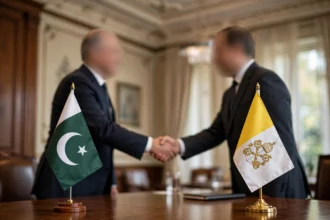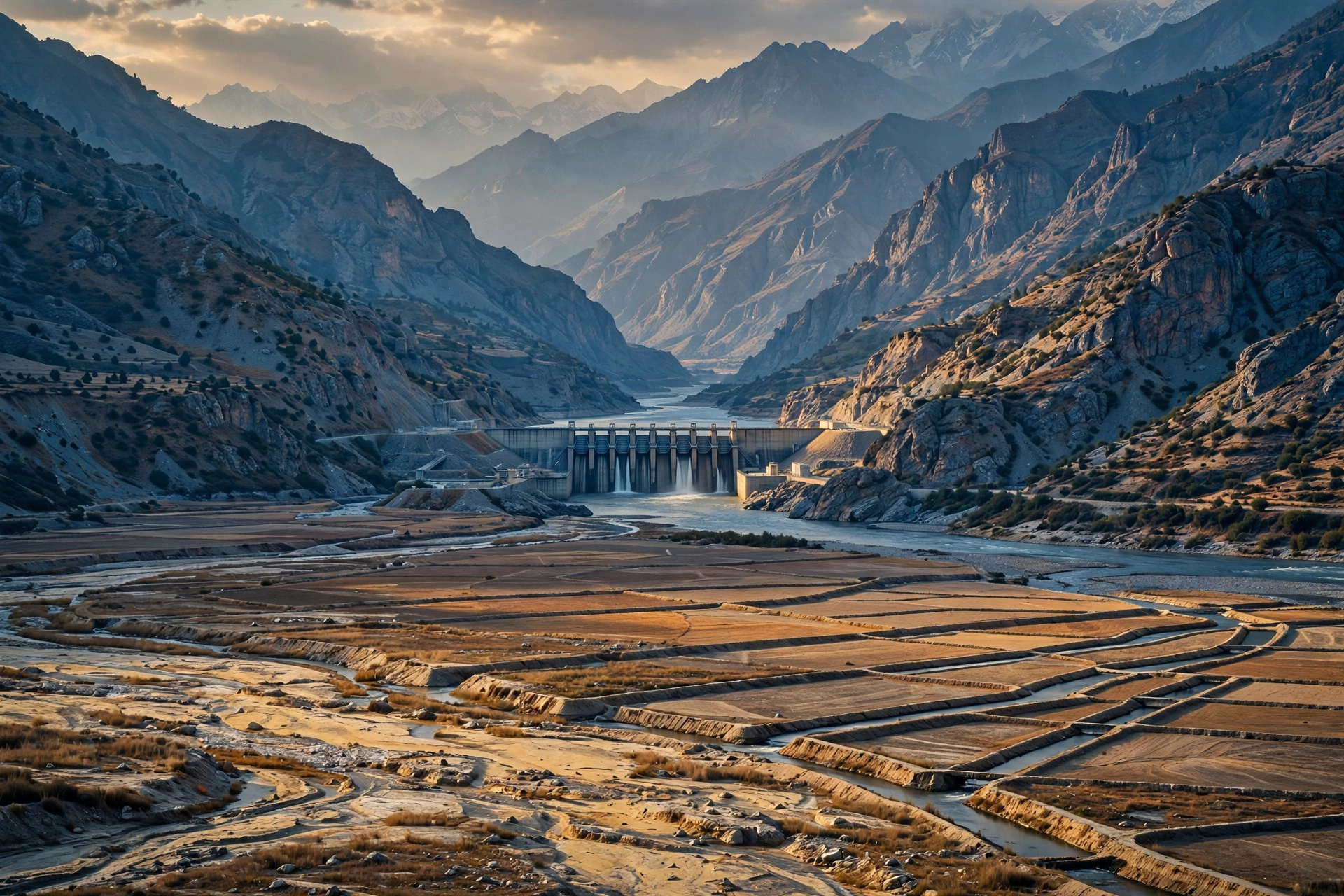

Pakistan took its fight over the Indus Waters Treaty to the United Nations on Wednesday, telling an informal Security Council meeting that India’s decision to hold the 1960 treaty in abeyance endangers more than 240 million people. Ambassador Usman Jadoon, Pakistan’s deputy permanent representative to the UN, called the suspension unlawful and said no country should use shared water as a weapon of coercion. India hit back at the same meeting, accusing Pakistan of misusing the forum.
The clash in New York
Jadoon was speaking at an Arria-formula meeting convened by Liberia on natural resources and conflict. He said India’s suspension of the treaty, announced in April 2025 after the Pahalgam attack, threatens downstream supplies and risks escalation between two nuclear-armed neighbours. He cited UN Security Council Resolution 2788 and Article 33 of the UN Charter on settling disputes by peaceful means.
India’s permanent representative, P. Harish, replied that Pakistan was using the platform to peddle propaganda and that India’s position remains clear and consistent. He also accused Pakistan’s military leadership of exploiting the country’s mineral wealth, citing Field Marshal Asim Munir showing mineral stones to foreign leaders, including Donald Trump. Pakistan’s First Secretary Ansar Shah used the right of reply to reject what he called India’s attempt to deflect and deny.
The court has already ruled
Pakistan asked for arbitration in August 2016 over two Indian run-of-river projects on the western rivers, the 330 MW Kishenganga plant and the 850 MW Ratle plant, arguing that gated spillways and low-level outlets could let India control downstream flows. India boycotted the Court of Arbitration and called it illegally constituted. In July 2023 the court unanimously rejected all six of India’s objections to its own existence. In June 2025 it ruled the abeyance declaration did not end its authority, and in August 2025 it ruled on the design questions, limiting the pondage India may build.
The decisive ruling came on 31 August 2026. The court held unanimously that the treaty remains fully in force, that abeyance is not a term the treaty recognises, and that none of India’s grounds justified suspending it. Article XII(4) of the treaty says it shall continue in force until terminated by a duly ratified treaty between the two governments. The same day, the court barred India from raising concrete on the Ratle dam wall and power intake above set levels until 90 days after the Neutral Expert’s final decision, expected around July 2027. India rejected the rulings the same day, repeating that the court is illegally constituted and its decisions null and void.
What India can actually hold back
The treaty gives Pakistan the waters of the three western rivers, the Indus, Jhelum and Chenab, which carry about 135 million acre-feet a year. It allows India to store only 3.6 million acre-feet on those rivers, about 2.7 percent of their flow. In more than six decades India has built barely 0.2 million acre-feet of that storage, almost all of it the small pondage at Baglihar on the Chenab. Its projects on the western rivers must be run-of-river, so water passes through and cannot be held back in large volumes.
The leverage India gains is therefore not a tap it can turn off tomorrow. It is the freedom to build, to stop sharing flow data, and to time releases in the low-flow winter months. That is why the design of Kishenganga and Ratle matters: pondage and outlets decide how much control a dam has over timing. The stakes are already visible at home. Punjab needs 10 billion cubic metres more water a year, the FAO warned, before any upstream cut is counted. How India may reduce Pakistan’s water share under the Indus Treaty has been an open question since April.
What happens next
Three dates now frame the dispute. The first is 2 to 4 December, when the UN Water Conference meets in the United Arab Emirates, where Pakistan has already said it will press the same case. The second is July 2027, when the Neutral Expert, Michel Lino, is expected to rule on whether the Kishenganga and Ratle designs comply with the treaty. India withdrew from his proceedings in July 2025 but welcomed his earlier decision on his own competence. Islamabad has kept other channels with Delhi open, naming its climate minister for the SCO forum in Delhi.
The third date is none at all. The court has no police force, the World Bank’s role is procedural, and India says the abeyance stands until Pakistan credibly and irrevocably ends support for cross-border terrorism. Pakistan’s case at the UN is therefore a legal victory still waiting for plumbing. The treaty stands in The Hague. On the rivers, it does not. More national news from Pakistan.