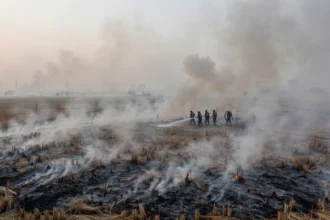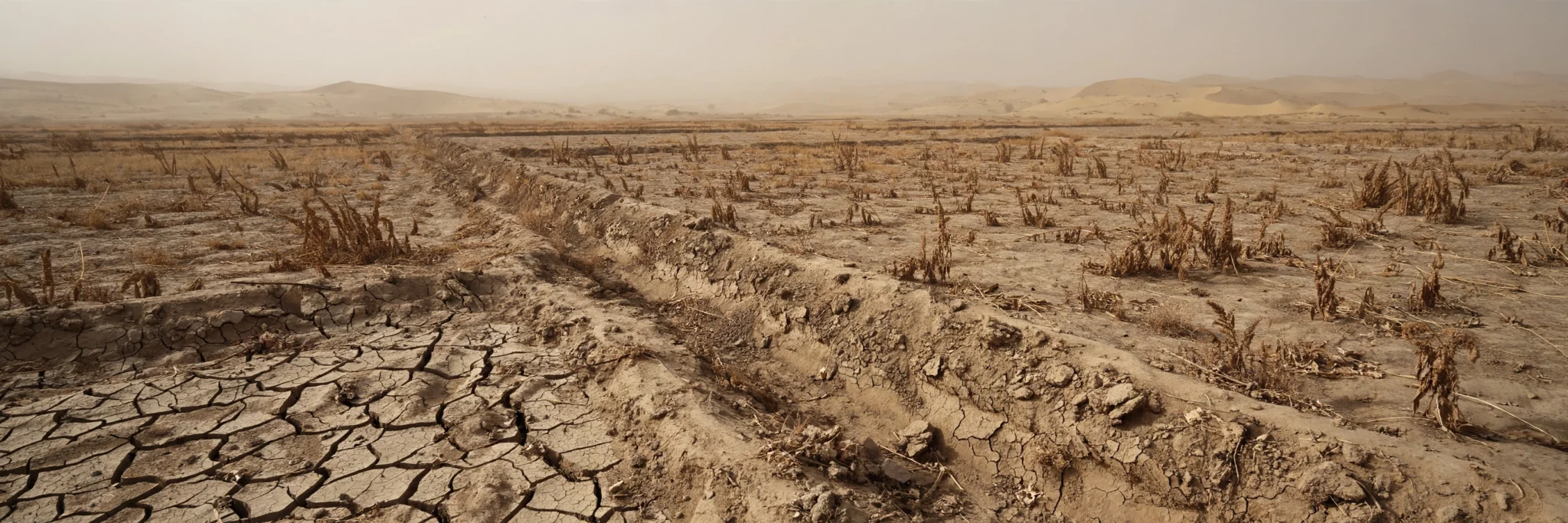

The National Disaster Management Authority has put six districts in Sindh and Balochistan on high alert for severe drought, ten days after Sindh declared Tharparkar a calamity-hit district. The authority’s National Emergency Operations Centre warned on Tuesday that Umerkot, Tharparkar, Mirpurkhas and Sujawal in Sindh, and Chagai and Washuk in Balochistan, face a severe drought threat after a monsoon that delivered far less rain than crops needed.
The map widens beyond Thar
Ten days ago the drought had one name. Tharparkar was declared a calamity-hit district on 7 November after losing about 90 percent of its crops across its seven talukas. The NDMA alert moves the line outward. Three more Sindh districts are now named, and the warning crosses the provincial border into Balochistan, where parts of Chagai and Washuk face drought-like conditions. The warning follows a nationwide assessment.
Tharparkar was treated as a local disaster with a local fix: repair the reverse osmosis plants, send water and fodder, study a pipeline from Naukot to Mithi. A national alert says the cause is bigger than one district’s failed rains. The NDMA named below-average rainfall, extended dry spells, rising temperatures and changing monsoon patterns as the drivers, with temperatures in the affected Sindh districts 1 to 3 degrees Celsius above normal.
The rainfall ledger
Sindh recorded a 50.8 percent rainfall deficit between July and September 2026, receiving just 71.1 millimetres against a seasonal norm of 144.3 millimetres, the largest shortfall of any province. September rains were severely depleted, ranging from just 1 to 36 millimetres across Tharparkar’s seven talukas. Rain-fed crops need three to four spells of rain every 15 to 20 days from June to August, so September rain comes too late for the harvest.
More than 90 percent of rain-fed seasonal crops in Tharparkar failed, mostly millet, guar and pulses. Satellite assessments put drought stress at 98 percent in Chachro and Dahli, 97 percent in Islamkot and 95 percent in Mithi. Local reports put the people affected in Tharparkar at between 700,000 and 1,000,000, and Umerkot scored 20 out of 25, rated Very High Risk, in a drought risk assessment citing its dependence on rain-fed farming and the absence of alternative livelihoods.
A food warning that runs into 2027
This is not only about this season’s harvest. The Famine Early Warning Systems Network projects Crisis-level acute food insecurity, IPC Phase 3, across the vulnerable arid pockets of Sindh through at least early 2027. Fodder shortages and dried grazing land are pushing pastoralist families to move early toward canal-irrigated areas for feed and water. With farm earnings down, food stocks depleted and prices rising, families are being pushed toward distress sales of livestock and debt, coping that strips away next season before it begins.
The State Bank’s annual report, released on Monday, listed climate preparedness among the structural reforms Pakistan still needs, after a year in which monsoon floods and an energy price shock both hit the economy.
What relief is on the table
The Sindh government will survey the drought in Tharparkar and Umerkot, the chief minister’s adviser, Gianchand Essarani, announced last Thursday. The survey will cover access to clean drinking water, education, food shortages, maternal and child healthcare, and livestock. Officials have been told to ensure relief in Diplo, Dahli, Chachro and Nagarparkar, with women and children given priority. The options include food distribution, direct cash support, food vouchers and help through the Benazir Income Support Programme.
Neither the survey nor the alert carries a number yet. No wheat quantity, family count or cash amount has been announced, and no date has been given for the findings to turn into relief on the ground. That is the same gap our earlier reporting found in the Tharparkar declaration, which ordered water and fodder without saying how much would reach how many families. The gap is not only about relief: Sindh’s water system won $540 million in World Bank funding, yet only 750,000 of 1.5 million people get safely managed water, so these districts were already short of water before the rains failed.
The water stress is not confined to Sindh. Punjab faces a 10 billion cubic metre annual water gap, the FAO warned, so the alerts add up to a national water problem, not a series of local ones.
What happens next
The NDMA’s operations centre will keep monitoring the six districts, and the Sindh survey decides the scale of relief. Two questions decide whether the alert stays a warning or becomes a crisis: whether the survey produces numbers fast enough for food and cash to reach families before winter deepens, and whether Balochistan’s districts, named in the alert but given no survey or relief plan yet, get one. For families already moving livestock toward canal water, the answer cannot wait for the next monsoon.