
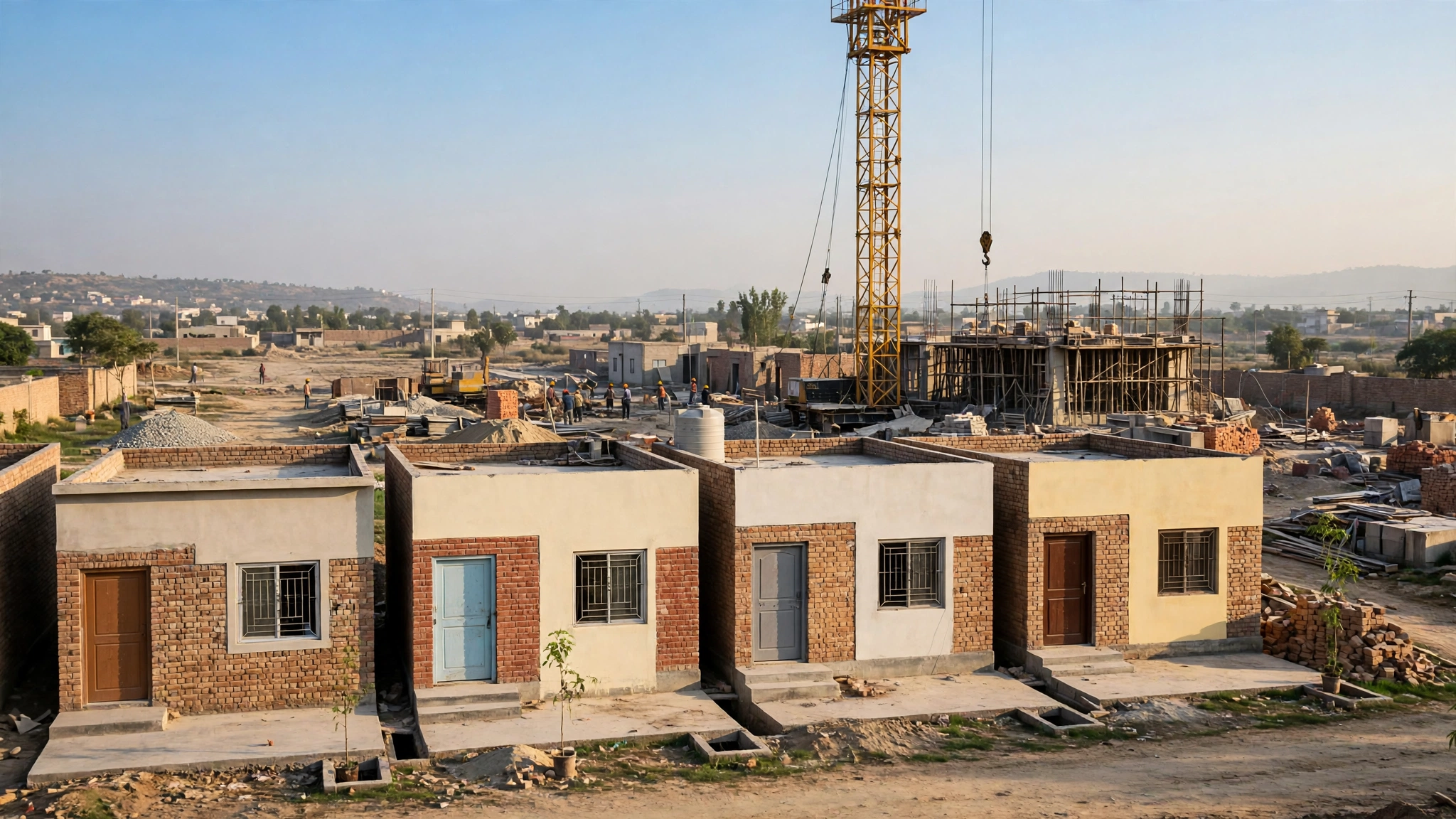

Prime Minister Shehbaz Sharif has told banks to disburse Rs1 trillion in housing loans under the Apna Ghar programme in the next six months, a target that would require them to lend nearly 10 times faster than they have managed since the scheme began. The instruction came at a ceremony in Islamabad on 23 November, when disbursements had crossed Rs100 billion and have since reached Rs112 billion for about 19,000 families. The gap between the promise and the pace is the real story.
The maths behind the target
Since the programme launched in April 2026, banks have disbursed about Rs112 billion in six and a half months, roughly Rs17 billion a month on average. The new target needs about Rs167 billion a month, every month, for six months. Even the recent pace is nowhere near it: disbursements rose from Rs76 billion on 9 October to Rs112 billion on 23 November, about Rs24 billion a month, still roughly seven times short of what the target demands. Rs1 trillion is roughly $3.6 billion at the current rate, so check the USD to PKR exchange rate today to see how that figure moves.
The average loan is about Rs5.9 million per family: Rs112 billion spread across about 19,000 families, against a maximum loan of Rs10 million for a house on a plot of up to 10 marlas. The first-year plan promised 50,000 homes and Rs321 billion of financing, but 19,000 families in six and a half months puts the scheme on course for roughly 35,000 homes in its first year, well short of that mark.
The approved loans that have not reached anyone yet
The fastest route to the target is money that is already approved. The prime minister said about Rs500 billion in loans had been approved, while Finance Minister Muhammad Aurangzeb put the figure at about Rs560 billion. Either way, only Rs112 billion has been disbursed, so roughly Rs388 billion to Rs448 billion of approved loans are still sitting in the pipeline. Even if every approved loan were paid out tomorrow, the total would reach only a little over half of the Rs1 trillion target. Banks would still need to approve and disburse roughly another Rs440 billion to Rs500 billion of new loans in six months.
In October the government set a full-year target of Rs700 billion for 125,000 housing units. The new six-month target is Rs300 billion higher, and it has to be met in half the time.
Why banks preferred government paper
The prime minister himself named the obstacle at the ceremony: banks were initially reluctant to lend for housing because they were earning profits from government treasury bills and other public investments. The numbers explain why. State Bank data for September 2026, cited by business leader Mian Zahid Hussain, shows government securities made up 96.1 percent of banks’ investments. Banks held Rs41.35 trillion in investments against only Rs15.70 trillion in net advances, about 2.63 times more parked in investments, mostly government paper, than lent out. In the last financial year the government borrowed Rs5,492.7 billion from banks while private-sector credit rose by only Rs1,173.2 billion.
That is the habit the target has to break. Housing loans mean slow work banks have avoided: checking ownership papers, valuing small houses and collecting instalments over 20 years, instead of buying a treasury bill. The prime minister has promised five leading banks blue passports, but warned they would be held accountable for delays in genuine loan approvals. The strain shows elsewhere too: Pakistan’s trade deficit was revised to $4.13 billion in October, a reminder of heavy import spending while banks sit on government paper.
What has to change now
The prime minister pointed to the main bottleneck himself: clear and undisputed ownership documentation is the fundamental requirement for a housing loan, and other paperwork can be simplified through dedicated facilitation desks at banks. He has directed an immediate meeting between builders’ association ABAD, the State Bank governor and banks to use the construction sector’s existing capacity. For applicants, the terms remain generous on paper: up to Rs10 million, repayable over 20 years, with 5 percent fixed markup for the first 10 years before the market rate applies.
Banks already have the plumbing to move faster: digital payments now handle 92 percent of retail transactions by count in Pakistan, which shows the same banks can process millions of small transactions when the system is built for it. The question is whether loan approvals get the same treatment as payments. For now the test is simple: if the Rs1 trillion is to be more than a ceremony promise, monthly disbursements must jump from about Rs24 billion toward Rs167 billion, and the approved-but-unpaid pile must start moving first. Readers can follow more business and economy news from Pakistan as the numbers come in.