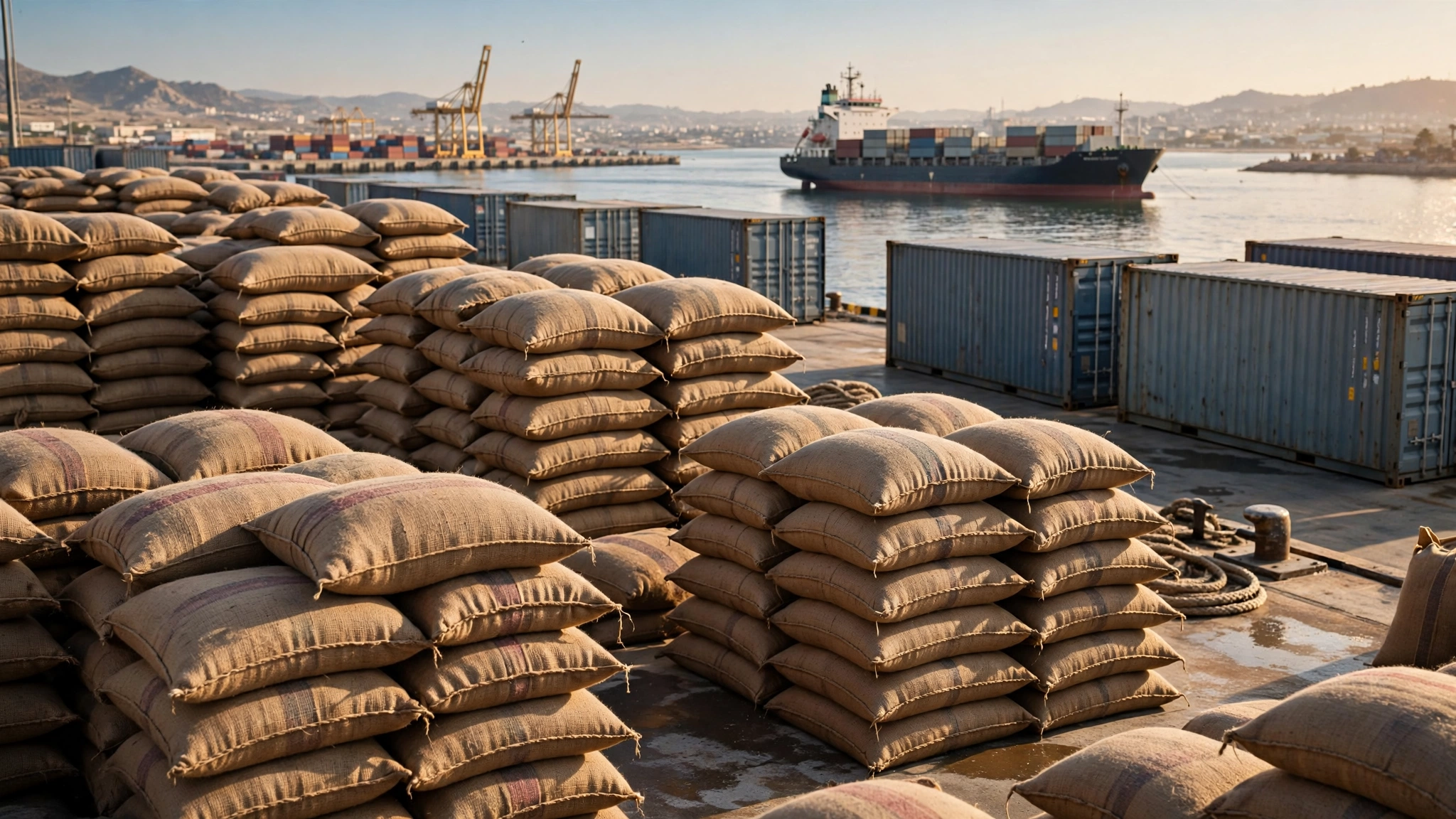

Pakistan’s Basmati rice earned about $1,135 for every tonne shipped abroad between July and October 2026, roughly two and a half times the $459 earned per tonne of other rice, trade figures published on 23 November show. Basmati made up only 22 per cent of the 1.351 million tonnes of rice exported, yet it brought in 42 per cent of the $823 million total. The gap shows where the real money in Pakistan’s rice trade sits.
The price gap, in numbers
Basmati shipments reached 301,323 tonnes in July-October 2026, up about 62 per cent on the same four months a year earlier, an increase of 116,000 tonnes. Earnings from those shipments rose faster than volume, up 69.07 per cent to $342.12 million. Non-Basmati rice also grew, with 1.049 million tonnes shipped for $481.19 million. Total rice exports for the period came to 1.351 million tonnes worth $823.32 million, up 41.67 per cent in value on a year earlier.
Dividing each line’s dollar value by its tonnage gives the average export value per tonne, and that is where the story sharpens. Basmati averaged about $1,135 a tonne. Other rice averaged about $459 a tonne. The premium is not new: in the first quarter of the financial year, July to September, the same calculation gave $1,118 a tonne for Basmati and $454 for other rice. The October figures therefore show the premium holding steady rather than widening.
These are averages across all grades, packing types and destinations, not quoted market prices. A tonne of premium 1121 Basmati sells for far more than a tonne of broken IRRI-6, and both sit inside the same average. Even so, the direction is clear: Basmati is a small share of the tonnage and a large share of the money.
Why Basmati held its premium
The gains came despite a difficult shipping environment. Heightened tensions involving Iran forced vessels to reroute, pushing up ocean freight charges and marine insurance premiums on routes through the Red Sea, the Strait of Hormuz and the wider Middle East. Analysts credited the resilience mainly to a bumper Basmati harvest, supported by an expanded cultivation area, double-cropping in some regions, higher per-acre yields and favourable weather. Large carryover stocks and the extension of the Drawback of Local Taxes and Levies scheme through September also helped.
Non-Basmati exporters faced a tougher market. They competed against heavily subsidised Indian rice and aggressive offers from Thailand, Vietnam, Cambodia and Myanmar. The pressure had already shown earlier in the year, when rice exports fell 35 per cent in February as cheaper Indian rice flooded global markets.
Buyers kept coming from familiar markets. The Philippines was the single largest buyer of Pakistani rice in October 2026, taking 87,478 tonnes, followed by Tanzania with 43,747 tonnes and Kenya with 33,078 tonnes. Those destination figures cover all rice shipped in the month, not Basmati alone.
Rice carried the food export bill
Rice was the main engine of Pakistan’s food exports in the four months. Total food exports reached $1.892 billion, up 21.8 per cent on the same period last year, according to data compiled by the Ministry of National Food Security and Research. Rice exports rose by $236.5 million to about $825 million, and that increase accounted for nearly 70 per cent of all the growth in food export earnings.
The dollars matter beyond the rice trade. Export earnings help pay for imports, and Pakistan’s trade deficit widened to $4.13 billion in October as imports climbed. For exporters, the rupee value of each dollar earned depends on the USD to PKR exchange rate today, so the exchange rate, freight costs and domestic paddy prices decide how much of the export gain reaches farmers and millers.
What happens next
The next test is whether the pace survives the rest of the financial year. November trade figures will show whether Basmati volumes stay strong once the new crop is fully in the market, and whether freight and insurance costs ease as shipping routes settle. Indian competition is the other watchpoint: cheaper Indian rice has already forced one sharp monthly fall this year, and any further slide in rival prices would squeeze the non-Basmati end of the trade first, since it competes mainly on price.
Higher export earnings do not automatically mean higher profits for farmers or rice processors. Their margins depend on what paddy costs at home, what freight and insurance cost at sea, and what the rupee is worth when dollars are converted. What the four-month figures do show is that Pakistan’s rice trade is increasingly a premium-grain business, and the premium held through four months of shipping disruption. For more business and economy news from Pakistan, the question now is whether the rest of the season protects that advantage or gives it back.