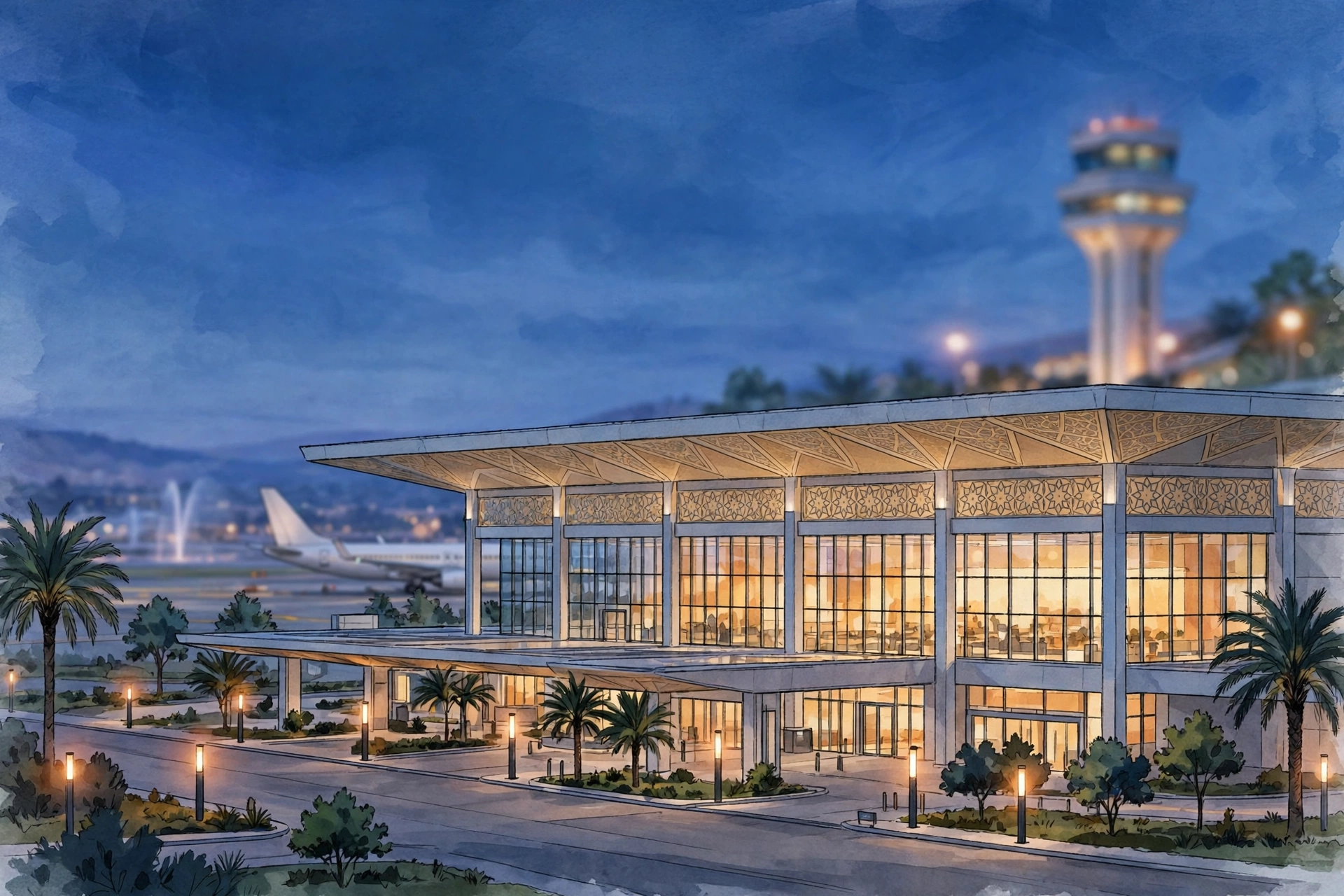

Pakistan has signed an advisory deal to outsource Karachi and Lahore airports, nearly four years after the government first decided to hand them to private operators. The Privatisation Commission signed a Financial Advisory Services Agreement with a consortium led by EY Middle East in Islamabad on Thursday 19 November 2026, covering Jinnah International Airport in Karachi and Allama Iqbal International Airport in Lahore. The deal starts formal preparation for private operation, yet no operator has been chosen, no concession length has been announced, and no bidding date has been set.
What the EY deal actually does
The agreement does not hand either airport to a private company; it hires the EY-led consortium as financial adviser to structure the two transactions. It will give technical, financial, legal, environmental and commercial advice and help design the deals through a transparent, competitive and market-driven process. The commission said the deals would bring private expertise into running, managing and commercially developing both airports under a concession or management contract. Muhammad Ali, Adviser to the Prime Minister on Privatisation and commission chairman, witnessed the signing; the EY team was represented by Andre Olivenca and Zeeshan Hussain.
PakMirror arithmetic: 47 months to reach this step
No announcement has spelled out the timeline, so PakMirror has added it up from the official record. In December 2022, under Prime Minister Shehbaz Sharif, the government decided to outsource the Karachi, Lahore and Islamabad airports under a public-private partnership. From that decision to the signing on 19 November 2026 is 47 months, or three years and 11 months. In that time the plan changed course: earlier this year it moved from a government-to-government deal to open bidding, after strong investor interest.
The Privatisation Commission Board approved the EY-Parthenon-led consortium as the top-ranked party for the adviser role in August 2026, at its 257th meeting, and set up a negotiation committee to finalise the agreement. From that approval to the signing took about three months of negotiation. The same meeting also declared the privatisation of Lahore and Multan power companies as major transactions, the fourth batch of distribution companies marked for sale. Islamabad airport moved faster: the Asian Development Bank signed on as its adviser in July 2026, four months earlier. The government has told the Senate it plans to outsource eight airports in phases, so Karachi and Lahore are the first two of a wider programme.
PakMirror arithmetic: over $1 billion expected, not promised
Both Karachi and Lahore airports are expected to attract over $500 million each in fresh investment. Added together, that is over $1 billion in expected private investment across the two airports, a combined figure the official announcements have not stated. That is an expectation, not a signed commitment and not money already raised. No concession fee, revenue share or investment schedule has been announced; those figures will only emerge once EY has structured the deals and bidders have made offers.
The investment case is linked to expansion work already approved. In October, the prime minister approved the expansion of both airports, a decision PakMirror covered at the time, noting that the cost and scope were not disclosed. The Karachi and Lahore airports expansion approved in October still has no published price tag, so the advisory process must answer the same question for the expansion and the outsourcing: how much money will actually arrive, and on what terms. Because the expected investment is priced in dollars, the current dollar to rupee exchange rate will shape what any dollar figure is worth in rupees when the deals are finally priced.
What happens next
The next step belongs to EY, which must prepare the transaction structure for each airport before the government can invite bids for a concession or management contract. Only then can an operator be selected and take over day-to-day operations. The commission has announced no timetable, so passengers should not expect a new operator soon.
Three things are worth watching: the concession length, since a long concession gives an operator time to invest; the revenue arrangement, including any upfront payment and the share of airport revenue that goes to the state; and the service standards in the contract, since the stated purpose is better facilities and service, not only new investment. The same week showed how fast the landscape can shift, after the Federal Constitutional Court struck down the infrastructure cess charged by Sindh and Khyber Pakhtunkhwa. For the airports, the test is whether this deal becomes a signed operator contract, and how long that takes after 47 months of preparation. More coverage will appear in our Business and Economy news section as each step is announced.