
Afghanistan has reported 50 polio cases this year. Pakistan has reported nine. Health officials said on Friday that the return of expelled Afghan nationals is bringing poliovirus back, and more than 40 per cent of Pakistan’s detections in the past two months were linked to Afghanistan. The virus has now been found in sewage as far south as Jamshoro in Sindh. Pakistan’s nationwide vaccination campaign ends tomorrow, 8 November. The question is whether a drive inside Pakistan can hold back a virus that keeps arriving from outside it.
The route back: people, then virus
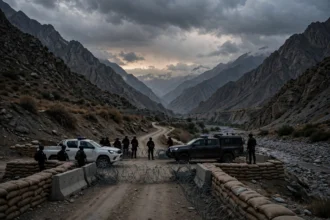
Officials told The News that Afghans sent back are returning in large numbers through sporadic crossings in Balochistan and Khyber Pakhtunkhwa, then moving across the country. Officials call that movement the biggest concern for polio eradication. The virus follows the same roads. Pakistan’s ninth polio case of 2026, confirmed this week in a seven-month-old boy from Bara tehsil in Khyber district, carries a strain genetically linked to the virus circulating in Afghanistan. All three cases reported from Khyber district this year carry the same link. A vaccination campaign stops at the boundary line. People do not.
Two in five detections still trace to Afghanistan
Between January and October, 29 positive sewage samples collected in Pakistan were linked with Afghanistan. Balochistan accounts for 14, including 11 from Quetta; Khyber Pakhtunkhwa nine, including six from Peshawar; Sindh four, including two from Karachi’s Keamari district and one from Jamshoro; Punjab two, one each from Rawalpindi and Multan. Seven of the 29 were collected in October alone, three each in Quetta and Sindh, so the flow has not slowed. The Pakistan Polio Eradication Initiative said the share of Afghan-linked detections stood at about 50 per cent in September and 40 per cent in October. A falling share is not a falling threat when two in five detections still point across the border.
Fifty against nine: the two curves move apart
Afghanistan has reported 50 cases in 2026, already more than double the 21 it reported in all of 2025, with almost eight weeks left in the year. Pakistan has reported nine, which is 29 per cent of the 31 it reported in 2025 and 12 per cent of the 74 it reported in 2024. Afghanistan’s 50 is more than five times Pakistan’s nine. The outbreak is concentrated: Hilmand 12, Kandahar 11 and Nangarhar 10, so three provinces hold 33 of the 50 cases, two-thirds of the total. The World Health Organization treats the two countries as a single epidemiological block, so one country’s transmission puts the other at risk. Pakistan has cut its cases by 99.8 per cent from an estimated 20,000 a year in the early 1990s, but officials warned the progress could reverse if the virus keeps crossing.
Why Afghanistan’s drive is failing
Health experts blame poor-quality vaccination drives in Afghanistan. The WHO has raised concern over curbs on house-to-house campaigns in the southern provinces, where vaccination has largely run from fixed sites, leaving remote children unprotected. Hilmand, Kandahar and Nangarhar sit on or near the border, and their 33 cases are the engine of the outbreak. Pakistan has its own gaps. The initiative said Khyber district faced security constraints and earlier campaigns had left children unreached, a problem sharpened by the legal test over emergency rule in Khyber Pakhtunkhwa. Routine immunisation in several districts is also below the required level. And the drive itself carries risk: two polio workers were killed in Mohmand on the second day of the current drive.
The campaign ends tomorrow
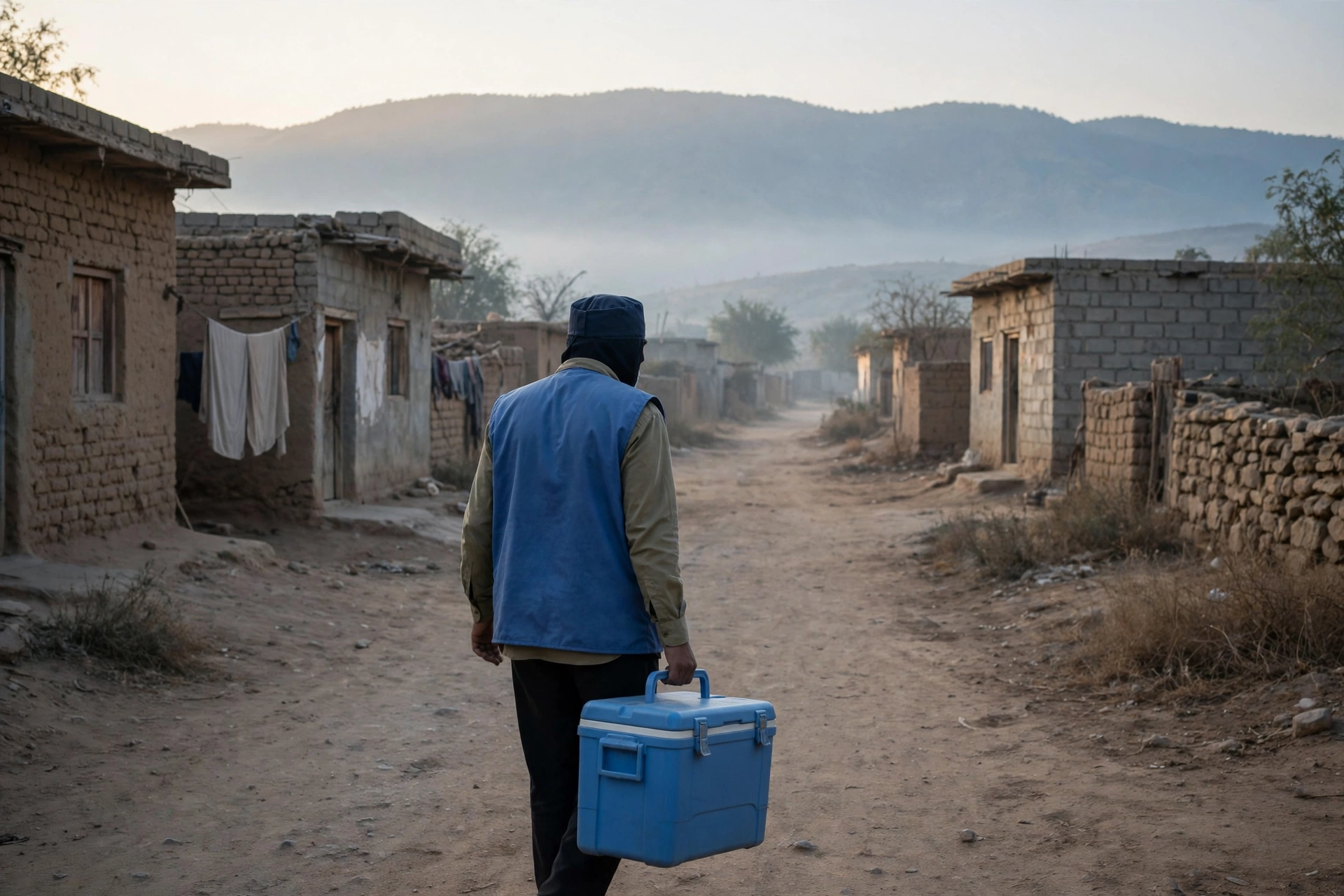
A door-to-door campaign runs from 2 to 8 November in 97 districts, including Khyber, to protect nearly 24 million children under five. It is synchronised with Afghanistan. A targeted injectable vaccine campaign in 78 union councils of the Peshawar block, held from 26 to 31 October, reached 829,000 children up to age 10. The initiative said it had launched a comprehensive investigation of the Khyber case. It urged all parents to ensure every child under five gets the vaccine in every round, regardless of previous doses. Tomorrow is the last day, and the sewage samples from its final days will show whether the drive reached the children the virus reaches first.
What to watch next
Three things will settle it. First, the November sewage data: if the Afghan-linked share stays near 40 per cent, the border route is still open. Second, the crossing points in Balochistan and Khyber Pakhtunkhwa, where 23 of the 29 Afghan-linked sewage samples were found. Third, the next WHO weekly update: whether Afghanistan’s count climbs past 50, and whether Pakistan’s ninth case stays the last of the year. The campaign ends tomorrow. Whether it worked will show in the sewage samples and case counts. More health news from Pakistan is on PakMirror’s health pages.