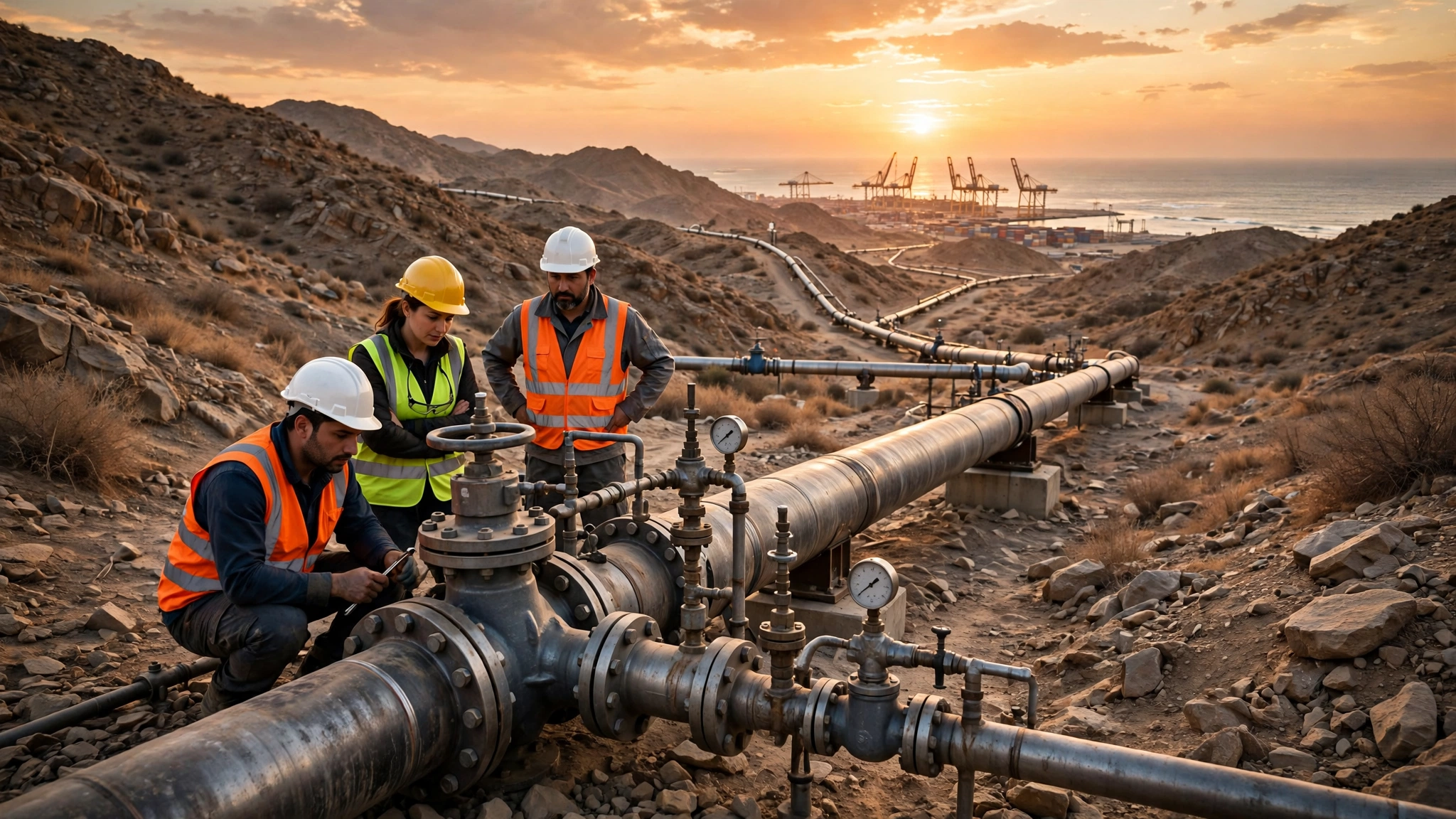

Saudi firm Delta Energy has signed an agreement with Pakistan’s Inter State Gas Systems to explore $30 billion of energy infrastructure, including gas pipelines to Gwadar and the Indian border near Fazilka. Reuters reported the deal on Tuesday. The headline figure sounds like the largest energy deal, but the agreement says something smaller: it is a framework to study the projects, not a decision to build them and not a commitment to pay for them.
What the deal actually covers
The programme would assess a gas pipeline entering through Pakistan’s western border and running to Gwadar. It would also weigh LNG facilities, processing, storage and export terminals. A second route would run from Chaman, on the Afghan border, toward Fazilka on the Indian border. Delta called that leg a “core strategic commitment” needing agreements with Pakistani and Indian authorities. Delta named Afghanistan’s Kashk gas concession as a potential supply, and said the plan was separate from TAPI.
Inter State Gas Systems is the Petroleum Division’s pipeline company and holds the Iran-Pakistan file. But a framework is only the first step: studies, financing, approvals and a final investment decision all lie ahead.
The $30bn number has a history
Delta has used large numbers before. In September it signed deals in Kabul covering exploration and a proposed 700-kilometre CentGas pipeline from Herat to Spin Boldak. The pipeline alone was put at about $10 billion, with wider figures of $50 billion over 25 years and $60 billion over 10 years reported for the programme. The committed money was far smaller: about $200 million of initial exploration in the Kushk-Tirpul basin, roughly 23,000 square kilometres, with every larger figure described as preliminary.
A headline figure in the tens of billions is not the same as money on the table, and the $30 billion for Pakistan belongs in the same category until a final investment decision exists. Pakistan has seen this shape of announcement before: the Saudi Fund agreement was an MoU, not money.
The hardest leg runs to India
The Chaman to Fazilka leg is the most ambitious part of the plan. It needs New Delhi’s agreement, and the announcement says nothing about an Indian response. India was once part of the original Iran-Pakistan-India plan, which collapsed when Delhi walked away in 2008. The two countries fought a military confrontation in May 2025, and Musadik Malik will attend the SCO dialogue in Delhi from 20 to 22 November as the first Pakistani minister to visit India since that confrontation. A gas pipeline to the Indian border would need a political relationship that does not exist yet.
Pakistan has heard this promise before
The Delta route runs over ground where pipelines have been promised before. The Iran-Pakistan pipeline was agreed in 2009, promising up to 750 million cubic feet a day for 25 years from South Pars. Iran built its 1,172-kilometre section by 2012. Pakistan’s 781-kilometre section was never built. In February 2024 the cabinet committee approved a scaled-back 80-kilometre section to Gwadar to head off Iran’s threat of arbitration. That section is still not built, and a US sanctions licence issued in June was revoked within weeks. TAPI has been delayed for years, and a $10 billion Saudi refinery announced for Gwadar in 2019 had still not attracted the promised investment, per 2026 reporting.
Why Pakistan still wants the gas
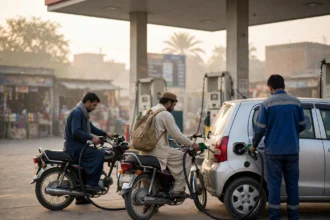
The need is real. Domestic gas output fell nearly 20 percent in five years, from 3,597 million cubic feet a day in 2019-20 to 2,890 million in 2024-25, per PIDE. Imported LNG now supplies about a third of consumption, about 99 percent of it from Qatar. That supply broke in March 2026, when QatarEnergy declared force majeure after an attack on Ras Laffan. Pakistan received 11 Qatari cargoes between March and September, against 64 in the same months of 2025. Pakistan rejected $27 LNG bids, and winter gas may now cost $34. At home, households now get piped gas in three short windows a day, and gas-sector circular debt stood at Rs5.454 trillion at the end of June, the energy minister told parliament in October. A pipeline bringing gas overland would cut dependence on one supplier and one sea route, but a strong case is not a built pipeline.
What to watch next
Three tests will show whether the $30 billion becomes real. First, the studies: feasibility work, financing and a final investment decision, none of which has a date yet. Second, the gas: Delta’s $200 million exploration in Kushk-Tirpul must find enough gas to justify a pipeline. Third, the politics: the Fazilka leg needs India, and the Gwadar leg needs a sanctions path the Iran-Pakistan line never found. Until then, the honest description is the one in its own text: a framework to explore, not a promise to build.