On Saturday, the Peshawar High Court removed every petition challenging the emergency and governor’s rule in Khyber Pakhtunkhwa from its cause list, days before the 10 November hearing meant to test its legality. About 105 petitions were struck from that day’s schedule, including the emergency challenges and the recovery petitions for the detained chief minister, the assembly speaker and the PTI’s provincial president. The petitioners must approach the appropriate forum. No one has said which forum that is.
What the high court did on Saturday
The Express Tribune reported that the high court deleted from its cause list all writ petitions against the emergency and governor’s rule, and arrests under the Maintenance of Public Order ordinances. The high court’s administrative committee, led by Chief Justice S M Atiq Shah, directed that no writ petition filed on or after 12 October be fixed for hearing. New petitions will be returned, not received or entertained, with instructions to approach the appropriate forum.
Removed with them were the recovery cases for former chief minister Sohail Afridi, assembly Speaker Babar Saleem Swati and PTI provincial president Junaid Akbar. The emergency was challenged by PTI chairman Barrister Gohar Ali Khan, opposition leader Mahmood Khan Achakzai, the Khyber Pakhtunkhwa Bar Council, Mohsin Dawar and MNA Shandana Gulzar. Missing persons, preventive detention, property and Afghan repatriation cases were also affected.
The order behind it: Article 245
The removal follows a Federal Constitutional Court order of 5 November. A two-member bench headed by Chief Justice Aminuddin Khan barred the Peshawar High Court from hearing Section 3 arrest cases under the Maintenance of Public Order ordinance. Its written judgment held that, the armed forces having been called in aid of civil power under Article 245, Article 199 proceedings filed on or after 12 October stood suspended by virtue of Article 245(4). The call-out order came on 11 October and the Defence Ministry’s memorandum on 12 October, making that date the cutoff.
The order was first described as covering detention cases only. The high court’s directive goes further: it covers every Article 199 petition filed on or after 12 October. Article 199 is how a high court hears complaints against administrative action, so that jurisdiction is closed. The court also told the advocate general to report within seven days on where the armed forces were no longer required. The report is therefore due around 12 November. That report is now the only live date in the whole dispute.
The 10 November date is gone
PakMirror reported on 5 November that the 10 November hearing would test the emergency against the constitutional threshold. That hearing’s cause list is now empty of these cases, and the high court has not said if the hearing will go ahead. The replies sought by 7 November from the governor and the speaker have not been made public.
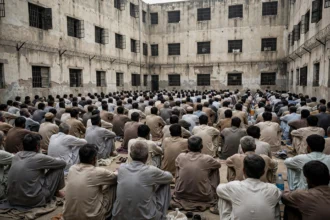
Afridi has not been seen in public since 11 October, 28 days ago. His brother’s 13 October petition says armed men seized him from the Chief Minister’s House that night. The court had earlier restrained Section 3 arrests, ordered the release of 28 PTI workers and granted bail to 23 more. The emergency is 28 days old, proclaimed on 11 October and approved by both Houses and a joint sitting by 15 October. On 4 November the cabinet moved the chief minister’s delegated powers to the governor. It covers 12 districts, largely the former tribal areas and the south. The pressure has not eased: intelligence operations widened across Khyber Pakhtunkhwa the same week the cabinet met, and the ninth polio case of 2026 was found in a boy in Khyber district.
What is left: one report and no forum
The petitioners must now find another forum, and no authority has named one. The Federal Constitutional Court issued the order, so approaching it means asking that court to undo its own suspension. The Supreme Court is the other obvious door, but no petition there has been reported. The Insaf Lawyers Forum has protested, saying fundamental rights must be protected.
The other clock is the six-month limit on governor’s rule, ending 11 April 2027, extendable by a joint sitting two months at a time. The emergency under Article 232 has no fixed end date of its own once approved. So the governor and his 11-member advisory council could run the province for months, with no court examining the takeover’s legality. Three dates decide what happens next: the report around 12 November, whether any petitioner reaches the Federal Constitutional Court or the Supreme Court, and whether 10 November passes in silence. Until one of those moves, the province has a governor but no chief minister, an assembly that cannot legislate, and a high court that cannot hear cases. See more national news from Pakistan.