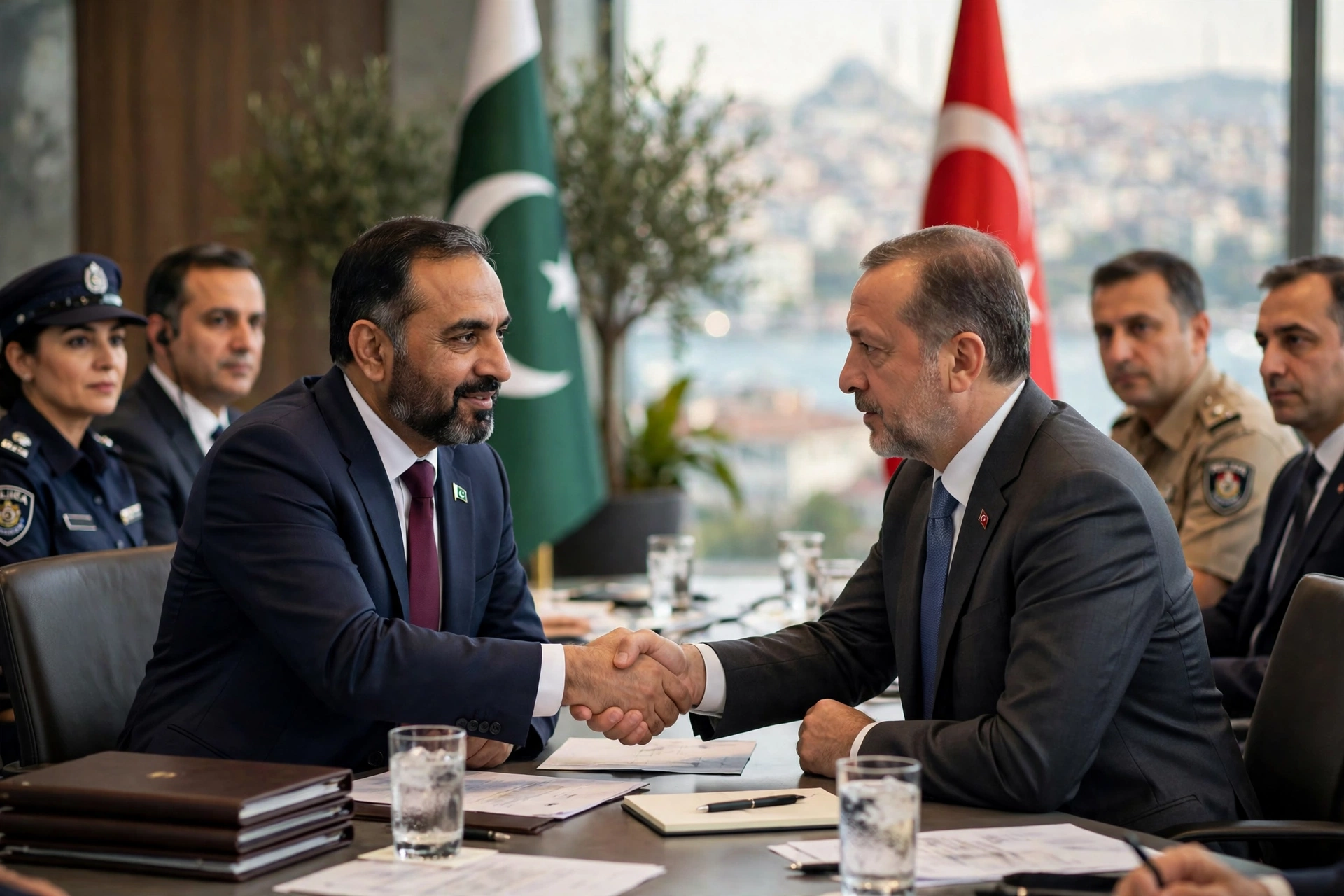

Pakistan and Turkiye signed an agreement in Istanbul on Friday to widen cooperation against terrorism, narcotics trafficking and organised crime, and agreed to set up a Joint Working Group between their interior ministries. The deal was reached during a meeting between Interior Minister Mohsin Naqvi and his Turkish counterpart Mustafa Ciftci at the Turkish Ministry of Interior. Both sides said the new framework would improve coordination on security cases that cross borders, from militant networks to drug routes and human smuggling. Readers following wider security developments can also track our Pakistan national news coverage for related updates from across the country.
What the agreement covers
According to the interior ministry, the two ministers signed the agreement to enhance cooperation in combating terrorism, narcotics and organised crime. They also agreed to establish a Joint Working Group to strengthen collaboration between the two interior ministries and to keep regular contact on cases of mutual concern. The meeting discussed technical assistance, exchange of experts and joint initiatives in cyber policing, the Anti Narcotics Force, the National Police Academy and other relevant fields. Officials said the aim is to move beyond occasional contacts and create a standing channel for sharing information, training and operational lessons.
Migration crackdown discussed in detail
Mr Naqvi briefed his counterpart on the results of Pakistan crackdown against networks that facilitate illegal immigration. The Turkish interior minister said the rate of illegal immigration from Pakistan to Turkiye had declined from 70 percent to 17 percent, and he appreciated the measures taken by Islamabad. Pakistan has intensified action against human smuggling networks after a series of deadly migrant boat disasters involving Pakistani nationals, and officials say closer cooperation with destination and transit countries is now a central part of that effort. The Istanbul meeting placed that migration work inside a broader security agenda that also covers drugs and organised crime.
Why the pact matters for Pakistan
Pakistan faces overlapping security pressures at home, including militant violence in Khyber Pakhtunkhwa and Balochistan, narcotics flows and cyber crime. Cooperation with Turkiye gives Islamabad another partner for training, intelligence practices and police modernisation at a time when the government is also pursuing similar arrangements with other states. Earlier this week Pakistan agreed with the United Kingdom and Poland to strengthen cooperation on irregular migration, narcotics and organised crime, including proposed work on law enforcement and legal assistance. The Turkiye agreement expands that outreach to counterterrorism and cyber policing. Our recent report on nine terrorists killed in the North Waziristan operation shows the domestic operations that run alongside this diplomacy.
How the Joint Working Group is expected to work
The Joint Working Group is intended to connect the two interior ministries directly, so that requests for information, expert visits and joint training do not depend on ad hoc contacts. Both sides agreed to further strengthen cooperation through technical assistance and exchange of experts, with the National Police Academy and the Anti Narcotics Force among the institutions named for future collaboration. Cyber policing was also listed, reflecting concern about online fraud, digital evidence and cross border criminal networks that operate through social media and messaging platforms. No timetable for the first working group meeting was announced in the statements carried by the two sources.
What happens next
Both interior ministers reaffirmed their commitment to further strengthening bilateral cooperation. Mr Naqvi had arrived in Istanbul on an official visit and received a warm welcome at the airport before the ministry meeting. For Pakistan, the next steps will be to nominate officials for the working group, identify priority cases for joint work and schedule expert exchanges. For readers who want to follow institutional reforms linked to law and order, our coverage of the Pakistan prison population and under trial report explains part of the wider justice picture, while diplomatic engagement such as the Vatican envoy Archbishop Gallagher Pakistan visit shows the broader outreach underway this week.