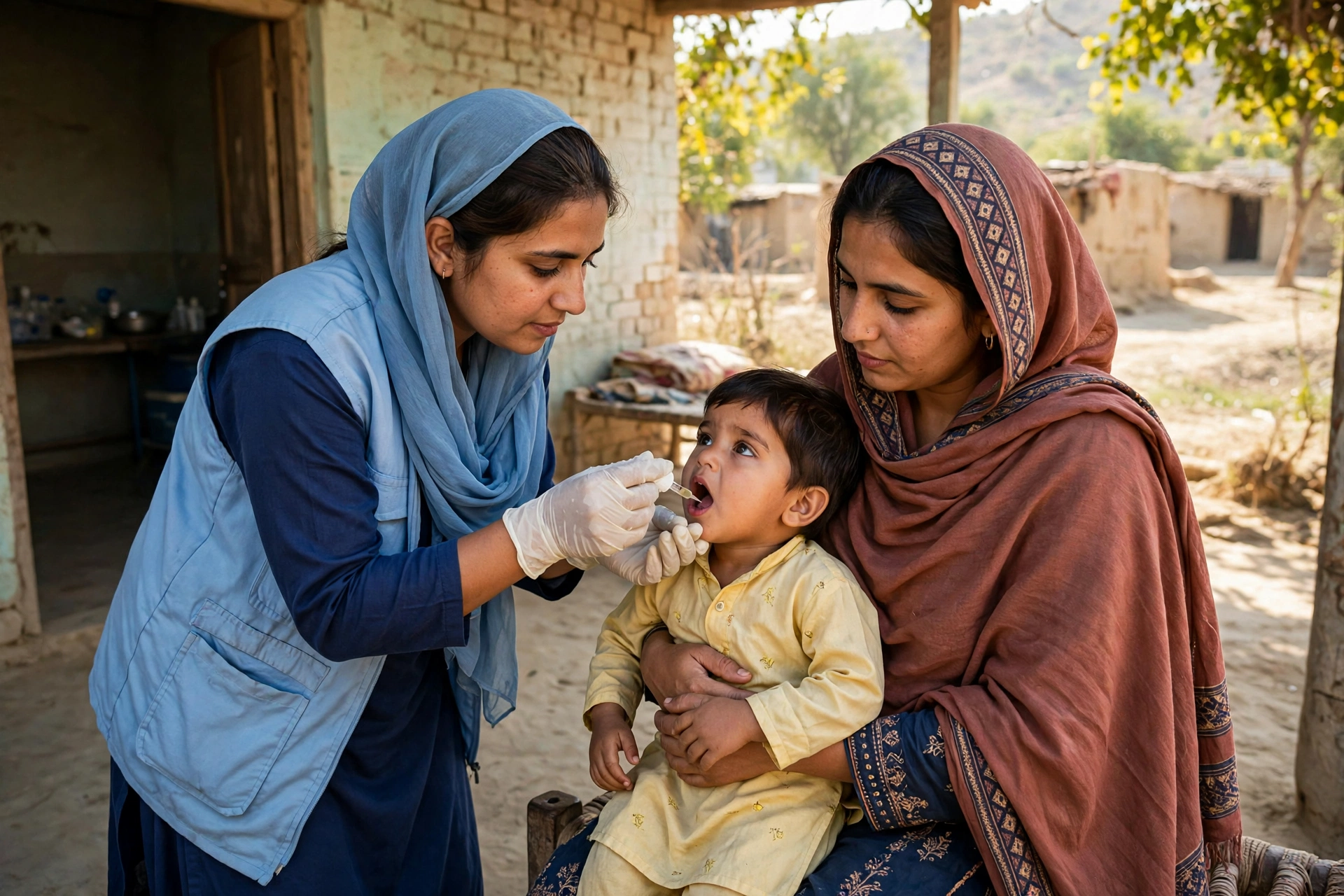

Japan has announced a $4.3 million grant for more than 28 million polio vaccine doses for 2027, UNICEF said on Friday. The money arrives in the same week that gunmen in Khyber Pakhtunkhwa shot dead two police officers guarding polio teams and abducted four more. The vaccine is funded, but reaching children still depends on teams under armed guard.
The grant, dose by dose
Announced in Islamabad on Friday, 13 November, the grant will flow through UNICEF to the Pakistan Polio Eradication Initiative, which will buy the 2027 campaign doses. Japan’s ambassador to Pakistan, Akamatsu Shuichi, said the grant had been increased from last year. Japan has backed the programme since 1996, giving over $248 million through UNICEF.
The increase is clear year on year. Last November Japan gave $3.5 million for more than 24 million doses for 2026. This year it is $4.3 million for more than 28 million doses, an extra $800,000 and at least 4 million more doses. That works out at roughly 15 cents a dose. The vaccine is cheap; delivery is the expensive part. Each national drive targets over 45 million children under five, with over 400,000 frontline workers.
Ayesha Raza Farooq, the Prime Minister’s Focal Person on Polio Eradication, said every dose Japan funds brings Pakistan closer to a polio-free country.
The case count: 74 to 31 to 8
The numbers show how far the programme has come, and how stubborn the last stretch is. Pakistan reported 74 cases in 2024, then 31 in 2025, and 8 so far in 2026, UNICEF said. Six of the eight cases this year have been reported from south Khyber Pakhtunkhwa, where UNICEF says insecurity and access still block some children. The target is not a low count but zero transmission by the end of 2027.
The eighth case, registered on Sunday, was a 13-month-old girl from Khyber district, Al Jazeera reported. Khyber Pakhtunkhwa remains the hardest-hit province with six cases, followed by two in Sindh. Pakistan and neighbouring Afghanistan are the only two countries where wild poliovirus transmission has not yet been interrupted.
The week the money arrived
The grant came in the middle of a violent week for the programme. On Sunday, health authorities launched a targeted drive to reach nearly 24 million children across 97 high-risk districts. On Monday, four police officers protecting polio workers were abducted in Khyber Pakhtunkhwa and have yet to be found.
On Tuesday, gunmen on a motorcycle opened fire on a police car in Khyber Pakhtunkhwa as the officers headed to guard a polio team. Two officers were killed and a third was injured. No polio staff were in the vehicle, police official Ali Rehman Khan told AFP. No one has claimed responsibility, but Al Jazeera noted similar attacks have regularly been carried out by the Pakistan Taliban, known as the TTP, and other armed groups, which falsely believe polio teams are part of a Western conspiracy to sterilise children.
President Asif Ali Zardari said on X the shooting was extremely regrettable and condemnable, and police guarding polio teams are performing a national duty. The teams work under that protection every day: polio teams in KP and Balochistan work under armed police guard. The backdrop is the same one in which security forces killed 74 militants in operations across Balochistan and KP this week.
What the 2027 deadline actually needs
The plan is the National Emergency Action Plan 2026-27, under the Roadmap to Zero, which aims to interrupt transmission by the end of 2027. The grant is timed to that final year: its doses are for the 2027 campaigns, the last full year before the deadline.
That timing exposes the gap money alone cannot close. Doses in a warehouse do not vaccinate children. Each drive must reach over 45 million children under five, and the hardest to reach live where teams need police escorts. JICA’s Yusuke Shinozaki commended frontline workers serving under challenging circumstances; UNICEF’s Pernille Ironside said the grant will sustain the campaigns needed to interrupt transmission.
The arithmetic of zero is unforgiving: interrupting transmission means reaching every child, including where access is hardest. The 74 to 31 to 8 decline proves the programme can shrink the virus. The six cases in south KP, and the two officers killed guarding a team this week, show where the remaining virus lives.
What happens next
Four things will show whether this grant leads to a polio-free Pakistan: whether the four abducted officers are found; whether the drive for nearly 24 million children finishes without further attacks; whether the 2026 count stays at eight; and whether the 2027 campaigns reach south KP, where six of this year’s eight cases were found. PakMirror will track the campaigns and case counts in our health coverage.