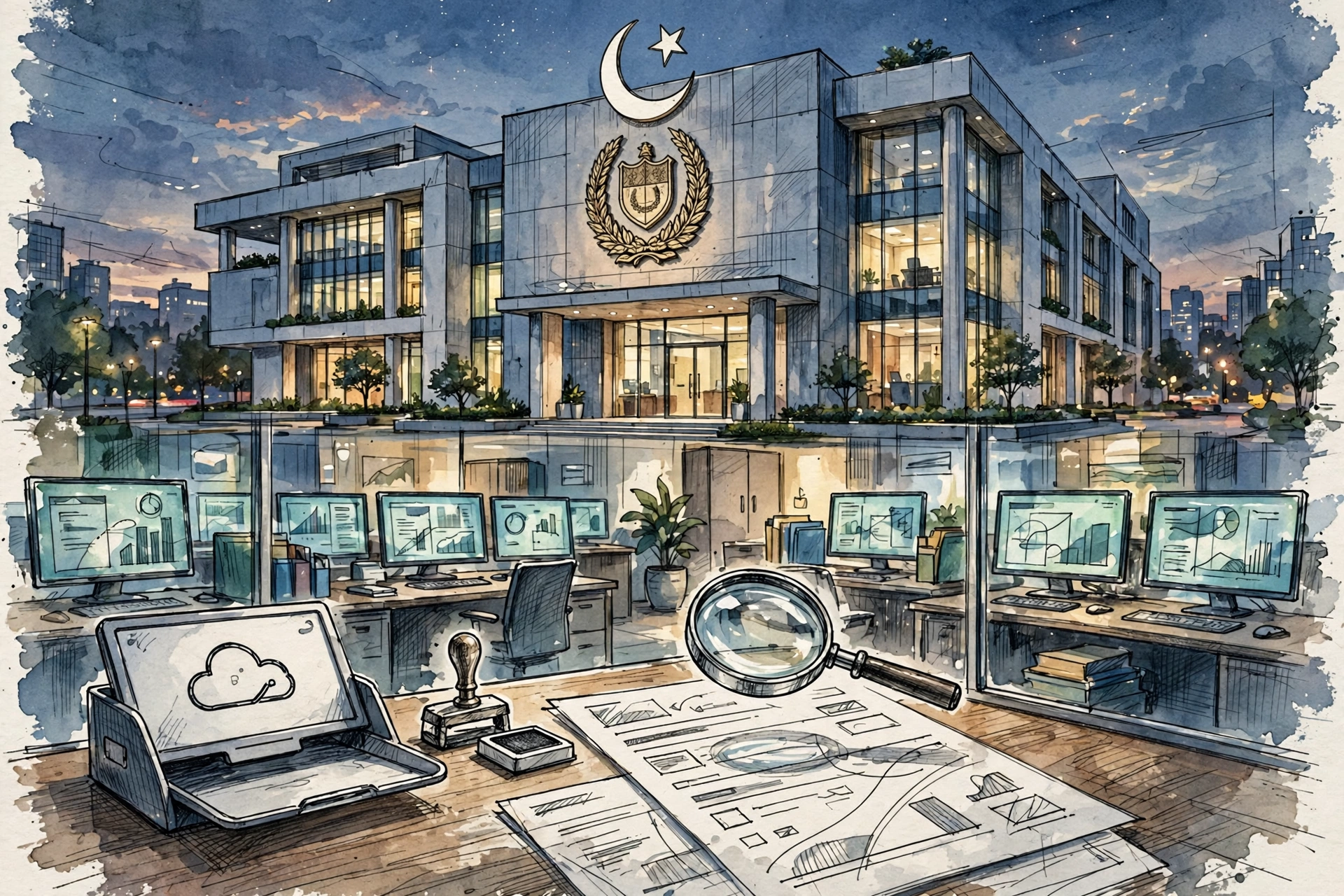

Pakistan’s tax machinery has taken its biggest step yet toward removing the human meeting from the audit. The Federal Board of Revenue issued two statutory notifications on Friday, October 16, switching on the legal machinery for faceless tax audits and assessments with effect from October 15, 2026. Under the new rules, notices arrive electronically stamped with a Digital Identification Number, taxpayers reply through their FBR IRIS accounts, and three separate officers handle the audit, the assessment and the quality check, so the taxpayer may never sit across the table from the person auditing them.
Two notifications switch on the new machinery
Statutory Regulatory Order 1828(I)/2026 brings Chapter XX of the Income Tax Rules, 2002, into force. The chapter, made up of Rules 233 to 245, governs how audits, assessments and recovery proceedings run through the National Faceless Centre, the Islamabad-based unit set up to process cases centrally. A second notification, SRO 1825(I)/2026 from the Revenue Division, enforces Chapter VIAC of the Sales Tax Rules, 2006, from the same date, extending the faceless system to the sales-tax side.
How a faceless case moves
For a taxpayer, the process looks very different from the old file-on-a-desk routine. Rule 238 says notices, orders and other official communications must be generated through the FBR’s computerised system and will carry a Digital Identification Number, a unique DIN on every notice. Under Rule 239, the taxpayer or their authorised representative files replies, documents and evidence electronically through their designated IRIS account. Rule 236 brings a defined list of proceedings inside the system: audits under Sections 177 and 214C, proceedings under Section 111, and assessments under Chapter X of the Income Tax Ordinance. And one provision is designed to break the old chain of personal influence: the audit, the assessment and the quality-control review of the same case and the same tax year must go to separate officers or separate units. Audit reports, adjudication notices and assessment orders then pass through a quality-control review under Rule 242, while Rule 243 extends the faceless procedure to penalties under Section 182 and default surcharge under Section 205. Physical verification is not gone entirely: Rule 241 allows it through the Field Operations Wing where necessary, subject to authorisation, and Rule 244 permits transferring a case to another tax authority in specified circumstances, such as where physical records exist or repeated verification is needed.
Who is covered, and who is not
On the income-tax side, the faceless system does not reach every taxpayer automatically. It applies to cases designated under Section 122E of the Income Tax Ordinance, 2001, which means the rules bite only where a case is formally brought into the system. The sales-tax chapter is wider: it applies to all persons or cases. For now the practical footprint is still the pilot programme the FBR announced on September 26. The National Faceless Centre began work on the premises of the Regional Tax Office in Islamabad with 27 officers, processing third party data of 300,000 to 400,000 individuals. That pilot covers medium-to-individual cases only, with no corporate entities or associations of persons included, and its initial focus is on spending patterns such as air travel, luxury vehicles and lavish houses. Because the pilot targets individual spending, taxpayers with cross-border expenses will want to watch the US dollar to Pakistani rupee exchange rate today, since declared foreign-currency spending is part of the data trail the centre is built to read. The centre was set up under the New Tax Operating Model approved in principle in June, with its legal authority flowing from the Finance Act, 2026.
The timeline ahead, and the second front
The FBR’s own calendar gives two dates to watch. October 2026 is the pilot start now formalised by these SROs. June 2027 is the bigger milestone: the second phase of the model centralises the audit and assessment functions of all regional tax offices, meaning the faceless system would then cover far more than the pilot’s individual cases. Running alongside is the institutional question. The government has directed the FBR to present restructuring proposals, including the possibility of a new tax agency, to the Prime Minister by October 19, a deadline covered in detail in our report on the new tax agency proposal FBR must present by October 19. Between the faceless machinery going live and the agency question being decided, October is shaping up as the busiest reform month for the tax system in years. For more Pakistan business and economy news, our business desk tracks every development as it happens.