
Two statements landed within hours of each other on Saturday. Finance Minister Aurangzeb told AFP that Pakistan has procured enough energy supplies to last through November and will buy spot LNG cargoes only in “an absolute dire need”. At almost the same time, the Express Tribune reported that Pakistan is urgently seeking LNG cargoes as Strait of Hormuz tensions disrupt supplies. Both can be true at once. Pakistan’s winter gas plan, how many cargoes are lined up and what they will cost, explains why.
The $1bn question on the PM’s desk
According to Profit by Pakistan Today, citing The News and senior Petroleum Division officials, the Petroleum Division has proposed buying 10 spot LNG cargoes for December to February, a purchase worth more than $1 billion. The NCMC, which wants to conserve foreign exchange, prefers existing contracted supplies. A compromise of 5 spot cargoes, roughly $500 million, is reportedly under consideration, and the final decision has been referred to Prime Minister Shehbaz Sharif.
Spot cargoes are the expensive option. Minute Mirror, drawing on official working, puts the winter programme at 22 cargoes from November 2026 to February 2027: 12 long-term and 10 spot. The 10 spot cargoes are estimated at around $863 million, roughly $86.3 million each, more than double the roughly $32 million average of a Qatari contracted cargo. January 2027 would be the costliest month: about $437.32 million for 8 cargoes. Profit separately put international LNG above $27 per MMBtu, with each spot cargo above $100 million. The estimates differ, but the conclusion is the same: spot gas costs roughly double to triple the contracted price.
Why the squeeze is happening right now
Three problems have piled up at once. First, QatarEnergy’s force majeure, extended twice, remains in effect until early November. Second, Strait of Hormuz disruption has cut Pakistan-bound LNG by up to 0.4 million tonnes per month from March to November 2026, and more than 2.5 million tonnes of gas demand has been destroyed through curtailment, fuel-switching and withheld domestic gas, per Wood Mackenzie analysis cited by Oilprice.
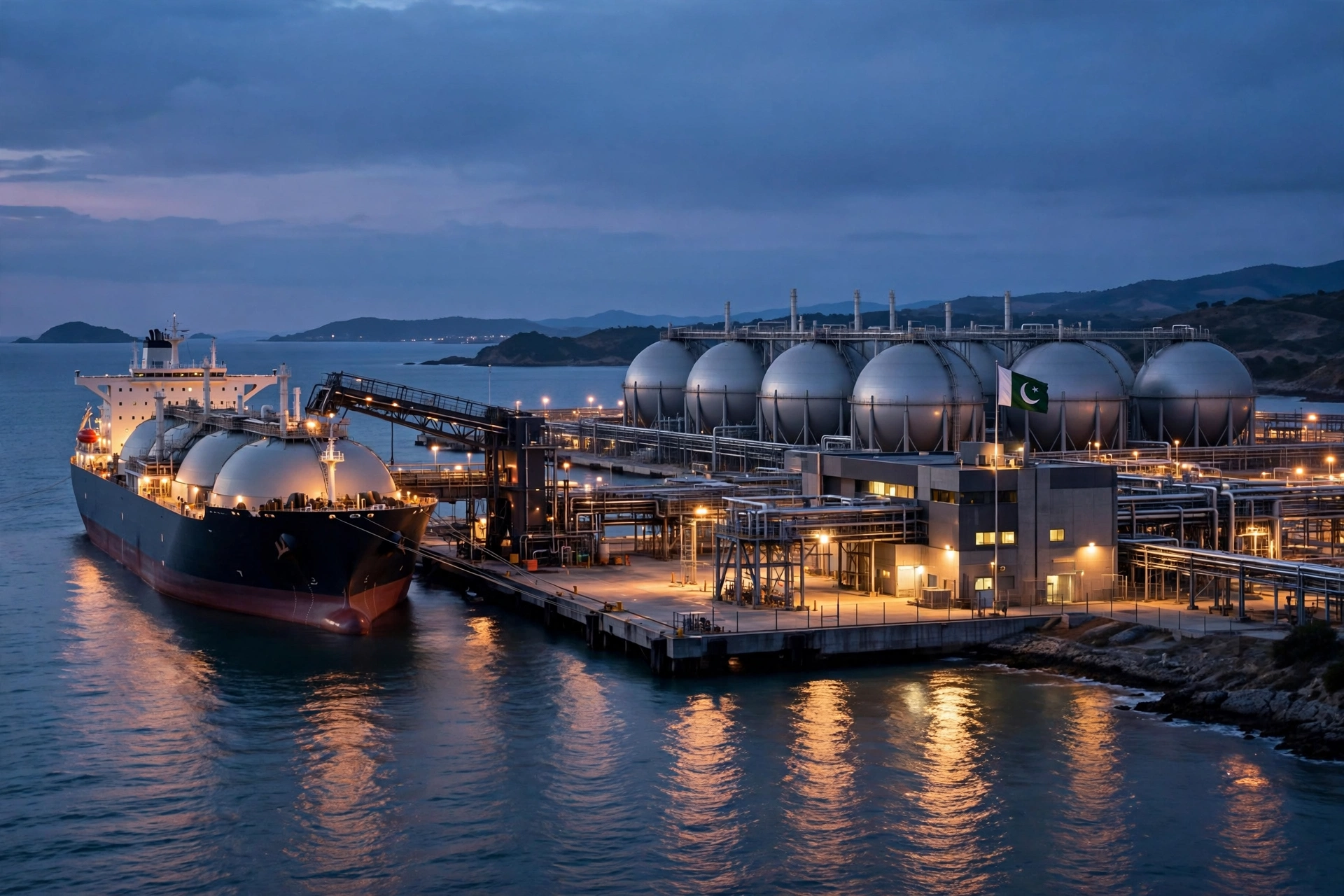
Third, the terminals are running thin. The vessel Al-Areesh berthed at Engro’s terminal on Tuesday with the first October cargo, and regasification has resumed at roughly 150 million cubic feet per day. But the Engro terminal had been shut since September 26, the PGPL terminal has been non-operational since October 9, and only around two cargoes are expected for the whole of October. The country is heading toward the winter demand spike with almost no buffer.
How big the winter spike is
Winter is when Pakistan’s gas demand jumps because of household heating. SNGPL’s winter demand could rise from 550 to 1,550 million cubic feet per day, while SSGC’s could climb from 300 to 500 million cubic feet per day, according to GTV News: a threefold increase on the SNGPL system alone.
This is why Aurangzeb’s “supplies through November” line and the urgent cargo hunt are not really in conflict. The November position is covered by contracted volumes and the trickle of October cargoes. The anxiety is about December onward, when the demand curve rises and the Qatar volumes return. That is the whole debate: the NCMC says more than 12 cargoes can be arranged through existing agreements until February 2027 at 13.37 per cent of Brent; the Petroleum Division says winter needs 10 more, at double the price.
What happens next
The immediate decision is the Prime Minister’s: the full 10 spot cargoes, the compromise 5, or something in between. That call determines whether Pakistan enters January, the costliest month at around $437 million for 8 cargoes, with enough supply to avoid the curtailments that destroyed more than 2.5 million tonnes of demand this year.
The second watch point is early November, when the QatarEnergy force majeure is due to end. If contracted volumes resume on schedule, part of the pressure lifts. The third is the Strait of Hormuz: any easing of the tensions that forced vessels to reroute would bring spot prices down from the current $27-plus levels, though nothing has changed there as of Saturday evening.
Households will feel the consequences whichever way the decision goes. If the government buys spot, the import bill rises and the cost eventually feeds into tariffs; if it does not buy and winter demand outruns supply, the shortfall shows up as low pressure and load management. It is worth watching how the dollar-to-rupee exchange rate is moving today, since every imported cargo is priced in dollars and a weaker rupee multiplies the bill. For how fuel prices are now set, see the daily petrol pricing mechanism explained, and for the household impact of rising energy costs, read how rising fuel costs are squeezing household budgets. Follow our Pakistan business and economy news for updates on the PM’s decision.