Pakistan has confirmed its ninth polio case of 2026, and the details point to a problem one vaccination round cannot fix. The patient is a seven-month-old boy from Union Council Mastak in Bara tehsil of Khyber district, and health officials confirmed the case on Thursday, 5 November. It is the third case from Khyber district this year, the seventh from Khyber Pakhtunkhwa, and the second case confirmed in the same tehsil within five days. Genetic analysis of the virus in all three Khyber cases shows a link to strains circulating in Afghanistan, which means the virus is crossing the border faster than the campaign can contain it in one district.
What the ninth case tells us
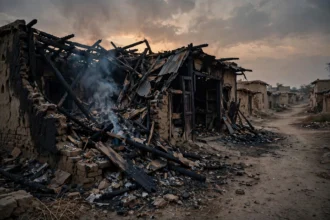
The National Emergency Operations Centre for Polio Eradication confirmed the case on 5 November. The child is from Union Council Mastak in Bara tehsil, the third case from Khyber district in 2026. Seven of the nine cases this year are from Khyber Pakhtunkhwa and two are from Sindh. The eighth case, confirmed on 1 November, was a 13-month-old girl from Union Council Janbaz-B, also in Bara tehsil. Two cases in five days, in the same tehsil, both in children under two. The seventh case, confirmed on 19 October, was a six-month-old boy in Karachi East, the first case reported in Karachi since December 2024.
The Afghan link in all three Khyber cases
Genetic analysis of the poliovirus found in all three Khyber district cases this year shows links with strains circulating in Afghanistan. Health officials say it points to continued cross-border transmission, driven by frequent movement across the border. The World Health Organisation treats Pakistan and Afghanistan as a single epidemiological block, so transmission in either country puts the other at risk. In Afghanistan, particularly in southern provinces, house-to-house vaccination has largely been replaced by vaccination at fixed sites, a format that can leave infants and children in remote communities unreached. The border is only part of the story. Officials also point to local circulation inside Pakistan, missed children, and gaps in immunity. Sewage samples from the Peshawar block, including Peshawar and Khyber districts, have also tested positive for poliovirus, which shows the virus is still circulating.
A campaign under attack
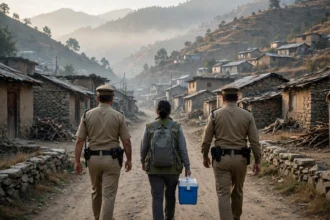
The ninth case arrived in the middle of a seven-day national round running from 2 to 8 November, aiming to reach about 24 million children across 97 districts. More than 200,000 frontline workers are taking part. On day one alone, more than 6.68 million children received drops, including more than 1.37 million in Khyber Pakhtunkhwa. The targets show the scale: Punjab about 9.3 million children in 13 districts, Sindh about 6.8 million in 20, Balochistan more than 2.2 million in 31 districts through 8,888 teams, and Khyber Pakhtunkhwa more than 4.8 million in 27. Balochistan has reported no polio case since November 2024. The round is also being fought under armed guard. Two police officers were killed guarding a polio team in Mohmand on 3 November, the second day of the drive, and four vaccination workers were abducted in Tank on the first day, while two others taken in South Waziristan were later freed. Intelligence operations widened across Khyber Pakhtunkhwa the same week, while the vaccination drive and the security operation run side by side.
The numbers behind the decline
The long trend is genuinely encouraging. Pakistan reported 74 cases in 2024, 31 in 2025, and nine so far in 2026, a fall of about 71 percent from last year’s total. But the short trend inside the decline is less comfortable. Two cases in five days, both in Bara tehsil. Khyber district alone now accounts for three of the nine cases. The case count has fallen faster than the virus has been cleared, and the gap between the two is where the next cases will come from.
A plan that arrives after the round
Prime Minister Shehbaz Sharif chaired a polio review meeting on 5 November, the same day the ninth case was confirmed. He directed the federal health authorities and the anti-polio team to visit all four provinces, consult chief ministers and chief secretaries, and prepare a coordinated national action plan within one week. Federal Health Minister Syed Mustafa Kamal has urged parents to ensure every eligible child receives the oral polio vaccine. The timing matters. The current round ends on 8 November, so the one-week plan will land after this round closes. Three tests will show whether the plan is different: whether it names measures specific to Bara tehsil, where two cases appeared in five days; whether the round-end figures show how many children were missed in Khyber district; and whether the genetic link to Afghanistan produces a concrete coordination step across the border. For more national news from Pakistan, follow the coverage as the plan is published.