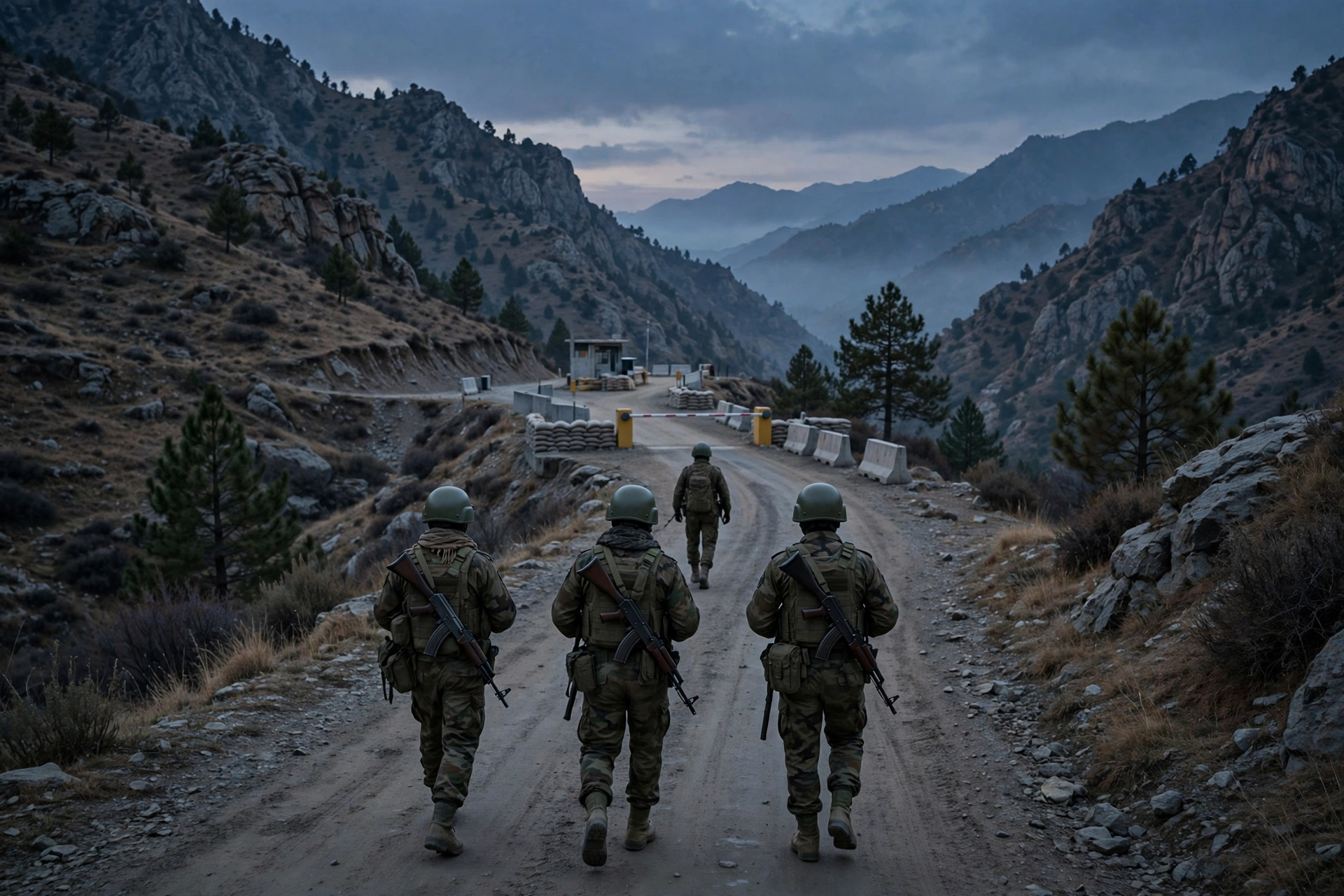

Islamabad has widened the scope of intelligence-based operations in Khyber Pakhtunkhwa, but the decision reported on November 4 comes with no new operation name, no district list and no deadline. Prime Minister Shehbaz Sharif chaired a review meeting on the situation on Tuesday, and sources told The News that the meeting decided to expand intelligence-based operations and improve coordination among federal and provincial institutions and law enforcement agencies. Governor Faisal Karim Kundi briefed the meeting, 12 districts were discussed, and the meeting reviewed ARDC and a Rs160 billion federal package.
What the meeting actually decided
The decision, as reported, is about scope and coordination rather than a new campaign. The prime minister directed further improvement in coordination among federal and provincial institutions and law enforcement agencies, and sources said the institutions should work under a coordinated strategy to establish peace and eliminate terrorism. He called durable peace and the protection of citizens lives and property national priorities. The room shows how wide the brief was: Deputy Prime Minister Ishaq Dar, Interior Minister Mohsin Naqvi, Finance Minister Aurangzeb, Planning Minister Ahsan Iqbal, Economic Affairs Minister Ahad Cheema, Governor Kundi and the provincial chief secretary attended with top military officials.
The one acronym nobody has explained
The most telling detail is a small one. The meeting reviewed the performance of ARDC, but two reports expand those initials in two different ways. The News calls it the Area Representative and Development Council. Another report of the same meeting calls it the Anti-Regional Development Committee. Neither report explains what the body does, who sits on it, or what its performance was judged against. That gap matters because the meeting treated ARDC as part of the security picture, reviewing it in the same sitting as the operations decision and the Rs160 billion package.
What widening does not mean
Widening scope is not the same as launching a new operation, and the reports do not describe one. No new operation name, district list, troop numbers, command structure or deadline appeared in the reporting. That restraint matters because the baseline is already large: the military spokesperson, Lieutenant General Ahmed Sharif Chaudhry, had said in an interview reported on November 2 that about 200 intelligence-based operations are carried out every day. Against that baseline, expanding scope most plausibly means more targets, more districts or better joined up work between agencies, not the start of intelligence-based work itself.
The timing also cuts against a simple cause and effect story. October attacks fell 37 percent but kidnappings hit a year high, according to the Pakistan Institute for Conflict and Security Studies, so the widening does not follow a month of rising attacks. Attacks fell from 226 in September to 143 in October, while kidnappings rose to 88 people, the highest monthly total in 12 months. That split, fewer attacks but more abductions, is the sharper context for a decision framed around intelligence and coordination. It fits the first days of November, when two guards killed as a polio drive was hit in Mohmand and four workers were taken in Tank.
The same day in Balochistan
While the Islamabad meeting was being reported, the existing tempo of intelligence-based operations was visible in Balochistan. The Inter-Services Public Relations said security forces killed 17 militants in two operations in Kachhi and Kharan districts, on reported presence of militants belonging to Fitna al-Hindustan and Fitna al-Khwarij. Ten were killed in the Sanni area of Kachhi, where troops thwarted an attempt to set up a roadblock, and seven were killed in Kharan after a hideout was busted. One soldier, Sepoy Hikmat Ullah, aged 25 and a resident of Karak district, was martyred in the Kharan exchange. Those operations were in a different province, not evidence of the widened KP scope. Five drones aimed at a Kharan check-post on October 30 had already shown that the same district is a testing ground for new militant methods.
Three tests to watch
Three tests will show whether this decision changes anything on the ground. First, clarity: does an official statement name the 12 districts, explain ARDC in full, and say what expanded scope means in practice, or does the decision stay as a sourced report with no public detail? Second, money: does the Rs160 billion package produce a published breakdown of what has been spent, where, and on which projects, or does it remain a headline figure reviewed behind closed doors? Third, data: does the November count show kidnappings falling back from October’s 88, and do attacks stay below October’s 143, or does the pattern of fewer attacks and more abductions continue? Until those answers appear, scope has been widened on paper but the detail to judge it has not been published. For more national news from Pakistan, that missing detail is the story to follow.