Turkiye’s parliament has ratified the Makkah Joint Defence Agreement with Pakistan and Saudi Arabia, closing the last ratification step 90 days after the three countries signed the pact in Makkah on 7 August. The bill passed the Grand National Assembly on Thursday 5 November by 279 votes to 119, with 398 of the chamber’s 592 lawmakers taking part. The vote answers the final open question that PakMirror reported in October, when the pact’s future hinged on three open questions, but it moves no soldier anywhere. Turkish troops can only deploy under a separate parliamentary mandate that has not yet been tabled, and the agreement only takes effect once it is published in Turkiye’s Official Gazette.
The vote in numbers
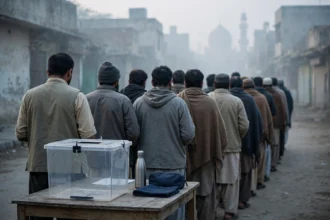
The 279 votes in favour were 70.1 percent of the 398 lawmakers who voted, but only 47.1 percent of the 592-member chamber, because 194 lawmakers did not take part at all. The 119 votes against came from opposition parties, which argued that the agreement could embroil Turkiye in regional wars.
Passage took two days, not one. Article 1 of the three-article bill, the clause that approves the 16-article agreement, was adopted on Wednesday 4 November. Deputy Parliament Speaker Celal Adan then adjourned the session until Thursday afternoon, when lawmakers debated the remaining two articles and put the bill as a whole to an electronic vote. The bill had reached the General Assembly only nine days earlier, after the Foreign Affairs Committee approved it on 27 October.
What the pact commits its members to
The 16-article agreement is a collective defence pact in the mould of NATO’s Article 5. Article 1 requires the signatories to use “all necessary means” to address threats to one another’s territorial integrity, sovereignty and internationally recognised borders. Article 2 states that if any signatory faces an armed attack or military aggression, the others must provide immediate assistance through the available mutual support measures.
Beyond the defence clause, the pact provides for cooperation in defence production, intelligence sharing, logistical support and counterterrorism. It runs for an initial 10 years, during which none of the signatories may withdraw. After that period a country seeking to leave must give at least three months’ written notice. During the debate, Justice and Development Party lawmaker Ziya Altunyaldiz said the agreement was intended to expand regional security cooperation.
What ratification does not do
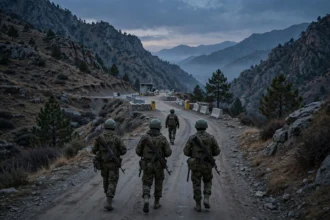
The most important fact about Thursday’s vote is what it leaves unchanged. Ratification does not by itself send Turkish troops to Saudi Arabia. Any deployment of Turkish military personnel would require a separate mandate from parliament. A ruling party lawmaker told Reuters last month that such a mandate would be sought, but it is not confirmed whether it has been filed.
Defence Minister Yasar Guler said in October that the scope of potential support for Saudi Arabia would be decided after ratification. He told Turkish media: “We absolutely do not foresee entering into any conflict with the Houthis,” adding that Turkish support “would be to strengthen deterrence”. No troop numbers, budgets or rules of engagement have been published, and the “agreed forces” named at the alliance’s 5 October emergency meeting in Riyadh have never been identified publicly. Until the agreement appears in the Official Gazette, the 10-year clock has not started.
Pakistan’s stake in the alliance
For Pakistan, the ratification completes a process its diplomats had already finished. Pakistan and Saudi Arabia had already ratified the pact, and the alliance’s institutions are already taking shape around a Pakistani appointment. Retired Lieutenant General Nauman Mahmood was named the first secretary-general of the alliance on 23 September by Pakistan’s Foreign Office, and he will lead the General Secretariat being established in Riyadh for a three-year term.
The appointment gives Pakistan the leading administrative role in the alliance’s first years. It also caps a busy season of defence diplomacy for Islamabad: Pakistan and Turkiye signed a separate anti-terror pact in October, and the Badr Accord was Pakistan’s second defence deal in ten weeks. The Makkah pact is the largest of the three.
Three things to watch next
First, the date the agreement appears in Turkiye’s Official Gazette, which starts the 10-year commitment. Second, whether and when the separate deployment mandate reaches parliament, since that document, not Thursday’s vote, will decide whether any Turkish personnel go to Saudi Arabia. Third, whether the Houthi attacks on Saudi Arabia continue, and whether the pact’s mutual defence clause is tested in practice.
Thursday’s vote turned an August handshake into a binding commitment among three of the region’s most significant military powers. The practical questions, who goes where, with what, and under whose orders, now sit with the Gazette, the deployment mandate and the Riyadh secretariat. For more national news from Pakistan, follow PakMirror’s coverage of the alliance as it takes shape.