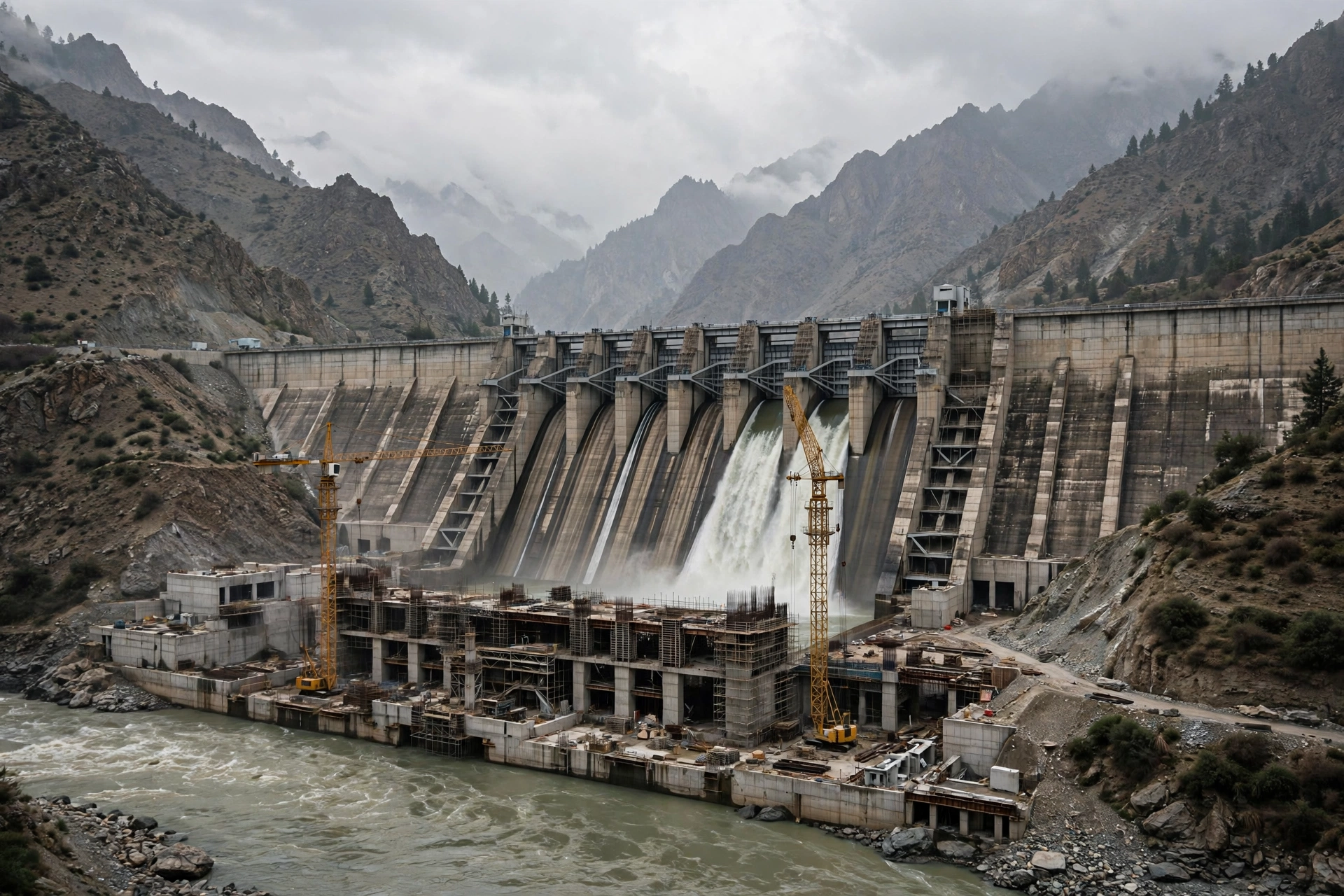

Water from the Indus surged into the tunnel and the under-construction powerhouse of the Tarbela fifth extension project on Monday, 9 November, after weak rock gave way during excavation, the Water and Power Development Authority said. WAPDA said every worker was evacuated safely, nothing was damaged and the main tunnel had not collapsed. But the district administration tells a different story: one local worker was submerged in the flooding tunnel and pulled out by local people, and officials were still assessing the damage.
What happened underground
The collapse happened during excavation of the second bench of the connecting tunnel at the fifth extension, known as T-5. Water from the intake pit flowed into the tunnel and powerhouse, WAPDA said. The authority said the intake pit had been fully drained, no further water was entering the downstream work sites, and dewatering of the powerhouse had begun. Reports said an emergency was declared at the site and workers were moved to safer ground, and sources told The News that work had been suspended for an indefinite period.
Two accounts of the same flood
The first contradiction is about the workers. WAPDA’s statement says all workers were immediately evacuated safely and that there were no injuries or deaths. Haripur Deputy Commissioner Waseem Ahmed told The News that one local worker submerged in the tunnel was pulled out by locals. The Daily Jagran reports the same rescue, citing the deputy commissioner. It appears nowhere in WAPDA’s account.
The cause is described two ways as well. WAPDA says a weak rock mass collapsed during excavation of the connecting tunnel. The deputy commissioner said a part of the protective embankment at the project intake broke after a girder fell. The two descriptions point at different failures, and neither side has explained how they fit together. The damage question is split the same way. WAPDA says the main tunnel, the under-construction powerhouse, the tailrace culvert and the switchyard suffered no damage. But the same deputy commissioner told Dawn that authorities were still assessing whether the structures had been damaged, citing project officials. A structure cannot be both undamaged and still under assessment, and until one assessment is published, the public has two official versions and no settled answer.
What the water did downstream
WAPDA also issued a notification about discharges downstream in the Indus. The notification said discharges will be more than 150,000 cusecs round the clock, and all concerned should make precautionary arrangements for public safety. Swabi Deputy Commissioner Nasarullah Khan said extra water had been released for unavoidable reasons, raising the river’s flow and level, and urged residents to avoid bathing, swimming and boating and to ignore rumours. The Indus is the river at the centre of the dispute over Pakistan’s water share under the Indus Waters Treaty, and every change in its flow is watched closely on both banks.
The second failure in four months
Monday’s flooding is the second failure at T-5 in a matter of months. In July, a government inquiry held the contractor, the consultant and WAPDA itself responsible for an earlier cofferdam collapse, citing unauthorised design changes made after the contract was signed. That collapse added at least two years of delay and more than 285 per cent to the cost, which rose from Rs82 billion to Rs317 billion. Before Monday, the project was scheduled for completion by the end of June 2028 instead of 2026. The extension is meant to add 1,530 megawatts, taking Tarbela’s total capacity from 4,888 megawatts to 6,418 megawatts, financed by 390 million dollars from the World Bank and 300 million from the Asian Infrastructure Investment Bank.
The extra power matters because the electricity system is already under strain. Consumers already pay NEPRA’s latest Rs2.37 fuel charge on their bills, and WAPDA is the authority at the centre of the Supreme Court’s questions over who lets power theft run. A project meant to add cheap hydropower by 2026 is now at least two years late, more than three times over budget, and stopped again after a second collapse.
Three things to watch next
First, the assessment: whether WAPDA or the district publishes one account of what failed, what was damaged and what happened to the worker. Second, the June 2028 date: whether the flooding pushes it back again, and what the two lenders say about a project they are financing. Third, the inquiry question: the July inquiry blamed all three parties, including WAPDA, and named unauthorised design changes as a cause. If Monday’s failure has a similar cause, the question is what changed after that inquiry, and what did not. Until then, the record stands as this: a flooded tunnel, a rescued worker, two official versions, and a 1,530 megawatt project with no new completion date.