
The Asian Development Bank has approved $500 million in contingent disaster financing for Pakistan, a facility the country can only draw on after a disaster strikes. The approval, announced in Manila on Wednesday 11 November, is the second subprogram of the bank’s Climate and Disaster Resilience Enhancement Program. It is not upfront cash for this year’s budget. The money becomes available as prompt budget support only after an eligible disaster event, to limit the economic and fiscal damage that follows.
What the money is, and what it is not
The distinction matters because the announcement is easy to misread as a $500 million loan landing in Islamabad this week. It is not. Contingent disaster financing works like a pre-approved credit line: the facility is agreed in advance, and the government draws on it when a qualifying flood, earthquake or other disaster is declared. Until then, no money moves. The bank said the facility will provide prompt budget support following eligible disaster events, so the government does not have to scramble for emergency funds while rescue and relief work is under way.
Pakistan has been here before, in a different form. In 2024 the bank approved a separate $500 million policy-based loan under the same programme’s first subprogram, aimed at climate change and disaster risk reduction. That was programme lending tied to reforms. Today’s approval is the second subprogram, and it adds the contingent facility on top of the reform agenda. The two approvals should not be added together as $1 billion of new cash, and neither should be read as money already in hand.
The reforms behind the facility
The programme supports reforms to strengthen disaster preparedness and risk management, and to build resilience into development planning and public investment. It also strengthens Pakistan’s disaster risk financing framework, so funding is available quickly when an emergency hits rather than being arranged afterwards. The bank said the programme is aligned with Pakistan’s own priorities for managing disaster risk. ADB Country Director for Pakistan Emma Fan said vulnerable communities are hit hardest when disaster strikes, and that investing in preparedness protects lives and livelihoods, reduces economic losses and safeguards development gains.
Why Pakistan needs a standing facility
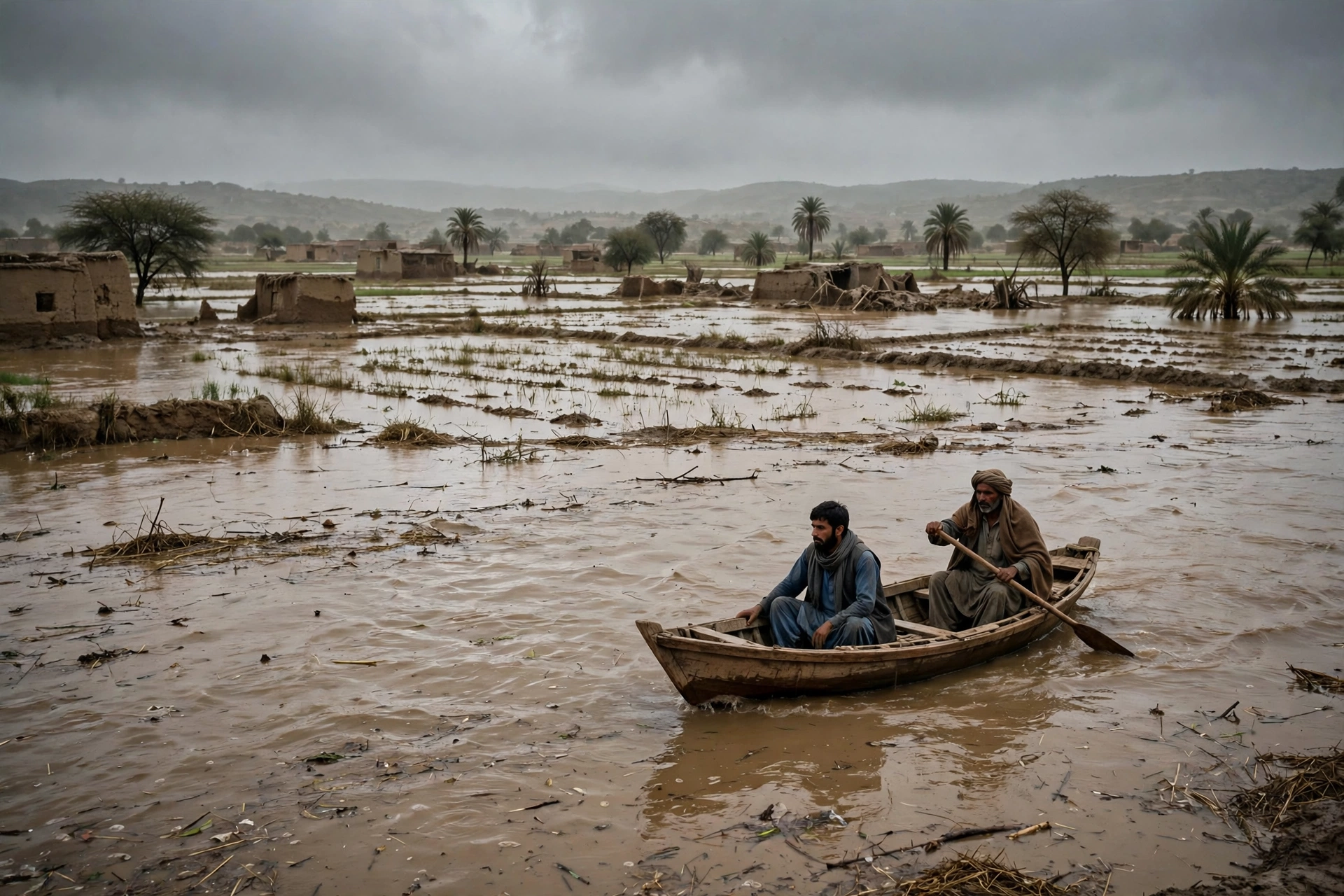
The case for a standing facility is in the bank’s own numbers. Floods, earthquakes and other disasters cost Pakistan an estimated $2 billion in average annual losses. The 2022 floods alone caused $14.9 billion in direct damage and $15.2 billion in economic losses, and pushed as many as 9.1 million people into poverty. Poor and rural communities recover slowest, the bank said, and women and girls are disproportionately affected. An ADB report issued last month warned that about 1.48 million people in Pakistan could be exposed to annual coastal flooding by 2100 as sea levels rise and saltwater pushes inland.
The risk is not theoretical. This week a worker was pulled from the flooded Tarbela T-5 tunnel, a reminder that water infrastructure itself can turn dangerous. And the poverty the 2022 floods deepened has not gone away: 29 percent of Pakistanis now live below the poverty line, which leaves far less cushion when the next disaster arrives.
Approved on the day Pakistan asks for climate money
The approval landed on the day Prime Minister Shehbaz Sharif was due to address the COP31 leaders’ summit in Antalya. According to the Foreign Office, he was to press developed countries for predictable, adequate and accessible climate finance. Pakistan contributes less than one percent of global greenhouse gas emissions yet ranks among the countries worst hit by climate change, a point the prime minister’s delegation has made repeatedly. Islamabad has also pressed developed countries to honour the long-standing commitment to mobilise $100 billion a year in climate finance for developing nations. The ADB facility is a different kind of answer to the same problem: not a grant, and not compensation for losses already suffered, but a pre-agreed line of credit for the next disaster.
What happens next
For now, the facility sits unused, which is exactly how it is designed to work. The reforms it supports will decide how fast money can move when the next flood or earthquake comes, and whether it reaches the communities the bank says suffer most. Approvals that look like cash have misled before: the Saudi Fund agreement is an MoU, not money yet. The test of this approval will not be the announcement in Manila. It will be the first time Pakistan has to draw on it, and how quickly the funds reach the districts that need them. More business and economy news from Pakistan.