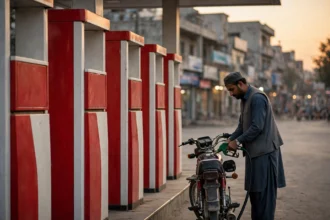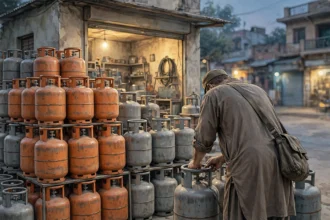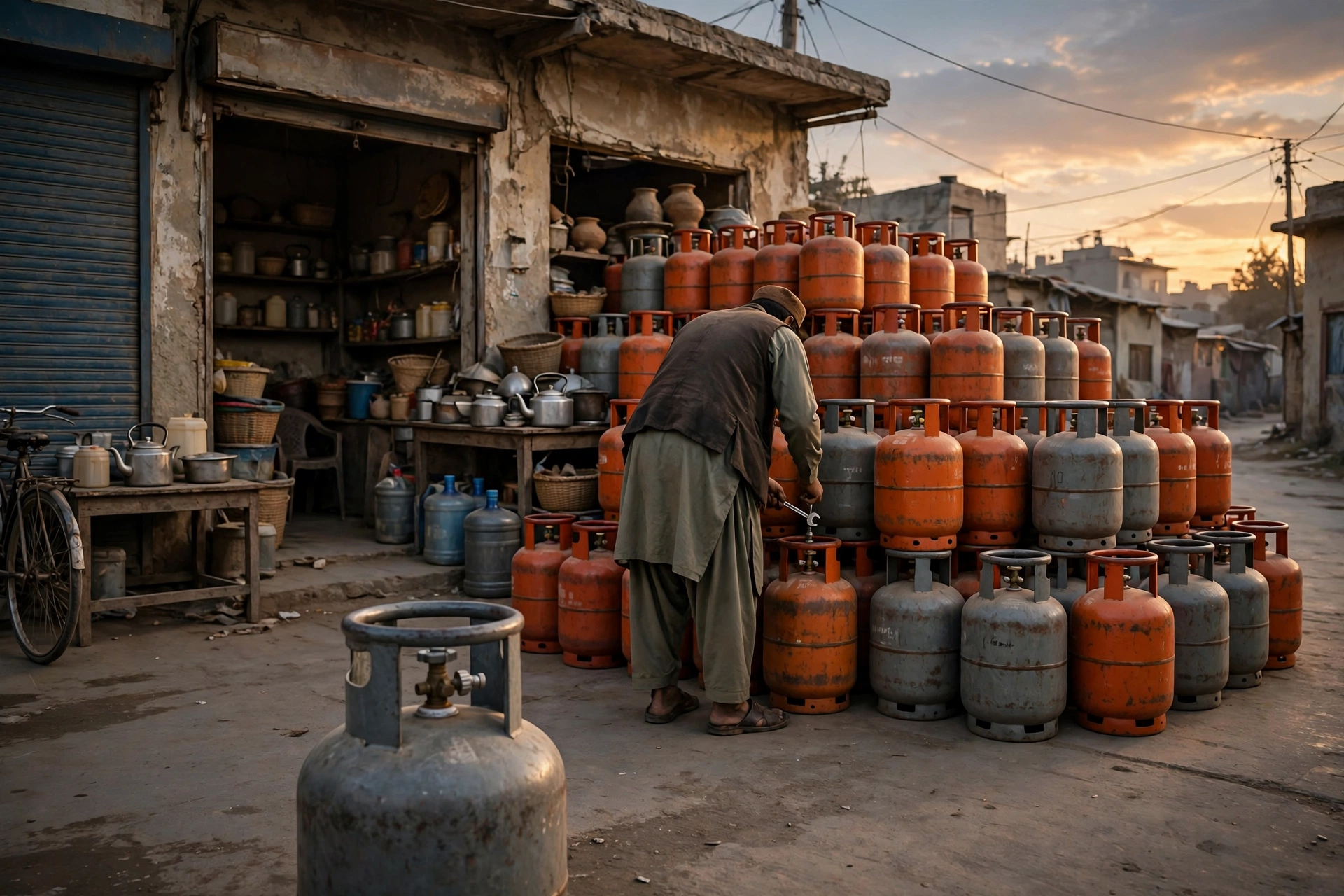

Pakistan has three prices for one cooking gas cylinder this month. Only one is official. The Oil and Gas Regulatory Authority (OGRA) has notified Rs294.07 a kilo for November, putting an 11.8kg domestic cylinder at Rs3,470.09. Company franchises charge up to Rs400 a kilo, and the open market reaches up to Rs630. For one cylinder: Rs3,470 on paper, Rs4,720 at a franchise, Rs7,434 on the open market, a gap of Rs3,964.
Three prices for one cylinder
The official maths: OGRA raised the November price by Rs14.73 a kilo, from Rs279.34 in October to Rs294.07, a rise of 5.27 percent. The domestic cylinder rises by Rs173.86, from Rs3,296.23 to Rs3,470.09. OGRA linked the rise to a 6.47 percent increase in the Saudi Aramco contract price. A 45.4kg commercial cylinder rises by Rs669 to Rs13,351.
The other two prices are where households buy. At Rs400 a kilo, a franchise cylinder costs Rs4,720, which is Rs1,250 above the official price. At Rs630 a kilo, an open-market cylinder costs Rs7,434, which is Rs3,964 above the official price and 2.14 times the notified rate. These are reported ceilings, but even the lower market price sits more than a third above the official rate.
Why the gap opened now
The reason is a single dependence. Irfan Khokhar, chairman of the LPG Distributors Association, told Dawn that Iran supplies 70 percent of Pakistan’s LPG while domestic production accounts for only 30 percent. With the Iranian border closed, sea shipments reduced, and the US-Iran war disrupting trade, the market lost its largest supply line before winter. In October, LPG at a record Rs600 a kilo in the hilly areas and Rs500 in Punjab and Khyber Pakhtunkhwa.
The industry’s own arithmetic explains why a border closure becomes a price spike. The distributors association puts domestic output at 2,000 to 2,500 tonnes a day against consumption of 4,000 to 4,500 tonnes, rising to 6,000 to 7,000 tonnes at peak winter. Those figures come from the association, not an independent audit, but they show the direction: lose the imported share and the daily shortfall starts above 1,500 tonnes.
The levy question nobody has answered
The sharpest charge concerns money collected for exactly this situation. Marketers say the 2016 LPG policy imposed a petroleum development levy of Rs4,669 per tonne on locally produced LPG to fund state-owned firms importing gas in winter and during emergencies. Their complaint, carried by Dawn, is that state firms failed to secure imports during the shortage despite that levy. TechJuice adds: the ProGas terminal at Port Qasim, under Sui Southern Gas Company, last imported LPG about seven months ago.
The News puts GST at Rs38,559 per tonne and margin-related charges at about Rs35,000 per tonne. The official price therefore already carries levies and taxes meant to fund the system. No official answer appears in the November 1 reporting, so the question stands: if an emergency levy was collected, where is the emergency supply?
Two November clocks, running against each other
November has two deadlines in the wrong order. The Pakistan LPG Marketers Association, through chairman Ali Haider, has threatened a strike from November 16 if the government goes ahead with a draft LPG policy that sidelines private firms or reverses deregulation. The association says it wrote to Petroleum Minister Ali Pervaiz Malik because the draft sent to the prime minister had no private-sector input. Business Recorder, via Scoop, says sales would stop if the demands are not met.
The second clock is the prime minister’s eight-member ministerial committee, formed on October 31 to review the proposed reforms, cylinder standards and the local pricing model. Its report is due in late November, after the strike date, so the disruption threat arrives before the review finishes. One October test is already answered: despite a proposal for a LPG price power shift that moved pricing from OGRA to state firms from November 1, OGRA itself issued the November notification.
Three tests before winter bites
First, watch November 16. Does the strike happen, or does a written answer on the private sector’s role arrive first? A strike in mid-November would cut supply as demand rises. Second, watch the committee report in late November. Does it give private firms a named role and keep a regulator check on price setting? A report that only moves the letterhead will not close it.
Third, watch the December notification and the open-market gap beside it. If the Rs294 to Rs630 gap does not narrow, the official price stays a paper price through winter. Piped gas links in: the Qatar gas halt runs to December 29 with only 10 cargoes planned against 20 needed. Judge November not by the notification, but by whether the three prices become one. For the latest more business and economy news from Pakistan, the number to track is Rs3,964.